


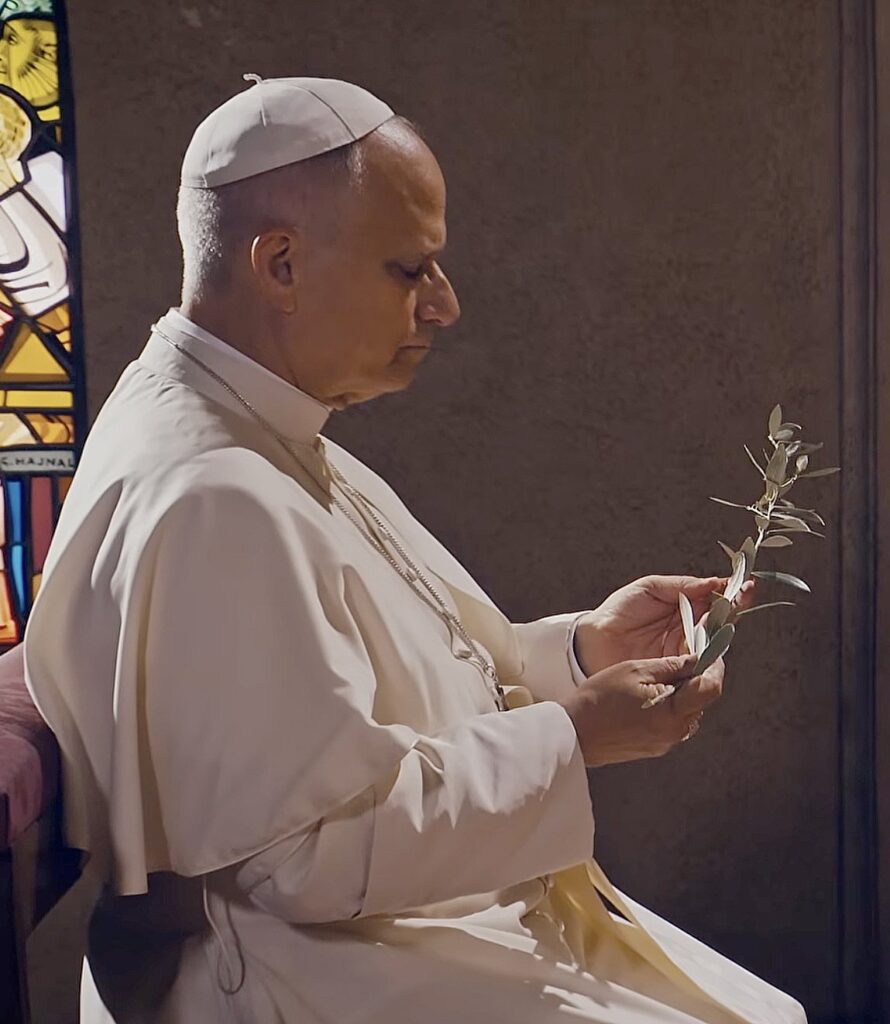
As Pope Leo XIV’s pontificate begins to come into sharper focus, concern for realities like synodality, curial reform, migration and care for the common home continues to connect him to his predecessor. Yet, if there is one overarching theme so far that is unmistakably among his own distinctive chief priorities, it’s the constant and unambiguous call for peace: in the world, in the Church, in our communities and in our hearts.
He consistently implores the world for a “disarmed and disarming” commitment to peacebuilding as more than the mere passive absence of conflict. He asserts confidently that the Church play an active role in resisting bloodshed, pugnacity and savagery in both our actions and words, uniting us with the Risen One and fashioning new models of relationality marked by dialogue, proximity and mercy.
In light of such calls, earlier this month, I attended the International Encounter for Peace and Reconciliation at Loyola University in Chicago. It was hosted by the Vatican’s Building Bridges Initiative, a project begun by Pope Francis and primarily based in the Holy See’s Pontifical Commission for Latin America. For years, this commission has been arranging meetings around the world between students and the Holy Father.
Pope Leo sent a message to the March 7 gathering that included bishops, curial officials, professors, students and international peace-makers, in which he offered three principles to promote amity and healing around the world. First, he stressed that God’s gift of peace implies that “Christians are called today to be co-workers for peace with Christ, who even in our day wishes to share that gift with humanity. The Lord walks with us as we work to promote harmony in our families, in our local communities, in our respective countries and around the world.”
Second, he shared how “it is necessary to seek the engagement and commitment of the international community for the sake of the common good, which transcends borders, faith traditions and cultures. It likewise requires systematic interdisciplinary collaboration, bringing together institutions, organizations, scientists and leaders in various fields to achieve this end.”
Lastly, he emphasized that “‘peace is a constant journey of reconciliation with God, with ourselves, with others and with creation.’ (cf. Address in the Presence of Religious Leaders, October 2025) In this spirit, we are called to foster a culture of reconciliation capable of overcoming the globalization of powerlessness, which tempts us to believe that an era free of conflict is unattainable. Moreover, we must remember that prayer is also a powerful force for reconciliation. When people of different religious traditions come together in prayer, it has the power to change the course of history.”
Since this event two weeks ago, the pope has only intensified his calls for an end to the current patterns of hostility unfolding around the world, particularly in Iran. In his Sunday Angelus comments on March 15, he offered his most potent critique to date: “For two weeks now, the peoples of the Middle East have been suffering the horrific violence of war. Thousands of innocent people have been killed, and countless others have been forced to flee their homes. I renew my prayerful closeness to all who have lost loved ones in the attacks, which have struck schools, hospitals and residential areas. … On behalf of the Christians of the Middle East, and of all women and men of good will, I appeal to those responsible for this conflict: cease fire! May paths of dialogue be reopened! Violence can never lead to the justice, stability and peace for which the peoples are waiting.”
Whether or not we are on the precipice of a new Pax Leonina (Peace in the Era of Pope Leo) remains to be seen. But without doubt, the Holy Father has diagnosed our current condition as increasingly malignant and debilitating.
Saint John XXIII once argued that the Bride of Christ prefers to use the “medicine of mercy” (“medicina della misericordia”) when addressing the ills of society. This last word in other languages emphasizes precisely the vision that Pope Leo offers as the antidote necessary in our day – not standing aloof or isolated, but rather sharing genuinely, tangibly and thoroughly in the very misery (miseria) of another’s heart (cuore).
An alumnus of Camden Catholic High School, Cherry Hill, Michael M. Canaris, Ph.D., teaches at Loyola University, Chicago.



 at the bottom and then tap “Add to Home Screen”
