



I recently closed out a remarkable three weeks in Rome, teaching graduate students and participating in the Vatican’s Discerning Leadership program alongside the top tiers of administrators and superiors general in men’s and women’s religious orders from 18 countries.
I never would have imagined that what spoke most meaningfully to me in all that time – and in such a beautiful setting – would be an empty Plexiglas box. But in conversations with students and colleagues, that is precisely what happened.
Before the last Great Jubilee in 2000, Pope Saint John Paul II established a Commission of New Martyrs, becoming convinced that the age of persecution had returned to the Church in new ways. On May 7 of that year, he held an ecumenical prayer service in Rome’s Colosseum memorializing some of the 13,000 reports that had flooded the relevant offices about those who had given their lives for the faith in the previous century. Of course, this can never claim to count all the untold stories of many, many more anonymous faces.
In the wake of this event, the pope decided a permanent memorial to these “new martyrs” should be erected. He decreed that the Basilica of Saint Bartholomew, the shrine on the island in the middle of the Tiber River (and one of the oldest sites of religious worship from the pre-Christian times), should serve this unique role in the city. There are almost 1,000 churches and chapels in Rome, but not too many hold the relics of one of the original Twelve Apostles who died for Christ, a man utterly without guile, as the Scriptures describe him.
Today, this church is entrusted to the care of the Sant’Egidio community, founded to foster friendship, peacemaking, prayer and close proximity to the poor, suffering and excluded.
Since my group had a priest from Ireland with us in Rome, we were blessed to be invited to celebrate a private Mass at Saint Bartholomew’s tomb, ironically on the feast of Saint Justin Martyr, June 1. Part of that visit was to the stunning crypt sanctuary where the Community of Sant’Egidio has designed a museum and series of reliquaries.
The museum is divided into rooms by continent, with vestments, prayerbooks and all manner of objects made sacred by those who prayed with or in them before being executed for following Christ. It is incredibly moving to see Saint Maximilian Kolbe’s possessions and Saint Oscar Romero’s priestly garb alongside Blessed Floribert Bwana Chui’s customs governmental ID. Floribert was a member of Sant’Egidio who was killed for refusing to be bribed when African gangs tried to impel him to allow tainted food into the country, which he knew would kill his fellow townspeople. He was beatified by Pope Leo on June 15, 2025.
But on to the boxes. Scattered throughout the sanctuary are empty Plexiglass boxes of the same type that hold these precious artifacts. The implication is clear: The possessions you hold dear or the clothes you are wearing now could one day be included, if you are called to shed blood for God.
We in the United States are anomalous Christians. As former editor-in-chief of “Christianity Today” David Neff once wrote: “The typical Christian lives in a developing country, speaks a non-European language, and exists under constant threat of persecution, imprisonment, torture or rape.” The Cameroonian, Lebanese, and Myanmarese members of my leadership cohort gave compelling personal testimony to this reality in the violence they have encountered only weeks or months – not decades or centuries – ago.
As Saint John Paul II put it, these accounts “contain a truth which today’s world often scorns and rejects, making love of self the supreme criterion of life. But the witnesses to the faith … did not consider their own advantage, their own well-being, their own survival as greater values than fidelity to the Gospel. Despite all their weakness, they vigorously resisted evil. In their fragility there shone forth the power of faith and of the Lord’s grace.
“Dear Brothers and Sisters, the precious heritage which these courageous witnesses have passed down to us is a patrimony shared by all the Churches and Ecclesial Communities. It is a heritage which speaks more powerfully than all the causes of division. The ecumenism of the martyrs and the witnesses to the faith is the most convincing of all; to the Christians of the twenty-first century it shows the path to unity. It is the heritage of the Cross lived in the light of Easter: a heritage which enriches and sustains Christians as they go forward into the new millennium.”
The voices of those silent boxes will continue to haunt and inspire me as I return to my duties in the classroom and beyond.
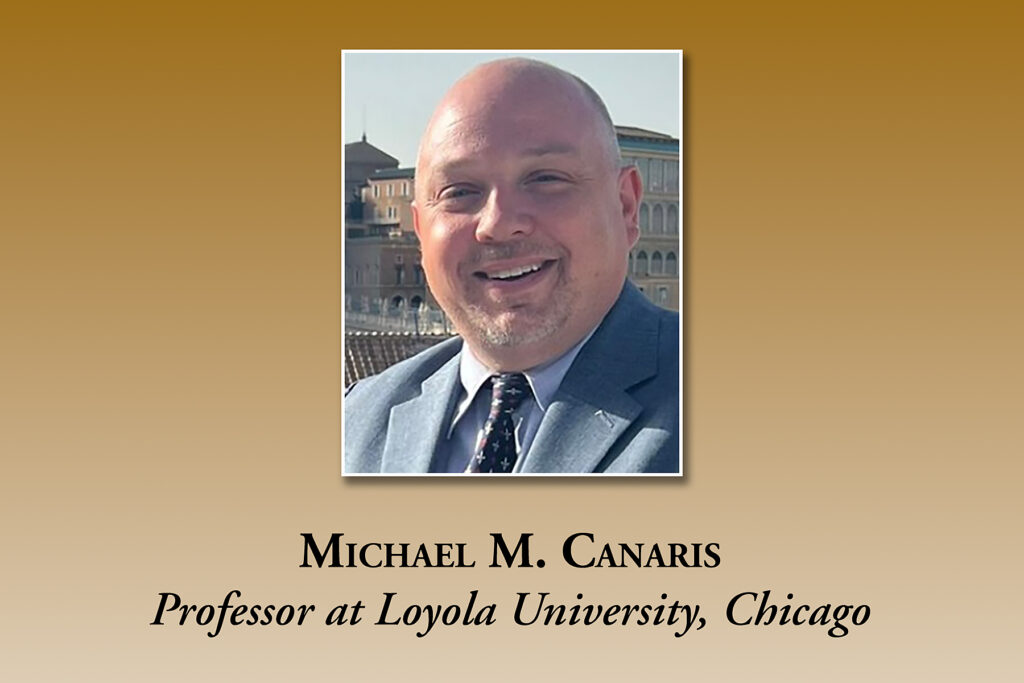
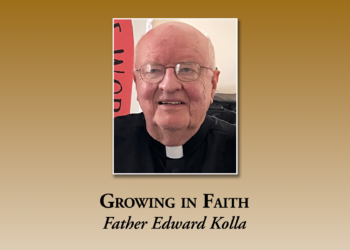
An alumnus of Camden Catholic High School, Cherry Hill, Michael M. Canaris, Ph.D., teaches at Loyola University, Chicago.



 at the bottom and then tap “Add to Home Screen”

