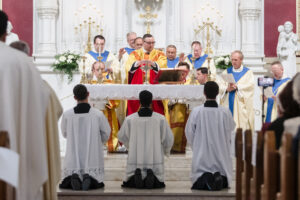





While dutifully attending Mass or other liturgical rites, the faithful might take for granted the sacred things all around that help prepare them for an encounter with the divine.
The holy water font that is full. The crisp, clean pall that is placed over caskets. The ciboria from which the body of Christ is distributed.
For parish sacristans, such sacred items are first and foremost when serving in this ministry. For as the “General Instruction on the Roman Missal” states, it is this person “who diligently arranges the liturgical books, the vestments, and other things that are necessary for the celebration of Mass.” (GIRM 105)
Further, the sacristan prepares “a path for the entry of our Lord Jesus Christ the King,” says the “Guide for Sacristans.” (Liturgy Training Publications)
Usually the first ones to church and the last ones out – working out of the public eye – these ministers are invaluable to parish communities.
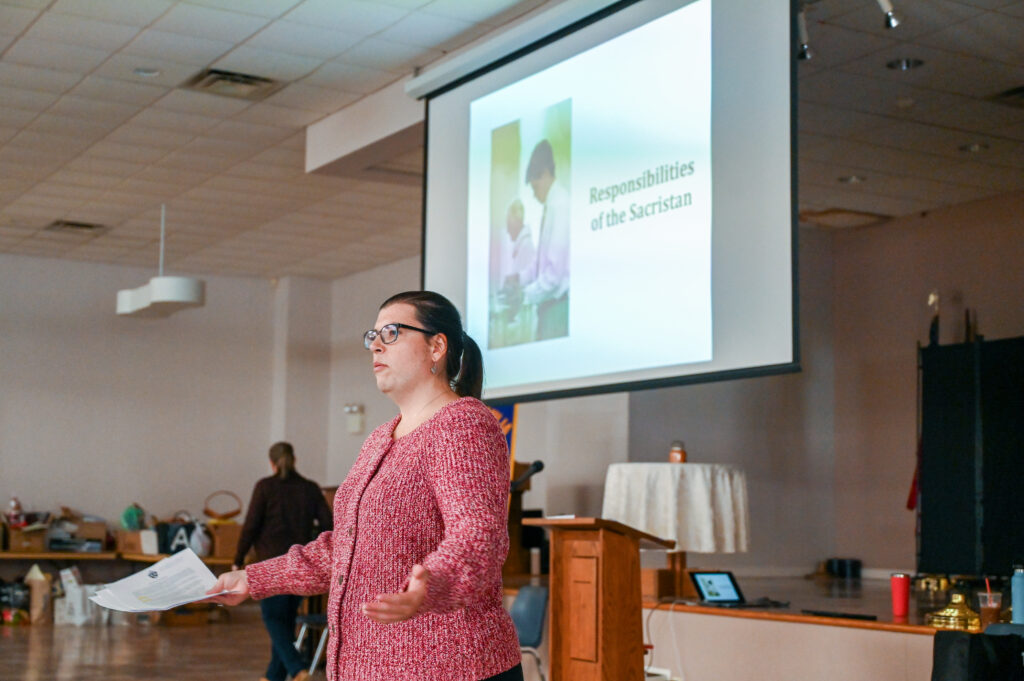
Recognizing the importance of this ministry, the Diocese of Camden’s Office of Worship and Christian Initiation has started Sacristan Training and Formation to “help folks go deeper in their understanding of the liturgy, and be aware of the importance of the work of a sacristan,” said Mike Bedics, the office’s director.
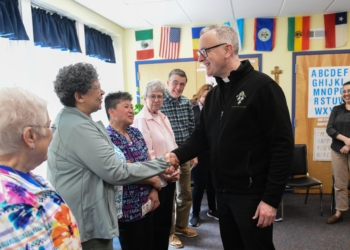
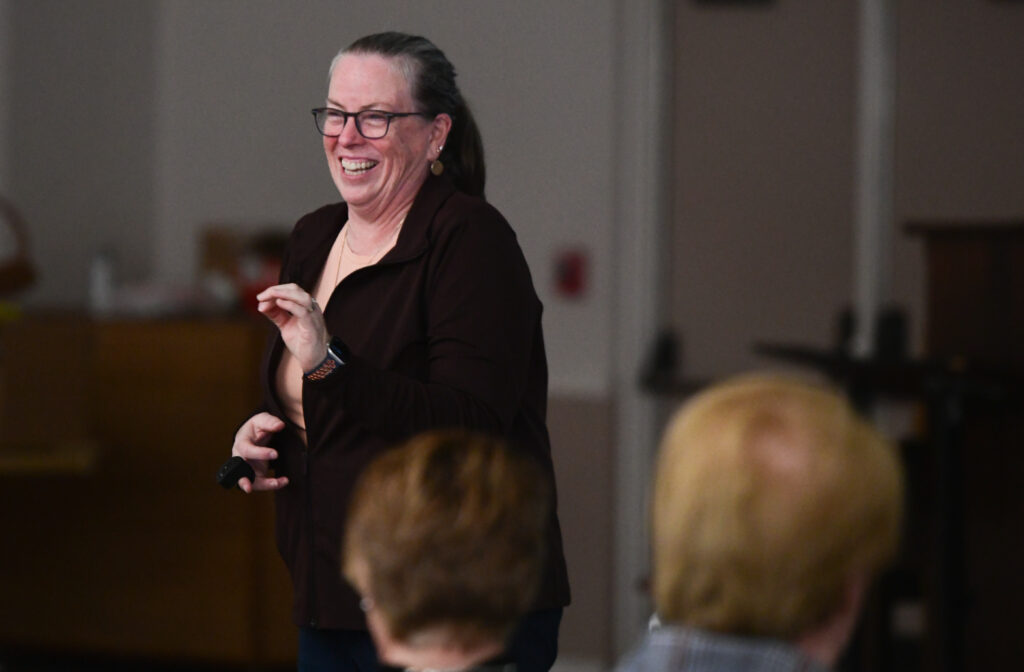
The first training session – held in the fall at Church of the Holy Family in Sewell – brought together 30 ministers from Cape May, Mullica Hill, Collingswood, Bridgeton and more. The formation was led by Cathy Johnson and Sister Mary Kay Kelley, SSJ, co-directors of the area’s Heartful Ministries, and Ann Marie Ours, administrative assistant of Discipleship and Evangelization for the Diocese.
In helping participants familiarize themselves with the sacred items and preparation for liturgical events, the facilitators demonstrated how their work benefits the parish as a ministry of encounter, Bedics said.
“Sacristans make sure things don’t get in the way of the liturgical act, or its flow, so the Spirit can come in and take action,” he said. “Having everything prepared ahead of time also ensures a better prayer experience.”
Ours took pleasure in the sacristan training, not only facilitating but gathering material from Church documents including the “General Instruction of the Roman Missal,” “Guide for Sacristans,” “Sacrosanctum Concilium” and “The Sacristy Manual.”
“I was a sacristan for three years” she explained, referring to her 2019-2021 ministry at Saint Dominic Catholic Church in Security, Colo., where she lived before moving to New Jersey. She said she enjoyed her duties, which included: opening the lectionary to the day’s reading to assist lectors; ensuring there was enough of the Holy Communion and Precious Blood for faithful; making sure that the sacred vestments such as the alb, stole, chasuble and dalmatic were available for clergy; and checking the sanctuary lamps so they had enough oil.
“Being a sacristan was my way of giving back to a Mass that I already loved,” Ours said. “I already was there every week, so why not show up an hour early and get everything ready?”
Sacristan formation follows similar training for extraordinary ministers of Holy Communion and lectors that the Office of Christian Worship and Initiation has put together over the years to demonstrate how taking part in the liturgical life of the Church with dignity, reverence and enthusiasm can lift up and strengthen the Diocese.
“We hope this sacristan training appeals to those who don’t necessarily want to be in a more visible role, such as a lector or Eucharistic minister, but might want to be behind the scenes,” Bedics said.
“Any opportunity to expand this formation, and those who serve in it, is good,” he continued.
For Ours, these workshops can bring attention to the sacred mystery of the Mass, and the subtle, but vital, work of these ministers.
“A Mass well-done is a beautiful thing,” she said.
The next sacristan training will be held April 11 at Saint Charles Borromeo Parish in Sicklerville, from 8:30 a.m. to 12:30 p.m. For more information, contact Ann Marie Ours at 856-583-2904.




 at the bottom and then tap “Add to Home Screen”
