





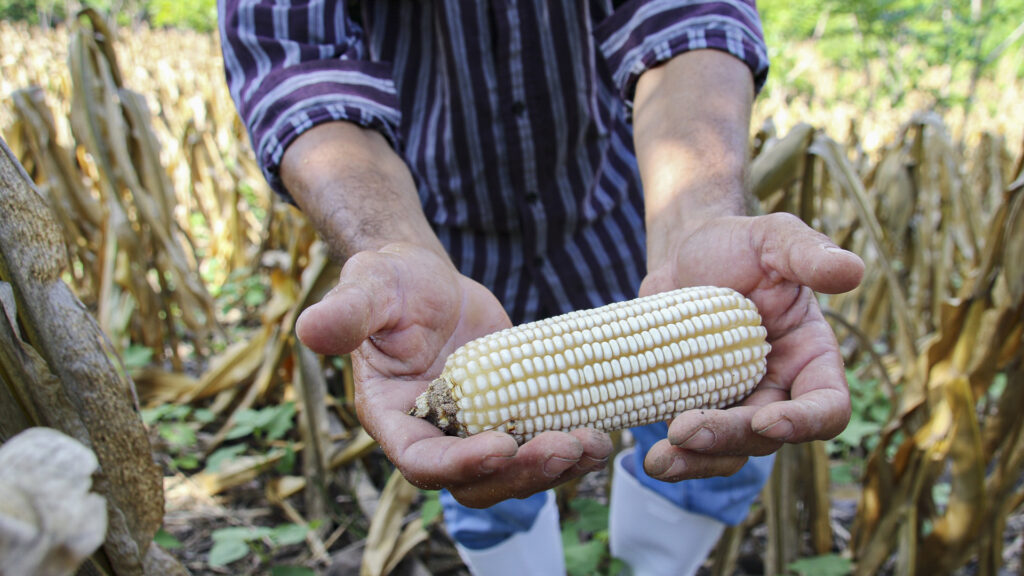
As noted by Pope Benedict XVI, “The right to food, like the right to water, has an important place within the pursuit of other rights, beginning with the fundamental right to life. It is therefore necessary to cultivate a public conscience that considers food and access to water as universal rights of all human beings, without distinction or discrimination.”
These words by the pope emeritus in his 2009 encyclical “Caritas in Veritate” are among the thousands of passages from recent pontiffs calling for faithful Catholics to “link charity and truth in the pursuit of justice, the common good and authentic human development.” (U.S. Conference of Catholic Bishops)
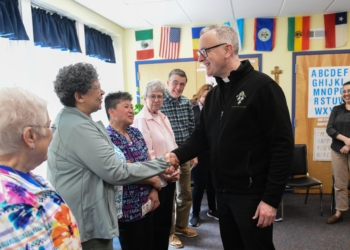
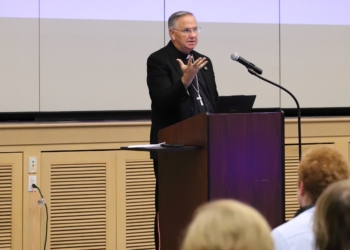
In the weeks leading up to Thanksgiving, this call to put faith in action was at the center of the “Hunger for Justice: Exploring hunger in our country and our world and long-term solutions” workshop hosted by the diocesan Office of Life and Justice Ministries and held in Sewell. There, clergy and representatives from Catholic Relief Services and Bread for the World, the latter a Christian organization that advocates for policy changes to end hunger, entertained a conversation on hunger and advocacy.
“We cannot stand idly by when thousands of human beings are dying of hunger,” said Father Kenneth Hallahan, a retired priest of the Diocese and longtime social justice advocate, quoting a homily given by Saint John Paul II when he visited Yankee Stadium in 1979.
Church teachings call all faithful Catholics to both social justice and charitable works.
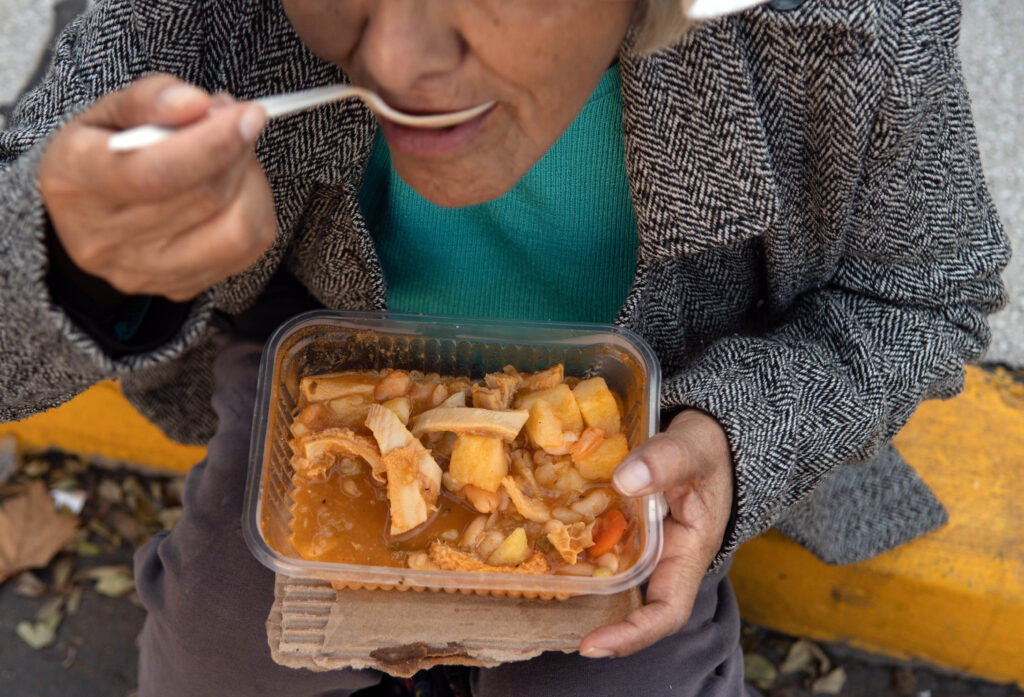
“Think about your own life. Your life is framed by the experiences that you have: in neighborhoods, in schools, in healthcare, in work. This makes us who we are. We need to bring the Gospel commandment of love to this framework,” he said, urging all to be aware of the needs of others in their communities.
For example, according to recent statistics, 800,000 New Jersey residents face hunger on a daily basis. One in 10 children in the state face food insecurity. And the number of people needing to utilize New Jersey’s Supplemental Nutrition Assistance Program (SNAP) rose from 769,331 in September 2020 to 887,467 in September 2021, an increase of more than 15%.
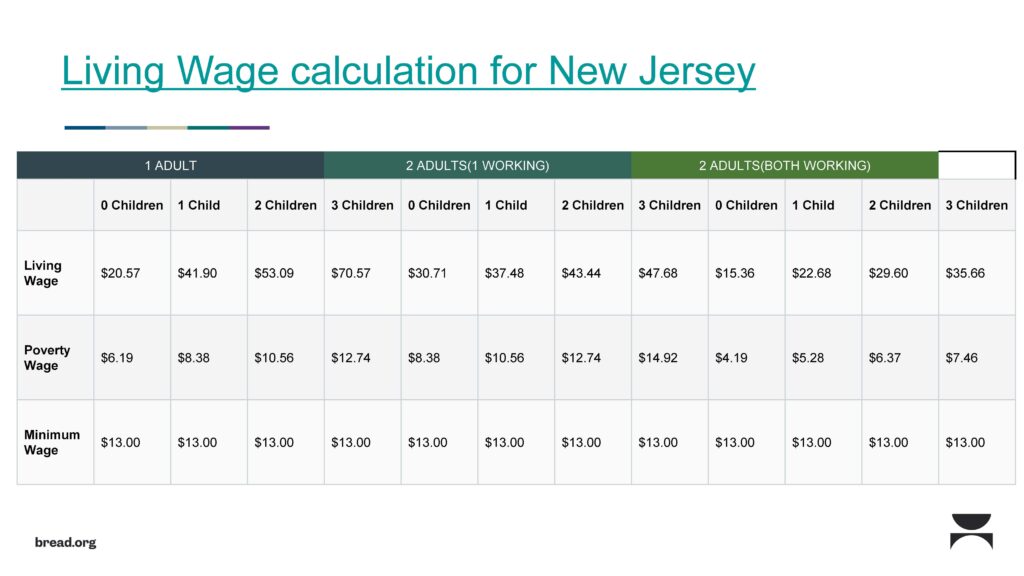
What drives food insecurity? Poverty, explained Cheri Andes of Bread for the World. Currently, the minimum wage in New Jersey is $13, which equates to about $27,040 in annual earnings. The state’s poverty rate is around 10.2%, putting New Jersey on the lower end of the national average. In the city of Camden, however, the median household is $28,000. The poverty rate is 33.6%.
“That is a huge disparity,” Andes said.
At first glance, one can focus entirely on wages when talking about food insecurity and hunger, the speakers agreed. However, numerous aspects factor into poverty, such as access to food, clean water, housing, healthcare and transportation – many of which are often beyond one’s control.
“There is the famous saying, ‘If you give a man a fish, you feed him for a day. If you teach a man to fish, you feed him for a lifetime.’ That’s not entirely true,” Father Hallahan said. “There are systems and structures and institutions that regulate fishing. I can be the best fisherman in the world, but if I have no access to the water, knowing how to fish is useless.”
For example, in the City of Camden, access to healthy food options is limited. With no major grocery stores within city limits, Camden is known as a food desert.
When it comes to poverty, “We can’t be deceived by simplistic solutions,” Father Hallahan said. “We must explore the reasons, many of which are often complicated. We may have to face our own systems, structures and institutions that are unjust, address them, and recognize that can be very uncomfortable.”
To that end, there is help. Working with organizations such as Bread for the World and Catholic Relief Services can connect the faithful and give them a stronger voice.
“We are citizens of the world, and we need your advocacy,” said Jessica Morrell, community engagement manager with CRS.
One campaign in which both CRS and Bread for the World are advocating is the 2023 Farm Bill. The Farm Bill is a multiyear package of legislation that oversees a variety of domestic and international food and agricultural programs. It is typically renewed every four to five years, and some of its programs would expire if not reauthorized.
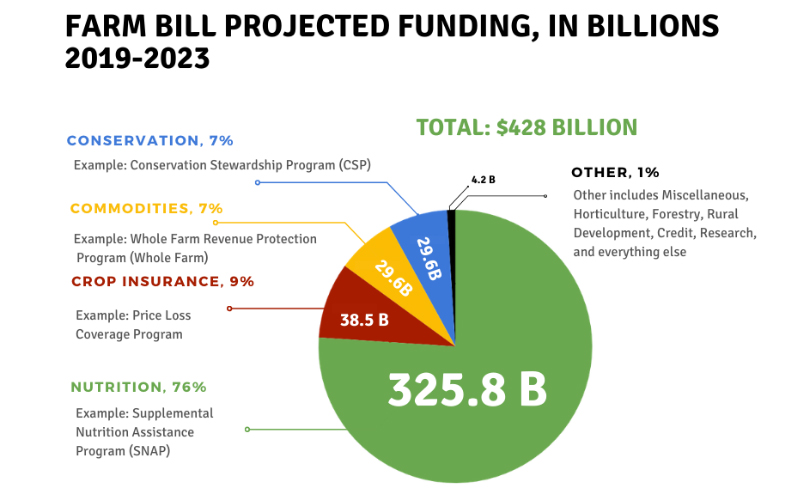
The bill is multifaceted. In addition to containing key gains for farmers such as agricultural research and a conservation stewardship program to help farmers and ranchers care for the land, it also contains critical monies for nutrition programs such as SNAP. Seventy-six percent of Farm Bill funding goes to SNAP.
The public can make their voices heard by contacting local, state and national representatives.
“The main way Bread for the World advocates is with letter-writing campaigns,” many of which are conducted through churches, Andes explained, urging all to get involved at www.bread.org. “We generate over 90,000 letters a year to Congress. When 90,000 people write year after year after year as a collective, that is what we call power. That is what we call relationship. Our legislators begin to know us and listen to us. We follow those letters up with visits, both in the Capitol and in our districts. We invite all of you to participate in that.”
CRS has formed local chapters in which social justice advocates work together to contact their legislators by letter, email, phone or in-person meetings. CRS also offers training on how to effectively communicate with legislators and craft letters to the editor, and offers talking points on the issue at hand. All of these tools, CRS’ many campaigns and more can be found at www.crs.org/get-involved/campaigns/action-center.
Like Father Hallahan, Morrell, too, quoted papal writings in calling on all to follow their faith and advocate for those in need.
“The Church cannot and must not remain on the sidelines in the fight for justice,” she said, quoting from both Popes Benedict and Francis.
In Evangelii Gaudium, Pope Francis writes, “An authentic faith – which is never comfortable or completely personal – always involves a deep desire to change the world, to transmit values, to leave this earth somehow better that we found it. We love this magnificent planet on which God has put us, and we love the human family which dwells here, with all its tragedies and struggles, its hopes and aspirations, its strengths and weaknesses.”
As such, Father Hallahan reminded the faithful that advocacy can have many faces – from legislation to being active in local food banks, school drives, parish outreach ministries, etc. “Remember, we have many different ways to reach out to people.”




 at the bottom and then tap “Add to Home Screen”
