



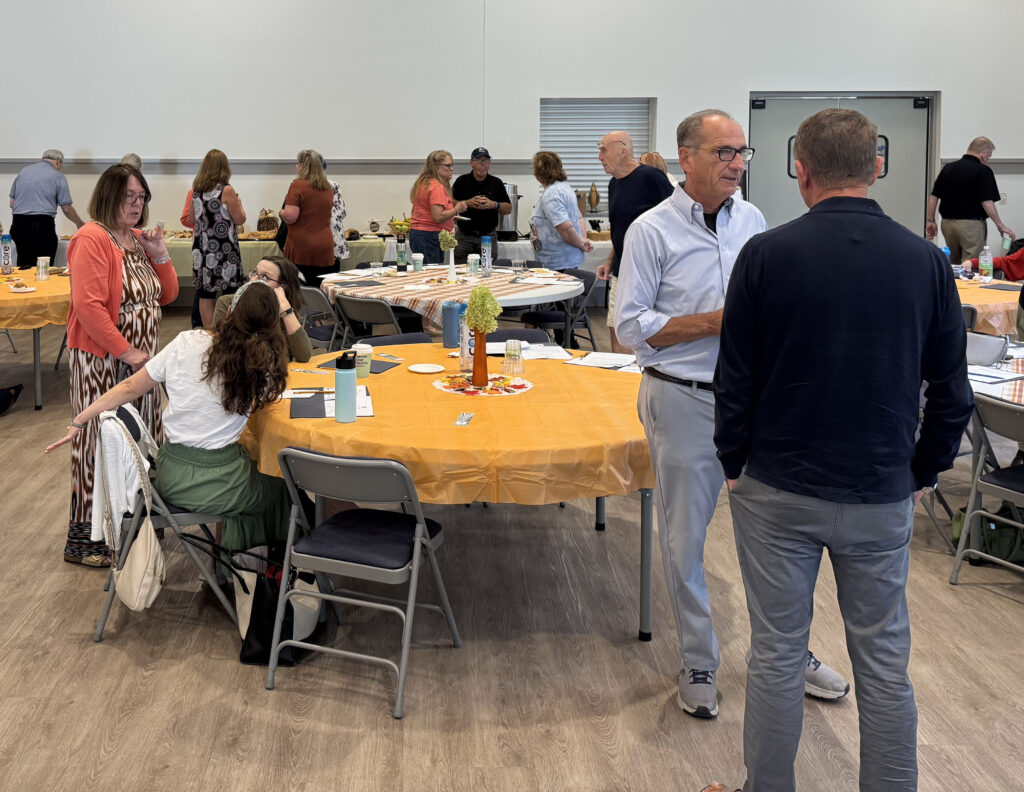
MARMORA – What does it mean to care for God’s creation? That was the question dozens of South Jersey’s Catholics came to learn more about at the “To Hope and Action with Creation: Care for Creation Symposium.”
“To listen to today’s presentation allows for an intersection to care for creation and to have a care for the less fortunate and more vulnerable communities,” Dr. Michael Sims, director of the Diocese’s Office of Life & Justice Ministries, told those gathered Sept. 13 in the Saint Maximilian Kolbe Parish Hall.
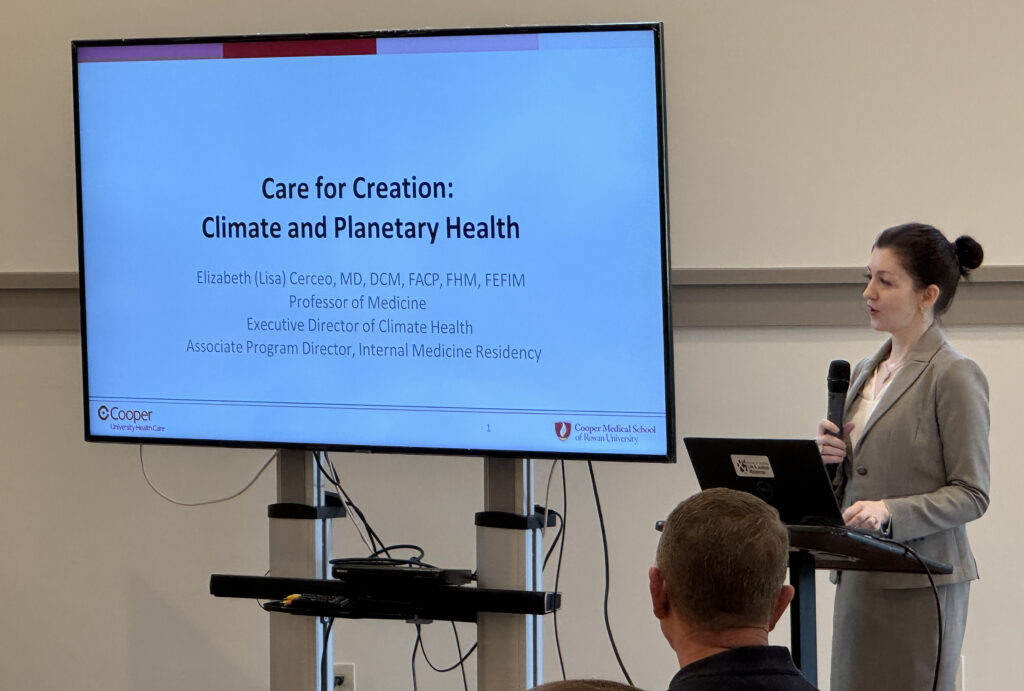
One of the day’s speakers was Dr. Elizabeth Cerceo, director of Climate Health at Cooper Medical School of Rowan University and a member of Clinicians for Climate Action New Jersey. “Harming the planet is harming yourself,” she said.
Too often, she explained, people underestimate the ripple effects of seemingly small actions – such as tossing an empty water bottle in the trash instead of recycling – on both the environment and human health.
“[A care for creation] focus should imbue everything that we are doing,” she said. “For me as a physician, when I’m taking care of patients … I can’t just see them as the person in front of me. I have to consider their whole context. … Where are they living? Where are they working? What are they breathing? What water are they drinking?”
For Dr. Cerceo, environmental awareness isn’t just an ethical duty – it’s a clinical necessity. Illness, she emphasized, rarely exists in isolation. The air people breathe, the water they drink and the neighborhoods they inhabit can all contribute to poor health outcomes.
This message of interconnectedness was echoed by Pope Leo XIV in his message for the 10th World Day of Prayer for the Care of Creation 2025. “We seem incapable of recognizing that the destruction of nature does not affect everyone in the same way. When justice and peace are trampled underfoot, those who are most hurt are the poor, the marginalized and the excluded. The suffering of indigenous communities is emblematic in this regard,” the Holy Father wrote. His words underscore that caring for creation is inseparable from caring for the vulnerable – a core tenet of Catholic social teaching.
One parishioner who attended the symposium, Mike Pagano from Our Lady of Peace in Williamstown, shared his reason for attending: “I was curious to learn more about our environment and what we can do to make it better.”
This curiosity represents the first step in a broader cultural shift – one where faith and environmental stewardship go hand in hand, speakers emphasized.
Dr. Kristen Poole, an English professor at the University of Delaware, further explored this connection in her session on the intersection of climate change and Christian ethics. Dr. Poole, author of
“Christianity in a Time of Climate Change: To Give a Future with Hope,” challenged attendees to view environmental issues not merely as political or scientific problems, but as moral imperatives.
“Only 71% of Americans believe climate change will negatively affect future generations,” Dr. Poole noted, a statistic that highlights the need for deeper awareness and action.
Throughout the morning symposium, the message was clear, attendees said: Caring for creation is not optional for people of faith. It is an integral part of living out the Gospel call to love one’s neighbor. Whether through reducing waste, advocating for cleaner air and water, or simply becoming more mindful of daily choices, every act of stewardship becomes an act of discipleship.
The presentations closed with a call to action, inviting parishioners to bring what they learned back to their own communities. The event was not meant to be the final word but rather a starting point – a spark to ignite continued education, conversation and action. As one participant put it, “It’s about taking small steps. If we each do a little, together we can make a big difference.”




 at the bottom and then tap “Add to Home Screen”
