




0 0 1 662 3778 Diocese of Camden 31 8 4432 14.0 Normal 0 false false false EN-US JA X-NONE /* Style Definitions */ table.MsoNormalTable {mso-style-name:”Table Normal”; mso-tstyle-rowband-size:0; mso-tstyle-colband-size:0; mso-style-noshow:yes; mso-style-priority:99; mso-style-parent:””; mso-padding-alt:0in 5.4pt 0in 5.4pt; mso-para-margin:0in; mso-para-margin-bottom:.0001pt; mso-pagination:widow-orphan; font-size:10.0pt; font-family:”Times New Roman”; mso-fareast-language:JA;}
The 1984 pastoral letter “What We Have Seen and Heard” is one of the most inspired but challenging documents addressed to the African-American Catholics in recent times. This document was issued by 10 black bishops and addresses issues that are important to the African-American Catholic community, even today.
It was released on the feast of St. Peter Claver. Why? St. Peter Claver dedicated his life to the service of the enslaved African Catholics, and so this document is a way of recognizing his role and contributions to the African Catholic community.
I have used this pastoral letter to teach a course on pastoral issues in African-American communities at St. Charles Borromeo Seminary, Philadelphia. The pastoral, focused on evangelization within the African-American community, traced the origin of the African-American Catholics all the way to the African continent itself.
The Black Church is endowed with special gifts, which if properly harnessed, can enrich the whole universal church. It is in view of this power that the great Pope Paul VI challenged the Black Church to give its gifts of blackness to the whole church (The Pope Speaks, 1969 Symposium in Kampala, Uganda).
The pope has challenged the Black Church to share its vast cultural values with the universal church. This is the true motivating spirit that inspired the 10 black bishops to share the rich African culture with the global church. This spirit is both generous and highly commendable. It is when the Black Church shares its rich culture that we, as the black community, contribute in building up not only ourselves but the whole church. The 10 black bishops spoke from experience when they said, “We have heard with Black ears and we have seen with Black eyes and we have understood with an African heart.”
This is the message at the core of the bishops’ contribution, a message that respects the black culture and Catholic heritage. The strategies the document outlined will be meaningful only when anchored within the black perspectives.
One of the issues the 10 black Catholic bishops explored in the document is the value placed by the black community on our family life. Our ideals on family life are an important institution in Africa.
The African society believes greatly in the extended family system. The members of the family take care of one another. As the individuals live for the community, the community in return exercises influence on the individuals.
There is an old saying that it takes a village to raise a child, which was true before, and the document noted that circumstances often required childcare to be the responsibility of everybody in the family.
Unfortunately, things have changed in today’s world, and this is true within the African-American family life system. The absence of fathers as role models and leaders in the African-American family way of life has created some devastating effects within the whole society. The bishops challenged everybody to hold on to a strong sense of family bond. This bond of togetherness and family should be carried over to the church, where we see ourselves as brothers and sisters.
The family system is important because it is a place to nurture vocations. Today, the church is facing an enormous problem in attempting to nurture the desire for vocations among the African-American communities.
Sister Thea Bowman once said, “If you want vocations, then each family and individual must raise them within their families.” As the trend of change has overtaken today’s African-American families, vocations can still be nurtured, even in the broken families of African-Americans. We can look into this erosion of family life to identify and encourage our young adults wanting to be priests, brothers, deacons and religious women.
Let us reflect on the insights of the values of the pastoral letter and adapt it to the present evangelization strategy in the African-American community. I, then, challenge the readers to make time to explore the legacy of the document. It is worthy of reading and taking into our hearts and lived in our daily lives. These life strategies, if adapted and followed through on, according to the African-American culture, will have the power to change the mindset of the African-Americans and win minds and bodies devoted to the vocations to God.
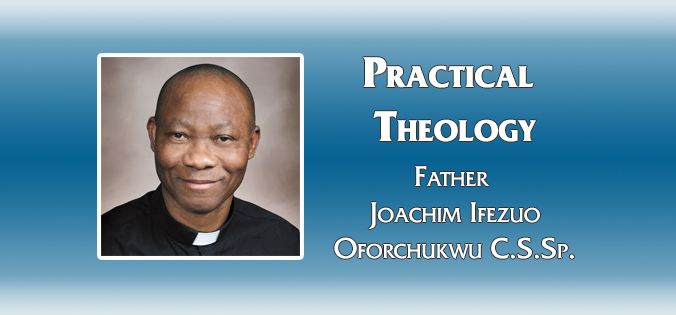
Father Joachim Ifezuo Oforchukwu, C.S.Sp., holds doctorates in education and practical theology.




 at the bottom and then tap “Add to Home Screen”