



The geographic triangle on the shores of the Great Lakes stretching between Illinois, Wisconsin and Michigan serves as perhaps the most recognizable hub for the Polish diaspora living outside of the European nation anywhere in the world. Food, music and various other aspects of the cultural heritage of Poles who immigrated to the area in various waves since the 1850s dominate the region. Many of the parishes in the area, including some where I often attend daily Mass, are administered by the Congregation of the Resurrection of Our Lord Jesus Christ, more commonly referred to as the Resurrectionists.
The religious order was founded in 1836 by three Polish emigrants, Bogdan Janski, Peter Semenenko and Jerome Kajsiewicz. Janski prioritized a vision of a more enlightened educated clergy and active laity, especially among expatriates from his homeland spread across Europe, particularly in the beginning years in France and Italy. On Easter morning in 1842, in the catacombs of Saint Sebastian, seven members of the original band of believers professed vows to live in community and form a new way of life together. As they emerged from the underground crypts, they heard the Easter bells resounding throughout the city and determined to make the feast the center of their newly founded religious congregation, taking the name Resurrectionists.
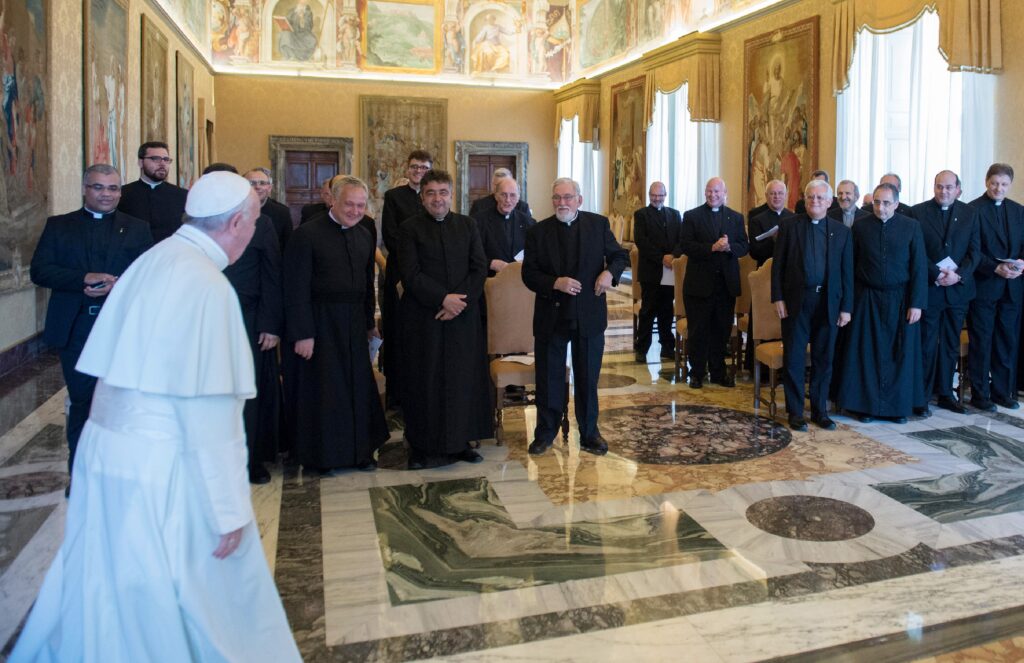
They took seriously the exhortation of Pope Pius IX: “Organize yourselves in a way that will do the most good for the Church.” In 1857, they decided to dedicate their ministry to the administration of parishes and to educating youth, especially in areas where Polish people were arriving and struggling, but of course broadening that mission to anyone they encountered in need of conversion, as well as material, spiritual and intellectual support. Today, the Resurrectionists labor in Australia, Austria, Bermuda, Bolivia, Brazil, Bulgaria, Canada, Germany, Israel, Italy, Slovakia, Tanzania, Ukraine, the United States and, of course, Poland. Their general headquarters in Rome is located on Via Sebastianello (Little Saint Sebastian) reminiscent of that Mass in the catacombs named for the same early Roman martyr nearly 200 years ago.
The parishes founded or administered by the order often, but not always, highlight their connection to Polish history. Figures like Saints Stanislaus Kostka, Hedwig and Hyacinth are often invoked, as is the famously strong Polish veneration of the Blessed Mother, evident under patronages like Our Lady of the Desert, Our Lady of the Lake and Our Lady of Mentorella. And, quite naturally, many of their ministries invoke the name of their (and of all Christianity’s) primary feast: the Resurrection.
One of the order’s moving prayers, the Litany of the Resurrection, invokes Jesus more than 30 times under the title of the Risen Lord, begging him to reconcile all things to himself, to raise us to new life and to send us his Spirit. Much of the literature of the order talks about their wish to be divine instruments in “the renewal of society.”
The famous theologian Jürgen Moltmann once said, “Christianity is unique in the sense that it is a religion of joy. Christmas carols and Easter laughter and the awakening of Pentecost feelings: This is unique in Christianity. … Compare this with Judaism and Islam and Buddhism; they are all unique in their own center. But this center of the Resurrection is unique in Christianity.”
All of us are then a collective People of the Resurrection. The shocking and scandalous cry that “He is Risen,” reminds of us of the night that “Christ broke the prison-bars of death and rose victorious from the underworld” because of humanity’s “happy fault” that earned us a Redeemer, as the Easter Vigil’s Exsultet proclamation puts it. It is in the Resurrection that Christ’s sanctifying power “dispels wickedness, washes faults away, restores innocence to the fallen, and joy to mourners, drives out hatred, fosters concord and brings down the mighty.”
Though the entire Church recognizes this moment as the ultimate and irrevocable triumph of God over human sin and division, the Resurrectionists around the world are called to live this reality as the central dimension of their charism in a particularly intentional way.
Originally from Collingswood, Michael M. Canaris, Ph.D., teaches at Loyola University, Chicago.



 at the bottom and then tap “Add to Home Screen”
