




The Second Vatican Council famously called the Holy Eucharist “the source and summit (fontem et culmen) of the whole Christian life” (Lumen Gentium 11). Two decades later, in 1985, an extraordinary gathering of the synod of bishops claimed “the ecclesiology of communion is the central and fundamental idea of the council … [It] is also the foundation for order in the church, and especially for a correct relationship between unity and pluriformity in the church.”
While theologians have wrestled with, lionized and criticized what has come to be called “communio ecclesiology,” virtually all practicing Catholics identify the sacrament as the most recognizable and formative experience of their lives of faith.
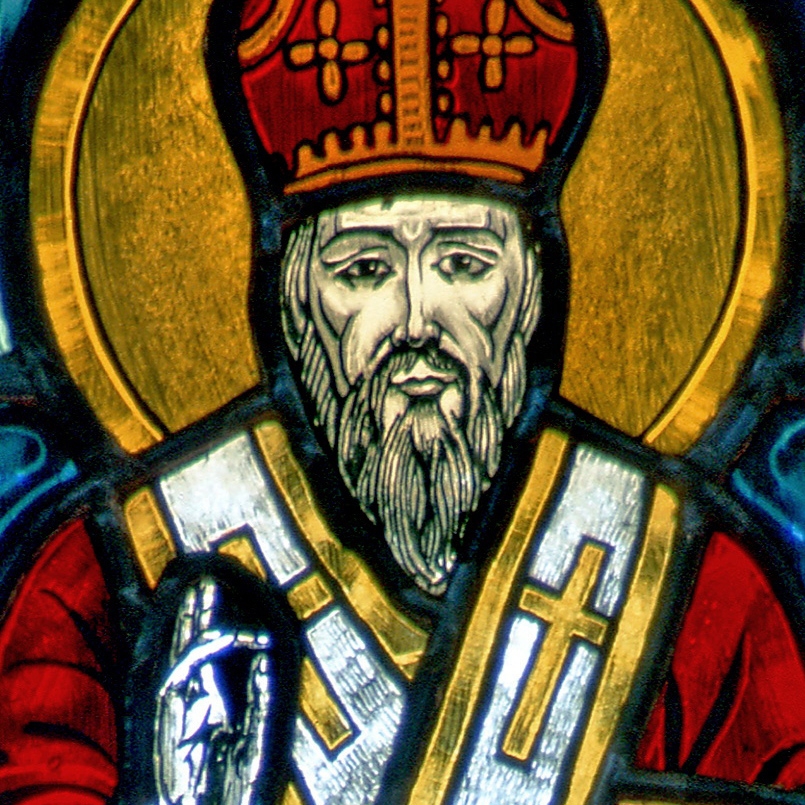
Of course, this is by no means a modern development. In a few days (May 2) the Western church will mark the feast day of Saint Athanasius, a figure long revered by Rome, even though it is all but forgotten that he was Egyptian by birth, as were Clement, Origen, Dionysius and countless other Alexandrian thinkers. (Another of the great ancient centers of Christian learning, Antioch, was also quite far from western Europe, on the modern-day border between Syria and Turkey).
Athanasius’s most famous contribution to doctrinal development is the homoousious clause that we profess in clunky translations each week in the creed as “consubstantial.” This was a direct refutation of Arianism, long considered the most prevalent and pernicious heresy in the early church, which denied the co-equality of the Father and Son, thereby calling into question Christ’s divinity.
But Athanasius also defended the Real Presence with vigor. In his Homily to Neophytes, Athanasius makes clear that “so long as the prayers of supplication and entreaties have not been made, there is only bread and wine. … But after the great prayers and holy supplications have been sent forth, the Word comes down into the bread and wine — and thus is His Body confected.”
A whole-body ecclesiology makes very clear that this transformation takes place on account of the prayers of the entire church, regardless of how many people are in attendance. (A priest is then never really saying Mass “alone,” even if he’s in private, and there’s been quite a lot of talk about this in Rome lately, if you’ve been following the events at the San Pietro side altars in the news). It is clear that in every authentic expression of the Tradition, God does not give Godself to some special and elite caste of people in the church to whisper it down the lane to the rest of us. Cardinal Avery Dulles says, “Some authors speak almost as though sanctity were a kind of substance inherent in the church. The pope and bishops, assisted by priests and deacons, are described somewhat as if they were engineers opening and shutting the valves of grace.”
This mentality is in some ways contributes to what Pope Francis has referred to as the re-emergence of the heresy of Neo-Gnosticism. Theologian Kevin Ahern defines this tendency as follows: “the temptation is to reduce Christian holiness to a set of abstract ideas detached from the flesh. … As ‘Gaudete et Exsultate’ rightfully points out, this is somewhat attractive in that a ‘strict and allegedly pure…[faith] can appear to possess a certain harmony or order that encompasses everything’ (No. 38). Ultimately, however, this approach fails to engage the messiness of real life, the suffering of people at the margins and the fact that God is a mystery that cannot be domesticated or understood easily. ‘God,’ Pope Francis writes, ‘infinitely transcends us; he is full of surprises’ (No. 41).”
The three greatest (and inter-related) surprises that the disciples ever encountered were probably the Eucharist, the Resurrection and the fact that Christ’s Kingdom was not to be of this world (cf. Jn 18:36). All three were unanticipated and shocking; all three were life-altering; and all-three were, importantly, gifts.
While the Eucharist is surely a foretaste of that “Kingdom [to] come” and of Christ’s victory over the grave, we also must recognize that this Heavenly Banquet is simultaneously both a sign of our communion with God and each other, and a counter-sign of our current scandalous state of division, brokenness and confusion about what the Reign of God is and one day will be.
The Real Presence is then for all of us in some ways also a Real Absence. Just as with any other experience of the divine, if we think we comprehend in its entirety the communion we receive and proclaim, whatever that is that we are understanding, it is not God.
Originally from Collingswood, Michael M. Canaris, Ph.D., teaches at Loyola University, Chicago.




 at the bottom and then tap “Add to Home Screen”
