



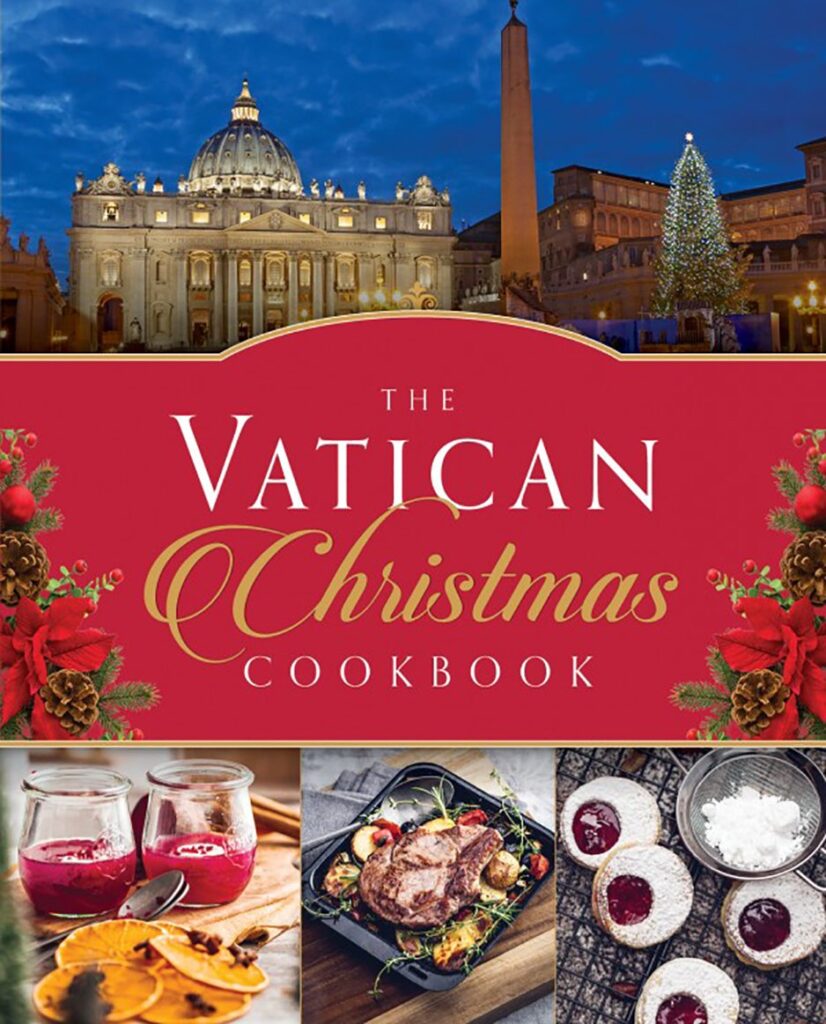
One of my favorite Christmas gifts this year came from my mother: “The Vatican Christmas Cookbook” (Sophia Institute Press, 2020). It is published by the Pontifical Swiss Guard. My wife and I love to cook — particularly the food of Italy, Spain and Argentina, given our time living abroad — and so I have already tried out some of the recipes.
It is beautifully crafted, with stunning photography and notes on papal history that supplement the international cuisine from around the globe for Advent, “Nochebuena” (Dec. 24), and Christmas, along with papal favorites and elaborate desserts, including a section on various Christmas cookies. Closing with “eastern” dishes from the Levant and Near East, like falafel, dal and lamb tagine, was a clever approach to the feast of the Epiphany, as in many places the arrival of the Three Kings from the Orient is much more widely celebrated as a central part of the season than in the United States.
In my home, we get the best of both worlds as our holidays stretch from American Thanksgiving (earlier than most Europeans would start the season) straight through to the Fiesta de Reyes Magos on Jan. 6 (when it has already ended for many Americans after New Year’s Day). We exchange gifts for a second time overnight on that 12th day of Christmas, and leave water and hay for the camels bearing gifts, as my wife has done since childhood. That’s a lot of time to have an excuse to eat turrón and panettone with coffee for breakfast!
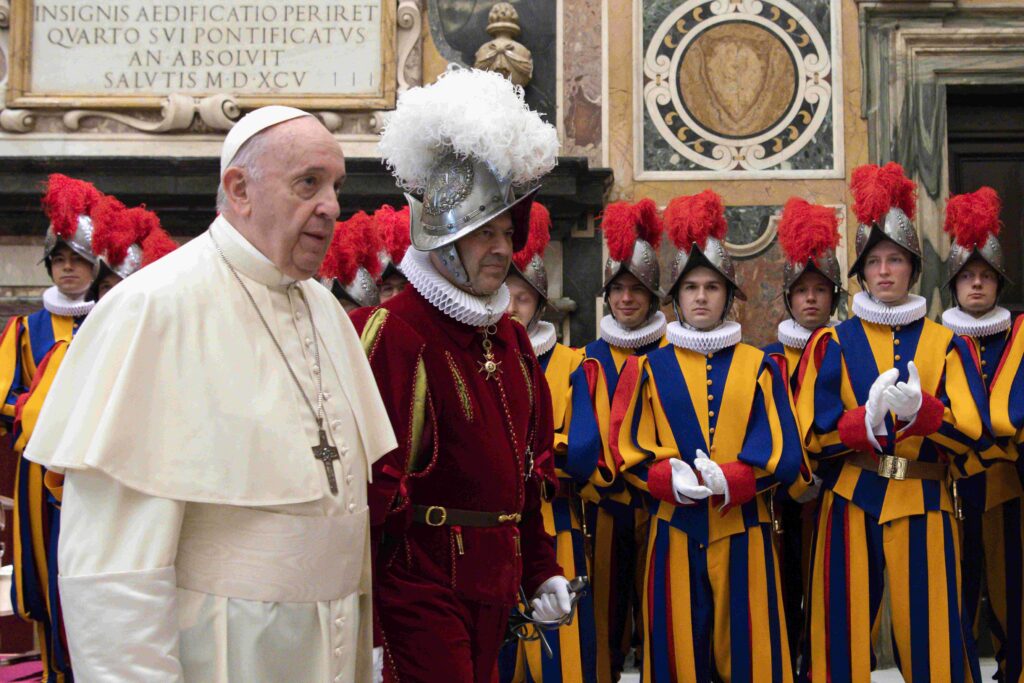
Any visitor to the Vatican will immediately recognize the Swiss Guard (in Italian, Guardia Svizzera) and their colorful uniforms, which were not designed by Michelangelo as the legends say. The red, yellow and blue are combinations of different papal family coats of arms, most notably the Medici and della Rovere, but they were not crafted by the famous sculptor and painter. The ceremonial garb certainly brings to mind medieval art and heraldry, but agents in dark contemporary suits trained in counterterrorism and modern security methods are also working unbeknownst to the crowds to protect the pope beyond the fedoras, halberds and pheasant feathers.
My father is a retired federal agent, and we often joke that had we been Swiss, our careers might have overlapped more than they have, as I likely would have tried to enlist. The guards must still come from Switzerland as they have since 1506 and must be unmarried, male, practicing Catholics under the age of 30 and over 5’8” tall (I would’ve barely made the height requirement). The minimum commitment to service is 26 months, although some make a career out of it. Those serving over five years are now allowed to get married, and most of the children living in the Vatican are those of these soldiers.
The order’s roots lie in Pope Julius II’s request for Swiss professional fighting forces to help defend the Papal States in the regional conflicts of 16th century Europe. He subsequently named them “defenders of the church’s freedom.”
During the sack of Rome by Emperor Charles V of Spain in 1527, a number of the contingent were violently massacred, but in the process enabled Pope Clement VII to escape to safety. The modern guards renew their vows of allegiance to the Holy Father on the anniversary of this event. Their three-fingered salute in this ceremony reportedly symbolizes a commitment to the Trinity. Among their numerous patron saints are Saints Maurizio, Sebastian, Martin of Tours, Nicola of Flüe and Ignatius of Loyola.
While today many of the Swiss Guard spend their time explaining where ticket offices and bathrooms are to confused tourists and patiently posing for innumerable selfies, their historical and continued presence have undoubtedly shaped the formation of what we today recognize as the globe’s smallest independent nation, on the former swampy ground near the ancient necropolis where Peter’s body was laid to rest by the first Christians. Now we can not only snap photographs of those standing guard over these sites of veneration for 50 popes and countless pilgrims, but also share in their holiday traditions and learn to cook some of their favorite festive meals. By Michael M. Canaris
One of my favorite Christmas gifts this year came from my mother: “The Vatican Christmas Cookbook” (Sophia Institute Press, 2020). It is published by the Pontifical Swiss Guard. My wife and I love to cook — particularly the food of Italy, Spain and Argentina, given our time living abroad — and so I have already tried out some of the recipes.
It is beautifully crafted, with stunning photography and notes on papal history that supplement the international cuisine from around the globe for Advent, “Nochebuena” (Dec. 24), and Christmas, along with papal favorites and elaborate desserts, including a section on various Christmas cookies. Closing with “eastern” dishes from the Levant and Near East, like falafel, dal and lamb tagine, was a clever approach to the feast of the Epiphany, as in many places the arrival of the Three Kings from the Orient is much more widely celebrated as a central part of the season than in the United States.
In my home, we get the best of both worlds as our holidays stretch from American Thanksgiving (earlier than most Europeans would start the season) straight through to the Fiesta de Reyes Magos on Jan. 6 (when it has already ended for many Americans after New Year’s Day). We exchange gifts for a second time overnight on that 12th day of Christmas, and leave water and hay for the camels bearing gifts, as my wife has done since childhood. That’s a lot of time to have an excuse to eat turrón and panettone with coffee for breakfast!
Any visitor to the Vatican will immediately recognize the Swiss Guard (in Italian, Guardia Svizzera) and their colorful uniforms, which were not designed by Michelangelo as the legends say. The red, yellow and blue are combinations of different papal family coats of arms, most notably the Medici and della Rovere, but they were not crafted by the famous sculptor and painter. The ceremonial garb certainly brings to mind medieval art and heraldry, but agents in dark contemporary suits trained in counterterrorism and modern security methods are also working unbeknownst to the crowds to protect the pope beyond the fedoras, halberds and pheasant feathers.
My father is a retired federal agent, and we often joke that had we been Swiss, our careers might have overlapped more than they have, as I likely would have tried to enlist. The guards must still come from Switzerland as they have since 1506 and must be unmarried, male, practicing Catholics under the age of 30 and over 5’8” tall (I would’ve barely made the height requirement). The minimum commitment to service is 26 months, although some make a career out of it. Those serving over five years are now allowed to get married, and most of the children living in the Vatican are those of these soldiers.
The order’s roots lie in Pope Julius II’s request for Swiss professional fighting forces to help defend the Papal States in the regional conflicts of 16th century Europe. He subsequently named them “defenders of the church’s freedom.”
During the sack of Rome by Emperor Charles V of Spain in 1527, a number of the contingent were violently massacred, but in the process enabled Pope Clement VII to escape to safety. The modern guards renew their vows of allegiance to the Holy Father on the anniversary of this event. Their three-fingered salute in this ceremony reportedly symbolizes a commitment to the Trinity. Among their numerous patron saints are Saints Maurizio, Sebastian, Martin of Tours, Nicola of Flüe and Ignatius of Loyola.
While today many of the Swiss Guard spend their time explaining where ticket offices and bathrooms are to confused tourists and patiently posing for innumerable selfies, their historical and continued presence have undoubtedly shaped the formation of what we today recognize as the globe’s smallest independent nation, on the former swampy ground near the ancient necropolis where Peter’s body was laid to rest by the first Christians. Now we can not only snap photographs of those standing guard over these sites of veneration for 50 popes and countless pilgrims, but also share in their holiday traditions and learn to cook some of their favorite festive meals.
Originally from Collingswood, Michael M. Canaris, Ph.D., teaches at Loyola University, Chicago.





 at the bottom and then tap “Add to Home Screen”
