





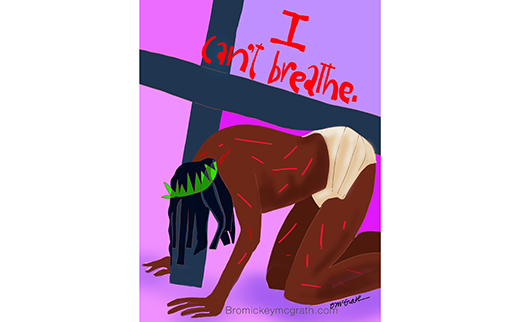
Image used with permission, Brother Mickey McGrath, OSFS
These are particularly difficult circumstances for a white, male theologian to opine about what is happening around us. But a number of priests of various races have told me over the years that while they have heard every conceivable sexual sin in the confessional, to a man they have never encountered someone confessing the sin of racism during the sacrament. We are absolutely in need of a national examination of conscience on this topic, and the bishops have recently said so in their public statements. One way of doing this is to prayerfully reflect on elements of Christ’s Passion:
“As the soldiers led him away, they seized Simon from Cyrene, who was on his way in from the country, and put the cross on him and made him carry it behind Jesus. A large number of people followed him, including women who mourned and wailed for him. Jesus turned and said to them, “Daughters of Jerusalem, do not weep for me; weep for yourselves and for your children.For the time will come when you will say, ‘Blessed are the childless women, the wombs that never bore and the breasts that never nursed!’ Then they will say to the mountains, ‘Fall on us!’ and to the hills, ‘Cover us!’ For if people do these things when the tree is green, what will happen when it is dry?” (LK 23: 26-32).
The etymology of the name Simon, one of the most popular in the ancient world, comes from the Hebrew word for “listening” or “hearing.” We know it from the two Simons among the Twelve, the Zealot and Simon-bar-Jonah, whom Christ would nickname Cephas, in English “Peter.” The Cyrenian, a member of the poorer working classes ‘in the country’ rather than the aristocracy from the centers of economic and political power of his day, was compelled by circumstance and providence to involve himself in the miscarriage of justice that drew him to the scene and fascinated him, albeit maybe preferably from the dispassionate role of an outside observer. But he was obliged by exterior – and we would like to believe interior – forces to do more than watch the travesties occurring around him.
Today, all Americans must interrogate themselves in light of this passage. Where are we called to be Simon? To practice the active listening implied in his name? To shoulder the heavy burden of anti-racism when head-shaking but removed disapproval of the calamities we witness is not enough? To demand that exclusion and oppression be recognized as “life issues”?
The dry kindling of our nation has long been primed for the conflagration we are witnessing from people pushed to existential precipices and peripheries. In many ways, racism is the “original sin” of this country, the matrix into which every other reality is interwoven. As did the women of Jerusalem, we weep with the results.
But let us also be inspired by the chaparros of Mexico and the borderlands, where the plants have adapted over millennia to developed ecological systems to germinate seeds precisely when activated by choking smoke or intense flames, so that they can capitalize on the lack of destructive competition and resultant rich soil to sprout newer, stronger shoots in the landscape that follows the blaze. May we all, together, take the necessary steps to do likewise.
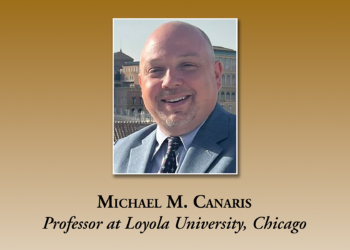
Originally from Collingswood, Michael M. Canaris, Ph.D., teaches at Loyola University, Chicago.



 at the bottom and then tap “Add to Home Screen”
