








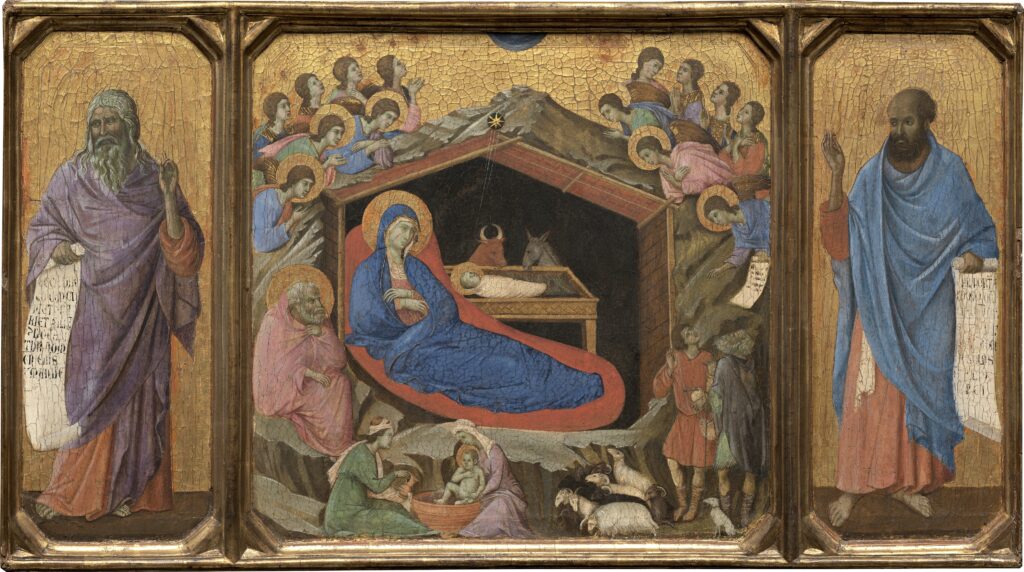
People listening to the Gospel Sunday after Sunday begin to notice an odd habit of Jesus, that he often refers to himself in the third person. He might say that the Son of Man does not know the day or the hour of a coming event, or else, “Judas, do you betray the Son of Man with a kiss?” Why not just say “I” or “me,” the way we usually do? The Old Testament’s Ezekiel may have the answer.
We know that Jesus was literate, able to read and write. Early in his public career he was handed the scroll of Isaiah in the local synagogue. When the woman caught in adultery was brought to him by Pharisees to see if he would join them in condemning her as the Law required, he bent down to write in the sand unrecorded words that apparently caused the guilt mongers to back off, perhaps because he was writing their sins for all to see.
But his literacy is no surprise. As a good, synagogue-attending Jew in Nazareth and Capernaum, he would have learned from the customary Jewish familiarity with the Hebrew Scriptures. Besides, he was called “Rabbi,” which means “teacher,” and how could a teacher not know how to read? He had the reputation of discerning the meaning of the Hebrew texts by which the people lived. We envy the two disciples on Easter Sunday afternoon walking from Jerusalem to Emmaus with him, getting the Old Testament lesson of their lives.
So we can take for granted that he knew those texts well, especially Ezekiel, texts we Catholics wish we knew as well. When (or if!) we read our Bibles, we notice the hundreds of footnotes telling us where a New Testament sentence intentionally refers to an Old Testament one. These references were vitally important to the first-century New Testament authors who were intent on proving that Jesus was the fulfillment of the Hebrew promises. So they argued to his organic connection to the Hebrew covenant since they wanted readers to see him living out such references. We have to remember that their intended readers were not 21st century Catholics but first century Jews and gentiles. We gentiles were admitted later, thanks largely to his contemporary, Saint Paul, and under much protest. Paul never uses the Son of Man self-designation for Jesus.
Our four evangelists together quote Jesus using his Son of Man reference some 85 times, with Matthew, the most Jewish of the Gospels, using it 32 times. But Ezekiel, the third of the three great Old Testament prophets, with Isaiah and Jeremiah, fully 96 times claims that God addressed him as Son of Man. This in itself should steer us to learning that Jesus saw himself as a new Ezekiel. The other prophets together use the term only three times.
Who was Ezekiel? He was a sixth-century B.C. exile in Babylon during the Jews’ ruinous half-century captivity there, compliments of Nebuchadnezzar. The prophet attacked his fellow captives fiercely and angrily, over and over chastising them with the reason why they were hundreds of miles from Israel, in modern-day Iraq. He repeatedly accused them for their idolatry and their abandoning the Law of Moses. He was a kind of shouting preacher, blasting his congregation in florid detail. He reminded them that they got what they deserved.
Jesus was like him? He rather saw himself as a kinder, gentler Ezekiel. Although if you read Matthew’s 23rd chapter, you find why the Pharisees and the other members of the temple establishment were so determined to kill him. He had little patience with their sanctimonious brand of Judaism, using the Law to hurt rather than help Jews, and also for their own selfish gain.
But he had little of the anti-person severity of his Old Testament predecessor. He saw the Law as a gift of God to help people. In teaching, he abrogated the utterly central law about sabbath rest, justifying pulling a son or a pack animal out of a pit on that day, when the higher law of charity preempted it. Some would say we have the same problem in the church today.
Ezekiel’s famous vision in chapter 37 of the dry bones miraculously reassembling shows the prophet’s conviction that God would rescue them from exile. The new Son of Man taught and showed the same outreach to all, especially sinners, using a model well known to his Jewish audience. The sinners and tax collectors understood. That’s why they flocked to him.






 at the bottom and then tap “Add to Home Screen”
