



The final part of Christmas focuses upon epiphany, a Greek-based word which is rich in meaning: appearance, manifestation, perception of the essential nature or meaning of something, an illuminating discovery, or a revealing event or moment (cf. Merriman-Webster Dictionary). In the context of Christmas, Epiphany refers to the manifestation of Christ through the Star and the visit of the Magi, through his baptism in the River Jordan, and, also, through the manifestation of his glory by changing water into wine at the wedding feast of Cana. Yet, everything we do as Catholic Christians can be a manifestation of Christ.
As Father Armando Rodríguez-Montoya wrote in a message in our parish bulletin, “Everything is an epiphany.” All done in love can be an epiphany of the presence of God and a revelation about the true meaning of life.
Between Jan. 2 and the feast of the Baptism of the Lord, most of the first readings of Mass are taken from the first letter of John. To summarize it, God’s nature is love. This love (and mercy) is revealed fully in God sending his only-begotten Son into the world so that we might have abundant and eternal life. The love and mercy manifested in Christ Jesus is manifested in our Christian life when we love one another (cf. 1 Jn 4:7-10).
Providentially, the church celebrates during this season (Jan. 4-6) the feast days of three North American saints. Two were local to us: Saints Elizabeth Ann Seton and John Neumann. One was Canadian: André Bessett. Each manifested God’s love differently.
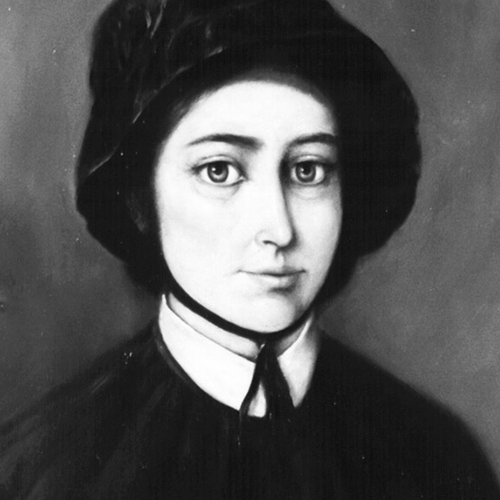
Elizabeth Ann Seton was a wife, mother, and entered the Catholic Church as an adult. She was widowed and then lost two children to death. She eventually became a religious sister and founded a congregation of sisters. Two hundred years ago, on Jan. 4, she died at age 46 gazing upon the Blessed Sacrament. She is the first native-born saint from the United States of America.
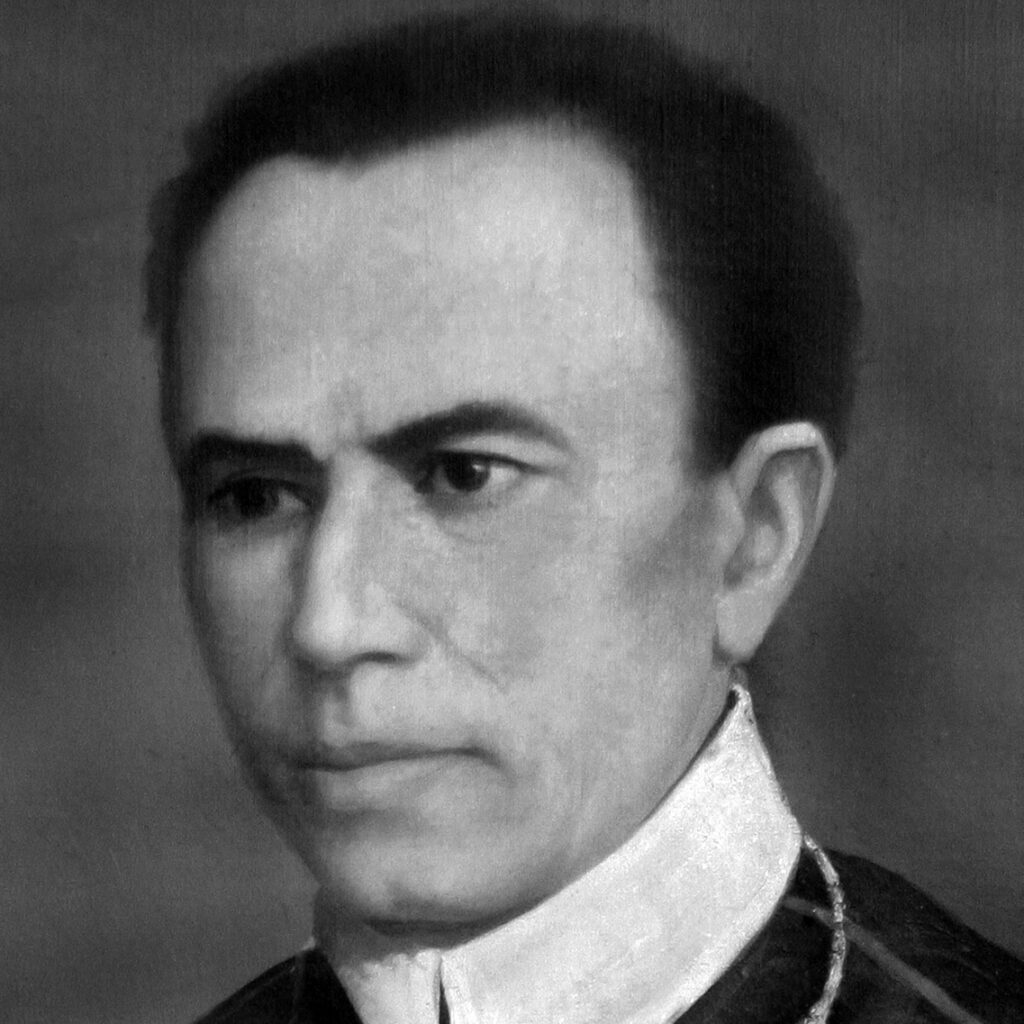
Saint John Neumann was an immigrant who came to the United States to become a priest. He learned many languages and traversed throughout Pennsylvania, Maryland, New York, and other parts preaching the Gospel as a Redemptorist priest. He became bishop of Philadelphia and, exhausted by his Gospel service, died at age 49 on Jan. 5, 1860.
Saint André, born near Montreal, Canada, was orphaned at the age of 12. He was poor, uneducated and of ill health. Eventually he became a religious brother in the Congregation of the Holy Cross and lovingly served as a porter (doorkeeper) at the College of Notre Dame. He was a man of deep prayer and a friend of the poor. Many came to him for healing. He had a great devotion to Saint Joseph and established the shrine of the Oratory of Saint Joseph in Montreal. He passed on Jan. 6, 1938. One million people came to pay him homage after his death.
The love of God poured into us at baptism is the same; yet it is manifested through each of us differently like a stained-glass window that manifests the same light in different colors and images. Like the North American saints, and especially during this pandemic, let us manifest Christ’s presence and love in our own special ways throughout 2021. May our Christian love and light shine upon others who feel the darkness of these times and who need a ray of hope and support in Jesus our Savior and in a brother or sister.
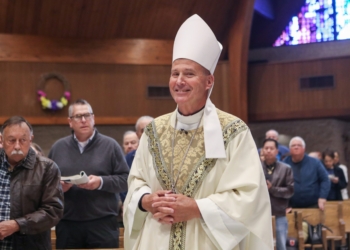
Father Matthew R. Weber is pastor of Holy Cross Parish, Bridgeton.




 at the bottom and then tap “Add to Home Screen”
