



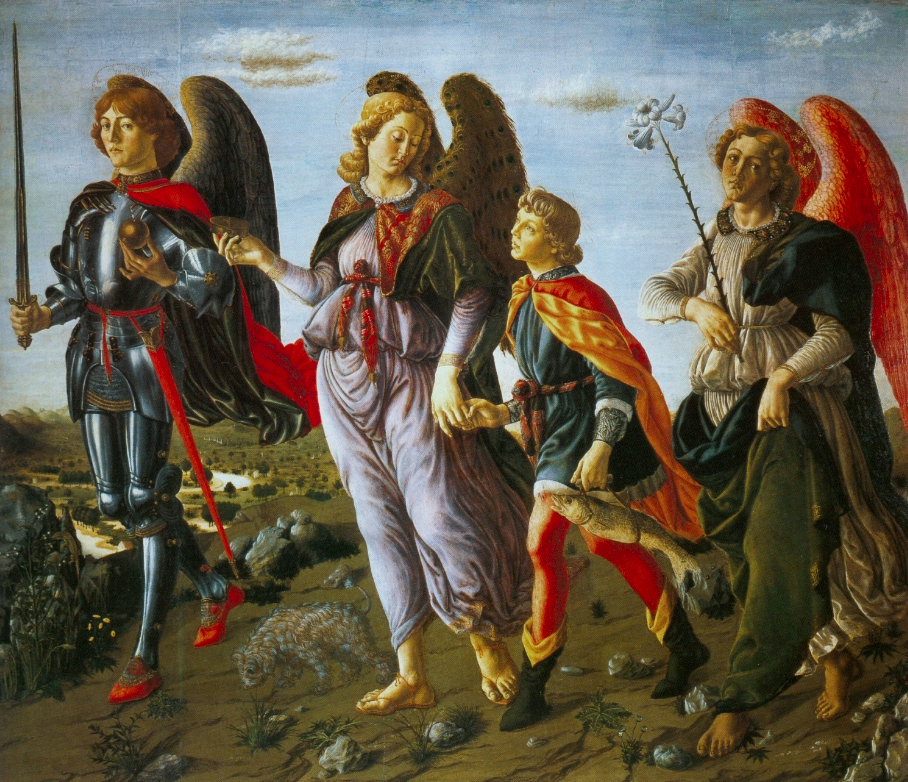
Sept. 29 is the feast of the Archangels Michael, Gabriel and Raphael. The popular notion we have of them, and all angels in general, is based on fantasy rather than Sacred Scripture. What they are not is delicate, androgynous creatures or chubby baby cherubs, as they are often portrayed in works of art.
Angels are spirit beings whose primary function is to serve as mediators between God and human beings. The name itself, “angelos,” is Greek for “messenger.” Since they are spirits, they take on a human or quasi-human form when interacting with humans on God’s behalf. Thus, the Archangel Raphael appeared as a young man when he accompanied Tobiah on a journey. Presumably, the Archangel Gabriel took on a similar likeness at the Annunciation of the Lord to the Blessed Virgin Mary, as well as at the announcement of the birth of John the Baptist to his father, Zechariah.
The depiction of angels in the Book of Ezekiel is quite a different matter. Identified there as cherubim, they appeared in human form, but with four faces and four wings. The faces were those of a man, a lion, an ox and an eagle. The sound of their wings was “like the roaring of mighty waters, like the voice of the Almighty. When they moved, the sound of the tumult was like the din of an army.” (Ezek 1:24)
In the Book of Daniel, the Archangel Gabriel was sent to explain a vision the prophet had received of the end time. Daniel was so overwhelmed by his presence that he said, “When he came near where I was standing, I fell prostrate in terror.” (Dan 8:17)
Angels are awesome, powerful creatures indeed.
We do not know how many angels there are. Scripture simply says they are “innumerable.” (Rev 5:11) The Book of Daniel says there are “myriads upon myriads” (7:10), indicating there may be even billions of them. However, insofar as archangels are concerned, there may be as few as seven. At least, that is what the Archangel Raphael suggested when he revealed his true identity to Tobit and his son, Tobiah. (Tob 12:15)
Taken as a whole, the story of the three Archangels who have been revealed to us in Sacred Scripture reads like a great novel: epic battle, sickness, evil, marriage, new life.
Michael is called “great prince” and “guardian” of God’s people. (Dan 12:1) His name means “who is like God.” He is the commander of the angelic army of heaven that drove Satan and all his fallen angels out of heaven after they had rebelled against God. (Rev 12:7) Michael crushed Satan and defeated him and all the forces of evil once and for all in a final cosmic war.
The name Raphael means “God heals.” So Raphael cured Tobit of his blindness. He also made possible what was considered to be the doomed marriage of Tobit’s son, Tobiah, with Sarah. Before she married Tobiah, Sarah had been married seven times, but the demon Asmodeus killed off all seven of her husbands before the marriage could be consummated. Raphael rid her once and for all of that demonic scourge.
The name Gabriel means “God is my warrior.” He announced the coming of the forerunner of the Messiah, John the Baptist, and the birth of the Messiah himself, Jesus. At the Annunciation of the Lord, he declared the Mother Mary to be resplendent with the presence of God, “full of grace.” (Lk 1:28) He also said the child would be named “Jesus,” which means “God saves.” (Lk 1:31)
The story of the three Archangels revealed to us in Sacred Scripture is rich and varied. But their story does not end when we close the pages of the Bible. It is our story, too. It is written in the drama of our lives where those angelic powers can be of great assistance.
When our health is in danger or our love for others falters, Saint Raphael, pray for us! When we need our heavenly Mother and her Savior-Son to come to our aid, Saint Gabriel, pray for us! When we feel overwhelmed by temptation, caught in the clutches of sin, or we fear that our lives, our nation and our world are overwhelmed by evil, Saint Michael, pray for us!
The Archangels are on our side. Call on them often for help.
Father Edward Kolla is a recently retired priest of the Diocese.



 at the bottom and then tap “Add to Home Screen”
