






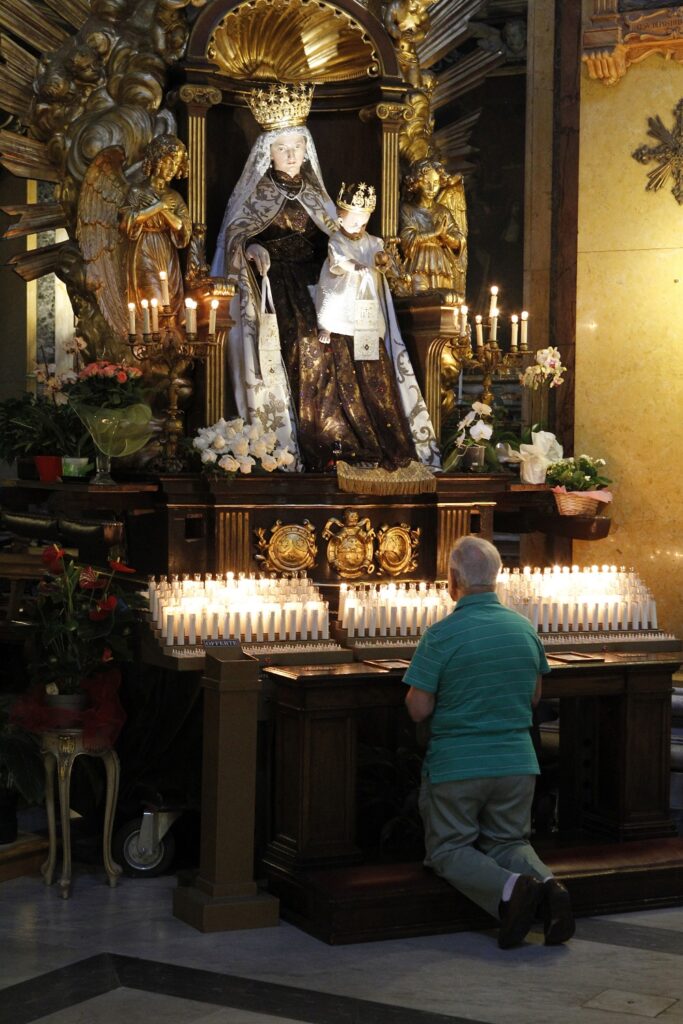
Right over the border from the Vatican on Italian soil along Rome’s Via della Conciliazione sits the Carmelite sanctuary of Santa Maria in Traspontina, the titular church of Quebecois Cardinal Marc Ouellet, undoubtedly one of the most influential Catholic figures in the world. This stunning shrine is the national church for Danish pilgrims to the eternal city. One of its most prominent ornately decorated chapels is dedicated to San Canuto (Knut or Knud in the Scandinavian languages), the patron saint of Denmark.
There are two Saint Knut’s – Saint Knut the Holy and Saint Knut Lavard – who are both still revered in Denmark, Sweden, Norway and Finland. In many of these frigid lands, Saint Knut’s Day on Jan. 13 marks the official end to the Christmas season. In Sweden, it’s called “Twentieth Day Yule” (Tjugondag Jul) or “Twentieth Day Knut” (Tjugondag Knut), which draws to my mind the wider celebrations of Epiphany or Reyes Magos in Spanish-speaking cultures, the vigil of which marks the 12th day of Christmas, from which we get the song, and the end of the holiday season in warmer climates. (In my home, my Spanish wife insists we place our shoes near the door to be filled with gifts, leave out carrots, grass and water for the Magi’s camels instead of cookies and milk for Santa, and eat a traditional cake called a Roscón to celebrate Jan. 6). Nordic Christians take down their Christmas trees and hold parties marking a quasi-official close to the season on Jan. 13, which normally falls close to the liturgical end of Christmastide on the feast of the Baptism of the Lord.
Since a few of these ruling Knuts (there were many of them) were kings not only of Denmark but even of England and the entire North Sea Empire in the Viking period after the Battle of Assandun, there are surprising Anglo-Norse roots to some familiar words for us, like “knot” and even “Lord” – which is etymologically related to Knut Lavard, or “Knut the bread-giver.” And the feast has been facetiously co-opted by those in modern Spain arguing for the legalization of marijuana where canuto is coincidentally the slang term used to describe a rolled marijuana cigarette.
Both canonized Knuts were royalty, which became a common occurrence in the Carolingian and medieval periods. Figures like Stephen of Hungary, Wenceslaus, Louis IX of France, Edward the Confessor, etc. were recognized for their personal holiness or their defense of the Catholic faith in their lands, or both. Many of these canonizations were also strategic on the part of the popes and curia, as they sought to bolster the faith of the populace in lands where Christianity was either newly arrived or under attack.
One of the traditional Scandinavian Knutsfest songs says: “Now Merry Christmas ends, ends, ends. The Christmas tree is thrown out, out, out. But next year once again, our old friend will come back. Because He has promised.” As we begin to pack up the Christmas lights and ornaments for another year – albeit while most of us will not literally throw the trees out the window into the snow or smash the gingerbread houses to smithereens like many Swedes on Saint Knut’s Day – we should reflect prayerfully on what transformation the marking of Christ’s Incarnation in Bethlehem, the “House of Bread,” has had on our lives in these past days.
And as we wait for the Christ-child, the one and only true Bread-Giver, to come once again, we can trust in his promises, because he is always faithful to his Word.
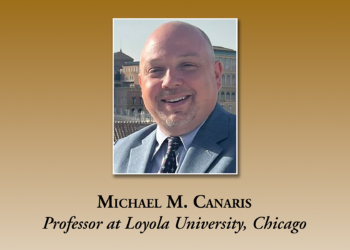
Originally from Collingswood, Michael M. Canaris, Ph.D., teaches at Loyola University, Chicago.



 at the bottom and then tap “Add to Home Screen”
