


Click Here to Subscribe

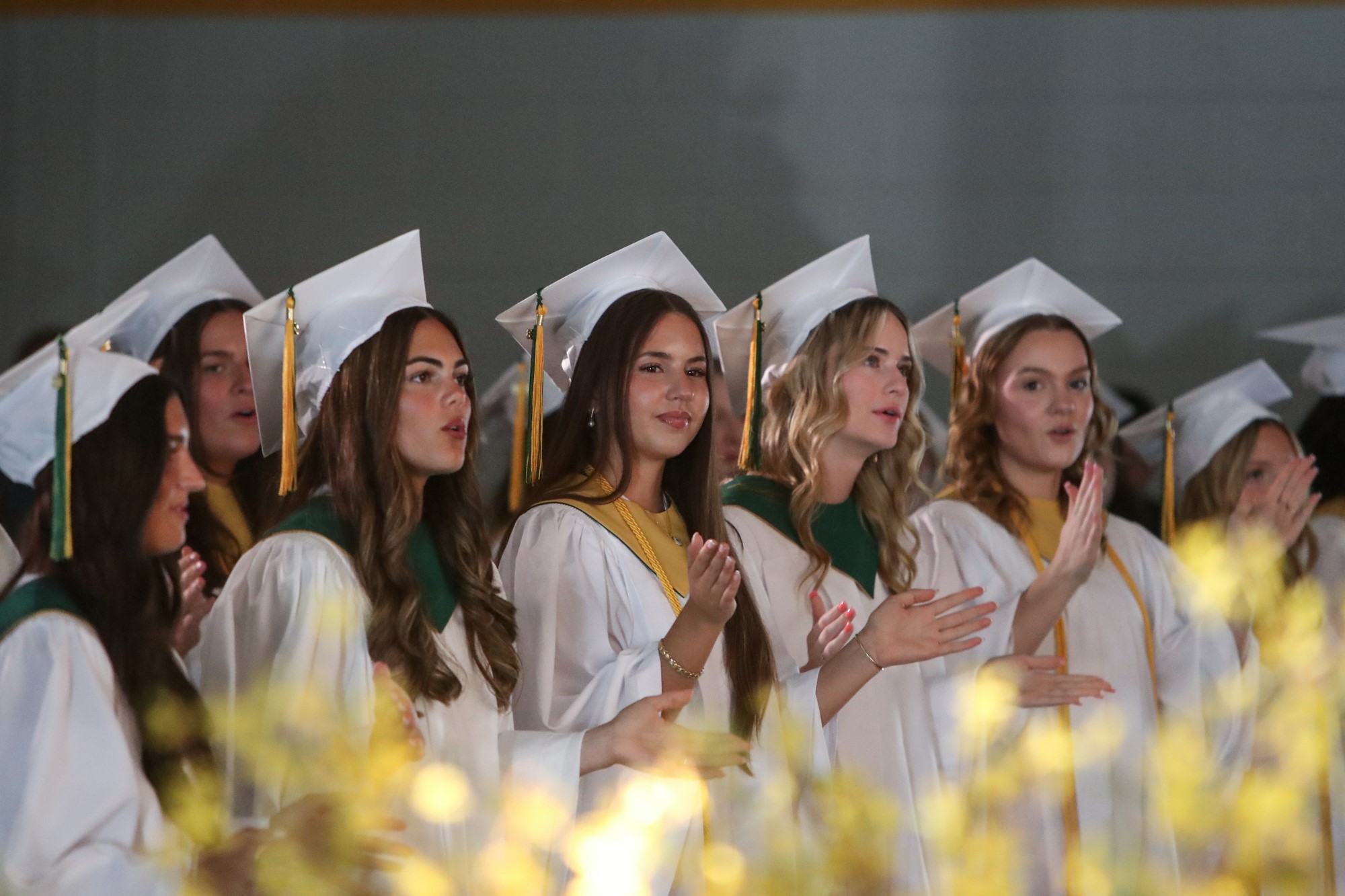
Photo Gallery: OLMA Graduation

Bishop's Schedule

The Bishop’s Schedule, June 2 – 14

by Staff Reports
May 28, 2026
0
ShareTweet

Featured

Remaining human in the age of AI

by Michael Walsh
6 days ago
0
ShareTweet

Tolkien, Beethoven, MLK: The voices that resonate in ‘Magnifica Humanitas’

by admin
1 week ago
0
ShareTweet

Military Services’ bishop shares journey, talks mission to support veterans

by Julia Train
1 week ago
0
ShareTweet
  • Contact
  • Advertise
  • Subscribe
  • Home
Wednesday, June 3, 2026
Catholic Star Herald
  • News
    • From Bishop Williams
    • Parish Life
    • Diocesan News
    • Sports
    • Columns
      • From Bishop Sullivan
    • Obituaries
    • World/Nation
  • Catholic Schools
  • Español
  • Features
    • Special Supplements
      • Thank You Bishop Sullivan
      • Welcome Bishop Williams
      • Jubilarians
    • Entertainment
      • Movie Reviews
    • Photo Galleries
    • Talking Catholic
    • Latest Videos
    • Health and Wellness
  • Advertise
  • More
    • Classified
    • Subscribe
    • Contact Us
  • News
    • From Bishop Williams
    • Parish Life
    • Diocesan News
    • Sports
    • Columns
      • From Bishop Sullivan
    • Obituaries
    • World/Nation
  • Catholic Schools
  • Español
  • Features
    • Special Supplements
      • Thank You Bishop Sullivan
      • Welcome Bishop Williams
      • Jubilarians
    • Entertainment
      • Movie Reviews
    • Photo Galleries
    • Talking Catholic
    • Latest Videos
    • Health and Wellness
  • Advertise
  • More
    • Classified
    • Subscribe
    • Contact Us
No Result
View All Result
Catholic Star Herald
No Result
View All Result
Home The Catholic Difference

The enduring importance of Centesimus Annus

admin by admin
July 14, 2011
in The Catholic Difference
Reading Time: 4 mins read
0
0
VIEWS
Share on FacebookShare on Twitter

Amidst the excitement of John Paul II’s beatification on May 1, the 20th anniversary of the late pope’s most important social encyclical Centesimus Annus, got a bit lost. Blessed John Paul II was not a man given to rubbing it in. Still, it is worth noting that the encyclical, which celebrated the collapse of European communism and probed the social, cultural, economic, and political terrain of the post-communist world, was dated on May Day, the great public holiday of the communist movement. It was a subtle but unmistakable reminder that, in the contest between the Catholic Church and communism, someone had won and someone else had lost.

Twenty years after it was issued, Centesimus Annus remains a hard encyclical to swallow for those whose politics require them to defend the constant growth of the welfare state, and to identify such bureaucratic and budgetary growth with compassion for the poor. The encyclical was also a sign of contradiction to those who had long insisted that Catholic social doctrine proposed some “third way” that was neither communism’s state ownership of the means of production nor the free market of the liberal democracies. By abandoning “Catholic third way” fantasies, Centesimus Annus firmly anchored the Church’s teaching on economic life in the realities of the post-industrial global economy while insisting (as the social doctrine had, all along), that economic decisions, like political decisions, are always subject to careful moral scrutiny.

What else did Centesimus Annus teach that remains urgent and relevant today?

John Paul taught that what the Church proposes is not simply the free society, but the free and virtuous society. It takes a certain kind of people, possessed of certain virtues, to make free politics and free economics work toward genuine human flourishing. Democracy and the market are not machines that can run by themselves, so a vibrant public moral-cultural life is essential to disciplining both the market and democratic politics. In fact, in the Catholic vision of the tripartite free and virtuous society—democratic polity, free economy, vibrant moral-cultural sector—it’s the latter that’s most important over the long haul. The habits of heart and mind of a people are the best defense against their allowing their political and economic liberties to become self-destructive.

John Paul also taught the Church new ways of thinking about the poor and about economic justice. In the emerging global economy, the Pope recognized, the source of wealth was less stuff in the ground than ideas and skills. Thus economic justice meant including a greater and greater number of people in the networks of productivity and exchange by which wealth was created and distributed: rather than problems-to-be-solved (as 20th-century welfare states understood them), the poor should be thought of as people-with-potential. Inclusion, not redistribution, became the paradigm of economic justice; empowerment and getting people off the dole became the measure of how well a social welfare system worked; philanthropy and the independent social welfare agencies it made possible, not just taxes and government, were the means by which the poor were to be empowered.

The encyclical’s analysis of the collapse of communism is also relevant to contemporary debates. Denying God, communism had a false view of the human person, and that was ultimately its undoing: it could not build a humane culture, politics or economics. This truth has implications for a world without communism, too. Culture is the key to making free economies and free politics work well, and at the heart of culture was religious conviction, John Paul insisted. Thus religious freedom had to be defended, not only against the hard totalitarianism of communist systems, but against softer, but nonetheless aggressive, forms of political pressure: pressures summed up in Pope Benedict’s biting (and wholly accurate) phrase, the “dictatorship of relativism.” Governments that impose political correctness through coercive state power—as, say, Canadian human rights tribunals do when they fine pastors for preaching biblical morality—are violating both religious freedom and weakening the moral-cultural foundations of democracy.

Centesimus Annus at 20 is coming into a needed maturity.

George Weigel is Distinguished Senior Fellow of the Ethics and Public Policy Center in Washington, D.C.

Previous Post

Things hidden from the learned and the clever

Next Post

The son who was saved from being sacrificed

Related Posts

The Catholic Difference

Meditations at the All Star break

August 2, 2012
The Catholic Difference

Cristeros, a passionate defense of Catholicism

June 7, 2012
The Catholic Difference

A Public TV Grand Tour of the Catholic world

September 29, 2011
The Catholic Difference

‘A man of wisdom who invites others into wisdom’

August 4, 2011
Facebook Twitter Instagram LinkedIn Youtube RSS

No Result
View All Result

Latest News

CCUSA’s People of Hope Museum

Faith, service, hope on display in Catholic Charities museum

Bishop celebrates Cathedral’s dedication anniversary

Father Nickolas Naticchione

‘Magnifica Humanitas’: Pope Leo’s AI encyclical warns of temptation to build future excluding God

Latest Videos

View Ordination of Nickolas B. Naticchione in Cathedral

The legacy of Pope Francis

Pope Leo’s first Easter message

See livestream of Bishop Williams celebrating annual Chrism Mass

Pope Leo XIV’s first Palm Sunday

Around the Diocese

  • The Diocese of Camden
  • Talking Catholic Podcast
  • Catholic Charities
  • Advertise
  • Catholic Cemeteries
  • VITALity Healthcare Services
  • Housing Services
  • Camden Deacon
  • Camden Priest
  • South Jersey Catholic Schools
  • Man Up South Jersey
  • Catholic Business Network

Additional Resources

  • New Jersey Independent Victim Compensation Fund
  • Quick Guide to Reporting Sexual Abuse
  • List of Credibly Accused Priests and Parish Resources
  • Bishop’s Commission Report on Catholic Schools

Reorganization of the Diocese

  • Chapter 11 Claims filing info
  • Chapter 11 Prime Clerk Filing

© All Rights Reserved | June 03, 2026 | Catholic Star Herald of the Diocese of Camden

En español/Sa Tagalog

Add the Catholic Star Herald to your home screen

For Android users(Chrome) tap the at the top right vertical 3 dots then tap “Add to Home Screen”

For iPhone tap:at the bottom and then tap “Add to Home Screen”

  • This field is for validation purposes and should be left unchanged.

If you need assistance with submitting your subscription, please call Neal Cullen at 856-583-6139, or email Neal.Cullen@camdendiocese.org

No Result
View All Result
  • News
    • From Bishop Williams
    • Parish Life
    • Diocesan News
    • Sports
    • Columns
      • From Bishop Sullivan
    • Obituaries
    • World/Nation
  • Catholic Schools
  • Español
  • Features
    • Special Supplements
      • Thank You Bishop Sullivan
      • Welcome Bishop Williams
      • Jubilarians
    • Entertainment
      • Movie Reviews
    • Photo Galleries
    • Talking Catholic
    • Latest Videos
    • Health and Wellness
  • Advertise
  • More
    • Classified
    • Subscribe
    • Contact Us

© All Rights Reserved | June 03, 2026 | Catholic Star Herald of the Diocese of Camden