





I could write a series of 10 articles on the impact the Lay Centre at Foyer Unitas has had on my life and not scratch the surface of what I would want to say about my second (or third or fourth) home in Rome, which I still visit a few times per year. But this unique community – of teachers and learners, of friends and disciples – living and praying and laughing and sharing good meals and faith journeys together has touched innumerable lives over its 35-year history of serving as one of the quintessential hubs of lay spirituality at the beating heart of the universal Church.
Its founders, Donna Orsuto and Riekie van Velzen, along with one of my best friends, Filipe Domingues, who has recently been named its deputy director, continue the legacy of hospitality and dialogue that serve as the focus of the Lay Centre’s mission to the contemporary world. Filipe is a native of São Paulo, Brazil, but has become a Roman by adoption after years in the city, covering the Vatican as an esteemed and well-connected journalist. As the Lay Centre’s familiar faces – including the chefs, office managers and cleaning staff – have become like family to me, I am always thrilled to return to its stunning location on the Caelian Hill overlooking the Colosseum when I visit Italy.
The history of the Lay Centre connects to two other important ministries in the eternal city: the Ladies of Bethany and the Centro Pro Unione. In a recent meeting with the CPU assistant director, Teresa Francesca Rossi, my former professoressa and now-colleague explained to a group of my current graduate students how these relationships came about.
Today the Centro Pro Unione, a mission of the Franciscan Friars of the Atonement, occupies the former Collegio Innocenziano in one of the aristocratic Doria Pamphilj family properties in Piazza Navona, adjacent to the church of Sant’Agnese in Agone. Their work supports that of the Vatican’s Dicastery for Promoting Christian Unity, fostering exchange and relationships across the various branches of the Church of Christ who profess Jesus as the Lord and Savior of the world. It hosts one of the most extensive libraries in the world on writings about the ecumenical movement, including records of many of the bilateral and multilateral dialogues in which Christians approach one another in a spirit of mutual enrichment.
The Centro’s formal drawing room overlooking the piazza and Bernini’s famed obelisk fountain was the site where many of the non-Catholic Observers to the Second Vatican Council met to discuss what they were witnessing in the daily interactions of the various sessions of meetings from 1962-1965. It was there, at the behest of Cardinals Augustin Bea and Giovanni Battista Montini (the future Pope Saint Paul VI), that the Dutch nuns, called in Italian Le Dame di Betania, or the Ladies of Bethany, welcomed international travelers from other Christian settings to the Foyer Unitas, the “hearth of unity.” It is from this shared heritage that the Lay Centre takes its formal name, and continues these remarkable religious women’s storied tradition of encounter and reconciliation.
The Dutch-American artist Frederick Franck, whose drawings of the council have become iconic over the last half-century, described the contours of his experience there: “The house [of Foyer Unitas] was an ecumenical council in miniature, where the moves in the Aula of St. Peter’s were not only critically discussed, but even anticipated. At breakfast, I could hear the Protestant observers […] sharing their worries and hopes over the developments with the monsignors.”
“My nuns […] astonished me constantly by the freedom they allowed to blow through their house, the criticism they voiced, their total disregard of rigid formulations, their spiritual earnestness, and their optimistic confidence about the renewal they expected from the Council for the Church and even for the world.”
Their commitment has led to what Professor Rossi has called the “laboratorio di unitá,” one of the world’s chief laboratories of unity. This work took place not only within palace walls or grand basilicas but, as she puts it, through “lively conversations during meals, walks, trips outside the city and watching soccer matches together, so that ecumenism could become not only a theological conviction but a mode of being, an experience of life.”
Today that co-traveling continues apace at the Lay Centre and the Centro Pro Unione, and both harvest rich spiritual rewards from seeds planted those decades ago by the Ladies of Bethany under the patronage of Martha and Mary, the sisters of Lazarus, who welcomed a divine stranger into their home and were transformed in the process.
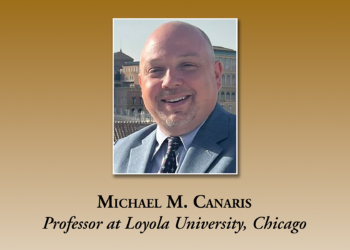
Originally from Collingswood, Michael M. Canaris, Ph.D., teaches at Loyola University, Chicago.



 at the bottom and then tap “Add to Home Screen”
