






Lent is not about sticking the landing on a perfectly executed resolution.
In fact, despite practicing discipline, one can find that the Lenten season often involves flexibility, balance and a few stumbles.
“The goal of Lent is not victory. It’s responsiveness to God,” said author Christine Marie Eberle, who recently visited the Women’s Club of Saint Thomas the Apostle Parish, Brigantine, for a retreat on “Live the Lent you Get.”
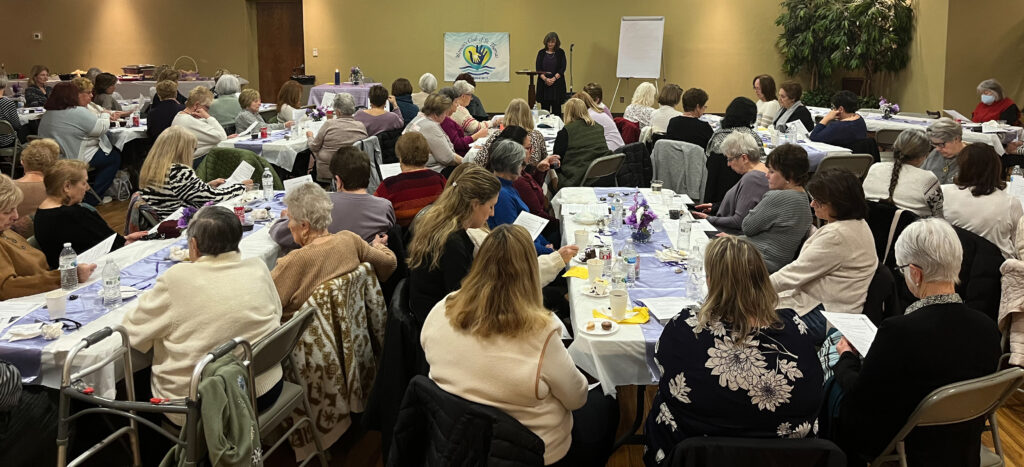
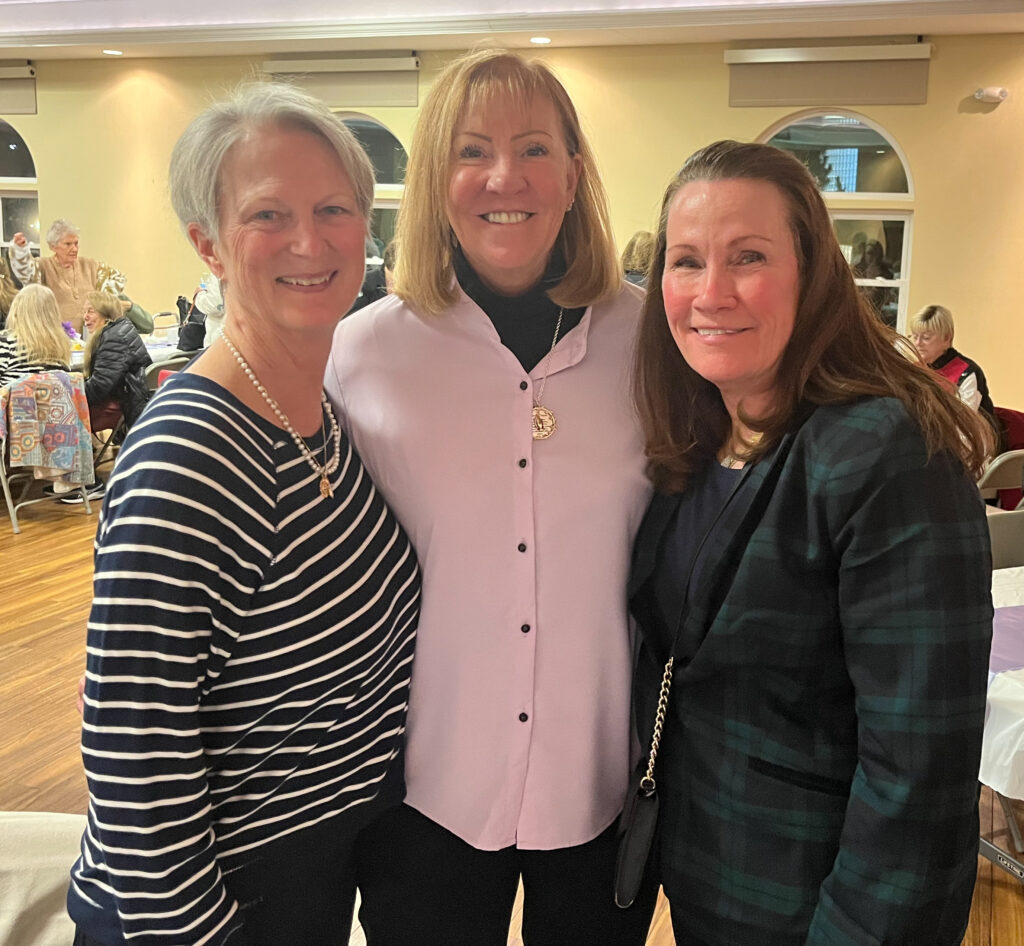
Speaking to more than 100 of the club’s members, who shared faith and friendship over dinner before the retreat, Eberle explained that there is a reason “return to me with your whole heart” is among the Scripture readings of the Lenten season.
“Every year, we have to keep returning and learning something new,” she said. “Growing closer to God disappointingly tends not to happen through victory and success. Returning to God with your whole heart involves some stumbling, some failure and hopefully encountering God in our real life – whatever is going on right now.”
She continued, “The stories of what God did with us at our lowest, in our failures, those become the stories that inspire other people. So if you’ve blown a Lenten promise already, turn back to God, use that reminder that we do nothing without the grace of God, and throw yourself back into his arms.”

To exemplify her point, Eberle, a public speaker and longtime college campus minister who lives in the Archdiocese of Philadelphia, related the story of a student she knew named Sarah. The young adult, who was very active in her college’s Newman Center, was coming into ownership of her Catholic faith, and during a particular Lent, she took on the practices of prayer, fasting and almsgiving with even more zeal.
Sarah pledged to: pray daily and meet online with friends to share those reflections; give up cutting classes and fast from laziness (hitting the snooze button), and take her homebound grandmother to church every Sunday. Said Eberle, “Sarah told herself, ‘This is going to be the best Lent ever.’”
A few days after Ash Wednesday, however, Sarah was in an accident, her truck sliding off the road and ending upside-down after hitting a patch of black ice. Seemingly uninjured, she went home later that night, praising God she had been spared.
The next morning, however, Sarah woke up in agony – feeling every bump and bruise, every sore and strained muscle. She spent the next six weeks in terrible pain and three days a week in physical therapy.
“Her marvelous Lenten resolutions went right out the window,” Eberle explained. “It was so hard to get out of bed in the morning, that Sarah probably cut more classes that Lent than she had before! She totaled her truck, so she couldn’t take her grandmother to Mass, and she wasn’t particularly into the prayer activity because she was out of sorts. ‘This was going to be the best Lent ever,’ Sarah thought. ‘Didn’t God know that?’”
“Now,” Eberle continued, “shift to our own stories. I have a theory, which is that the Lent we get is often harder than the Lent we choose. Think about how we go about making resolutions. We choose things that are challenging because we want to grow, we want to stretch ourselves, but we also choose things that are manageable because nobody wants to flunk Lent. But life has a way of choosing for us things that are challenging and unmanageable – or things that feel unmanageable.”
“Let life become its own Lenten discipline,” she said. “Notice the daily invitations to prayer, to sacrifice, to generosity. Letting life become its own Lenten discipline becomes living the Lent we get. We are going to live this Lent, not some ideal Lent, whatever it holds.”
Returning to Sarah’s story, Eberle explained how the college student grew spiritually during the Lenten season – just in ways she hadn’t expected. She grew in humility, since she had to ask for help; in patience for herself during her slow course of healing and others as they gingerly walked her to classes; in gratitude for her life, family and friends, and in compassion for those who had never had the energy and flexibility that she had always enjoyed.
Sarah began to abandon her illusion of control, and by the end of Lent, realized that whatever the day was going to hold, her invitation was to trust God through it all.
“I just went to Sarah’s 40th birthday party, and I’m still telling this story,” Eberle said. “If Sarah had perfectly executed her three-point Lenten plan, would anybody, including Sarah, remember what she had done for Lent that year?”
The takeaway, Eberle said, is to recognize where might God be calling you to prayer, sacrifice and generosity.
“Choose your sacrifices. But draw close to God in the sacrifices life chooses for you,” she said. “Select your charities, but be on the lookout for God’s invitation to be generous – with your time, your attention or your money. Pray not only as you plan but as a whole-hearted response to those things for which you did not plan – and be alert to the possibility that the clamor drawing you away from your prayer is actually God present in the most unlikely of places.”
Questions for Reflection
Deepen your Lenten journey and take some time to ponder or journal on these questions concerning prayer, sacrifice and generosity.
• Where and how is God inviting you to pause this Lent?
• What sacrifices does life seem to be choosing for you right now?
• Do these “unchosen sacrifices” call you to deeper solidarity with anyone?
• Where can you feel the tug of generosity in your heart these days?
• Who needs your time, attention, money, expertise, etc.?
Source: christine-marie-eberle.com






 at the bottom and then tap “Add to Home Screen”
