



Our Jewish friends just completed what is known as the High Holy Days, the 10 days of repentance between their feasts of Rosh Hashanah and Yom Kippur. These holidays begin with the celebration of Rosh Hashanah, a two-day celebration that begins on the first day of Tishrei in the Jewish calendar. It marks the beginning of the Jewish New Year. Jews believe that it is the anniversary of the creation of Adam and Eve.
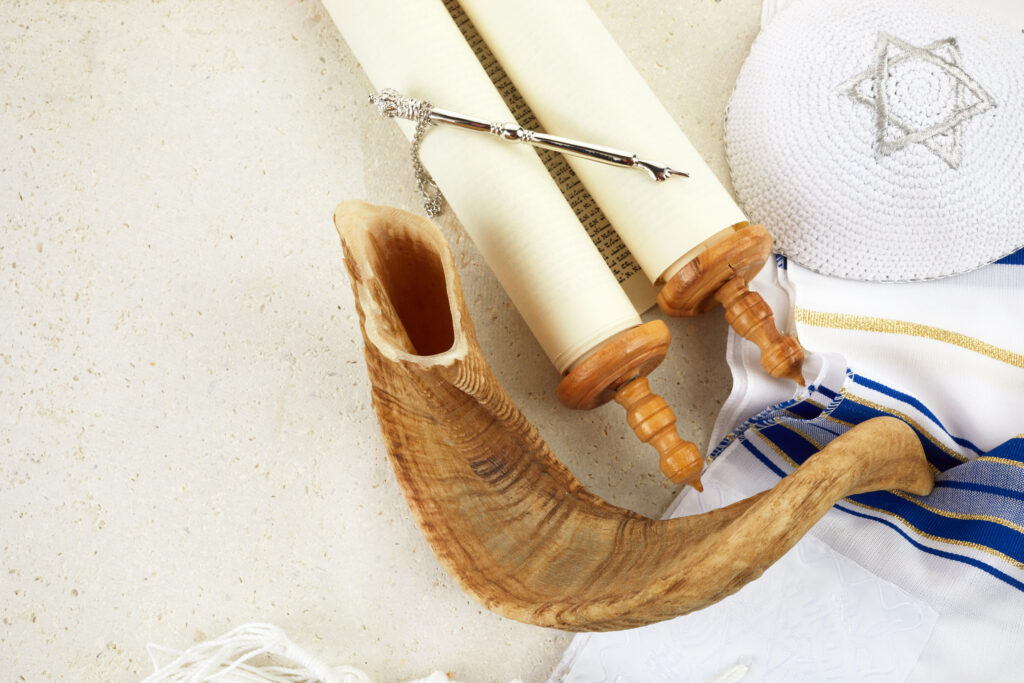
Rosh Hashanah begins with the sounding of the shofar, which is a hollowed-out ram’s horn, as prescribed by Torah. The shofar is blown at various points during the prayers, and most Jewish communities sound the shofar 100 times a day during the High Holy Days. The shofar blast has several different meanings for Jews. For some, it is a symbolic “wake up call,” calling upon Jews to turn toward God, mend their ways and repent. The Mishneh Torah instructs that when sounding the shofar, say, “Sleepers, wake up from your slumber! Examine your ways and repent and remember your Creator!” A special and beautiful prayer known as “Avinu Malkeinu” is sung, as is described by the late Rabbi Hertz as “the oldest and most moving of all the litanies of the Jewish Year.”
Generally, Jews believe that God sits upon his throne in heaven while books containing the deeds of all humanity are opened for review and each person passes in front of him for judgement. The Mishnah, a collection of Jewish oral traditions, refers to Rosh Hashanah as the “day of judgement.” It states that three books of account are opened in heaven, where the fate of the wicked, the righteous and those somewhere in the middle are recorded. The names of the righteous are immediately inscribed in the Book of Life and are sealed “to live.” Those somewhere between wicked and righteous are given 10 days to reflect, repent and become righteous. The wicked are “blotted out of the book of the living forever.”
Yom Kippur is the last of the 10 days of repentance, and it is the holiest day in Judaism. It is centered on atonement and repentance; two of the main observances are a full day of fasting and ascetical acts, and a long day of prayer in synagogue or temple. As Rosh Hashanah marks the inscribing of names in the books in heaven, Yom Kippur marks the day God “seals” the verdict.
The interplay of Rosh Hashanah and Yom Kippur is captured beautifully in the poem “Unetanneh Tokef,” recited on both days: “A great shofar will be blown, and a small still voice will be heard. The angels will make haste, and be seized with fear and trembling, and will say: ‘Behold, the day of judgement! … On Rosh Hashanah it is written, and on the Yom Kippur fast it is sealed, how many will pass and how many will be created, who will live and who will die, who in his time and who not in his time. … But repentance, prayer and charity remove the evil of the decree. … For You do not desire a person’s death, but rather that he repent and live. Until the day of his death You wait for him; if he repents, You accept him immediately.”
The Talmud, primary source of Jewish law, says, “Yom Kippur atones for sins done against God, but does not atone for sins done against other human beings until the other person has been appeased.” This is why it is so important for Jews to try to repair the harm that they may have done to their neighbor. In the prayers recited on Yom Kippur, we hear it is “a day of creating love and brotherhood, a day of abandoning jealousy and strife.” Jews generally believe that if they do not remove hatred from their hearts and mend broken relationships on Yom Kippur, their prayers are not heard.
We can certainly see, as Christians, the rich treasure trove of spirituality from which we sprung. Jesus, Mary, Joseph, the Apostles and early Church would have immersed themselves in the spiritual nature of the High Holy Days. It stands as a reminder to Christians that we are all called to repentance – and to mending fences with those we may have hurt – so that our names, too, will be inscribed into the Book of Life!
Father Joseph D. Wallace is diocesan director of Ecumenical and Inter-religious Affairs and pastor of Christ the Redeemer Parish, Atco.




 at the bottom and then tap “Add to Home Screen”
