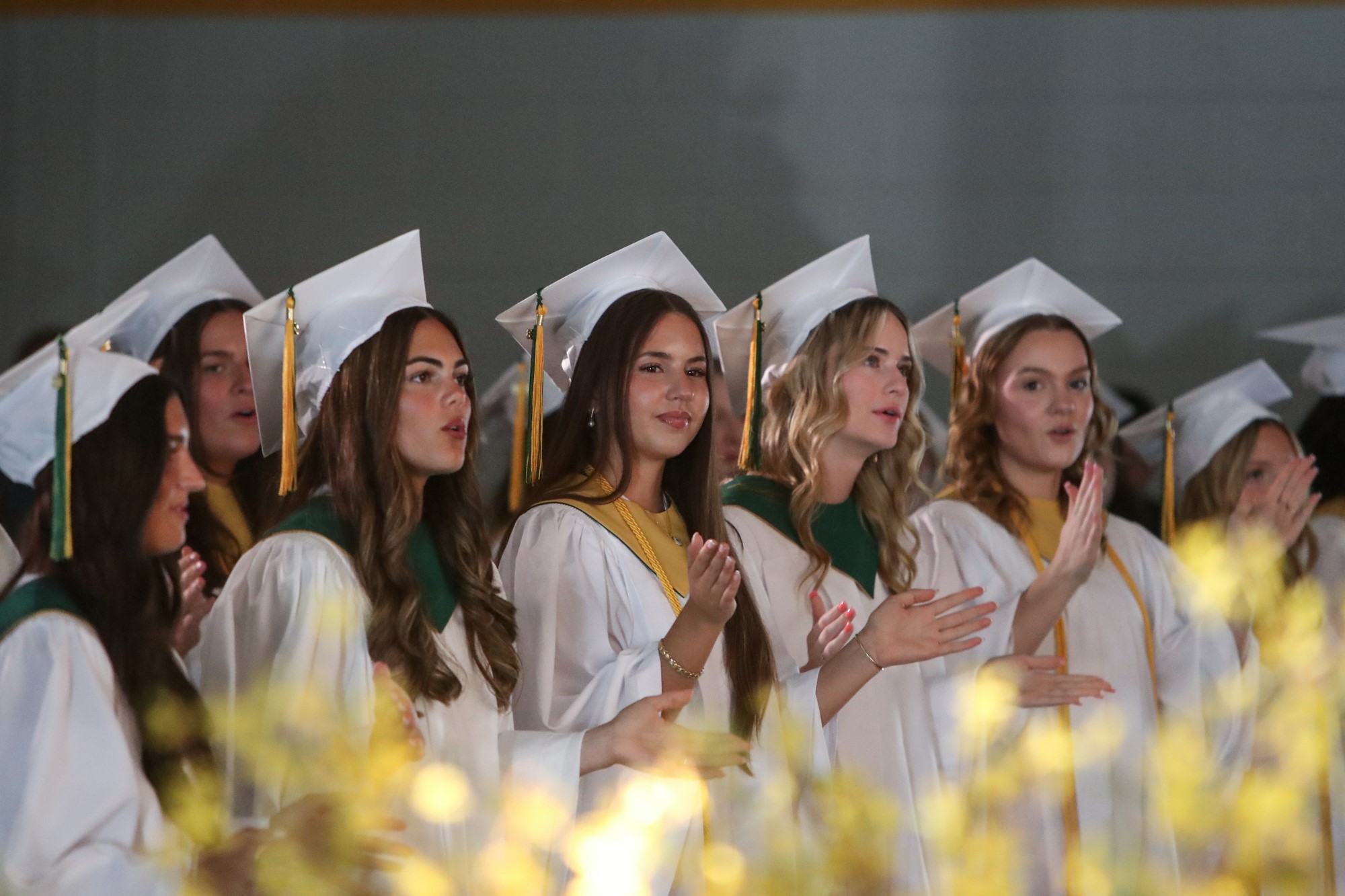






The words “Catholic school” conjure a range of images. Many involve Mass, competitive athletics and students studying for challenging exams. Others include religious sisters. Most involve uniforms!
For those who have attended Catholic schools, close – often lifelong – friends and at least one inspirational teacher will populate their reflections. Catholic school graduates often recall and appreciate the sense of order, safety and peace they felt and the ways that the trademark Catholic school discipline helped them as adults.
Today’s parents choose Catholic schools for many of the same reasons that parents have for generations. In a survey of parents of South Jersey Catholic Schools elementary students, approximately 50% chose the Catholic faith and religion or traditional values and morals as their No. 1 reason for selecting a Catholic school. The quality of the academic programs was the next most popular No. 1 choice, followed closely by discipline, structure and behavior expectations.
In some ways, there is a “the more things change, the more they stay the same” quality to these results: Catholic schools today are chosen and known for the excellence that they have always worked hard to sustain. A century ago, one driving force for the establishment of many Catholic schools in the United States was religious discrimination. Bishops, pastors and parents took seriously their responsibility to provide schools where children could learn the truths of the Catholic faith, as opposed to Protestant principles that dominated schooling at the time. Fast-forward 100 years, and bishops, pastors and parents feel the urgency to provide an education that combats the prevailing secularism of our society.
The stability and consistency of Catholic schools does not mean that our schools have been static for a century. Far from it! From Smartboards and virtual maps to tech labs and robotics, classroom design and instruction have grown in new and exciting ways. Catholic schools also have improved in recognizing the diversity of gifts and talents that each child brings to the classroom. Teachers employ a range of strategies to help each child navigate successfully the rigors of a challenging curriculum. These approaches have incorporated more student interaction, which has led to seating configurations and classroom designs that meet the needs of today’s students and teachers.
In addition, South Jersey Catholic Schools embrace today’s growing demographic diversity. School communities continue to reflect their surrounding neighborhoods, but as those communities evolve, so have our schools. Latino enrollment, for example, has grown by 96% in elementary schools and 61% in high schools in the last decade.
Today’s students live in a world of societal priorities and pressures that didn’t exist a generation ago. They can access at the touch of a screen what took their parents a trip to the library, a microfilm machine and a couple of hours to find. They are exposed to ideas, conflicts and realities at younger and younger ages that they are often not yet mature enough to process. Sometimes they “act out” their confusion behaviorally in the classroom.
Today’s Catholic school leaders and teachers have had to adapt their approaches to discipline to respond to student contexts that can be very complex. The core of our approach remains discipleship, specifically the formation of disciples of Jesus Christ. This requires a commitment to mercy as well as justice, to defining clear boundaries as well as walking with students as they learn to stay within them. Each Catholic school accompanies students in its own way, which both reflects and contributes to the unique characteristics and community that distinguish one Catholic school from the next.
In the aforementioned survey of Catholic school parents, 97% were satisfied that their school had met their expectations in areas of Catholic faith, religion and traditional values, 89% in academics and 85% in discipline. Comparable statistics for other kinds of schools nationwide are 62% for “character or values,” 74% for academic expectations, and 61% for discipline.
Yes, Catholic schools continue to excel, but we also recognize there is room to grow. For example, some parents might not be satisfied with their child’s school because they expect a different kind of academic program or a different approach to discipline. Some friction is inevitable, and when it arises, we rely on two of the defining characteristics that continue to form the backbone of Catholic schools: We profess a shared faith, and because of that, we work with parents as partners. Taking this approach has allowed Catholic schools and parents together to provide students with a strong foundation in faith, academics and discipline that serves them well in school and in life.
During Catholic Schools Week, each school will celebrate both the shared mission of all Catholic schools and its own, local response to ministering to the students and families in its community.
No matter the evolution of Catholic schools over the centuries, their success – and most importantly, the success of the students who attend them – is something worth celebrating. Together, let’s continue to ensure the tradition of excellence for which Catholic schools are known.
Dr. Bill Watson is superintendent of South Jersey Catholic Schools for the Diocese of Camden.




 at the bottom and then tap “Add to Home Screen”
