






As people around the world participate in May crowning ceremonies that honor the Virgin Mary, it seems a good season to return in an intentional way to ponder the Church’s veneration of this month.
Pope Paul VI wrote a brief but powerful testimony to this longstanding tradition in his encyclical titled “Mense Maio,” translated into English as “The Month of May.” The title, like most Vatican texts, is taken from the opening words of the document.
In the letter, the pope points out that May itself is both “a powerful incentive to more frequent and fervent prayers,” and also the specific time of year when “our petitions more readily find access to [Mary’s] compassionate heart.” He claims that above all in this sacred time we must pray for the conversion of the world to an attitude more enlightened by evangelical witness.
Though speaking in 1965, he could be describing our day when he says the Church and papacy “cannot help but raise Our voice to defend the dignity of man [sic, passim] and Christian civilization; to condemn secret and treacherous warfare, terrorist activities, the taking of hostages, and savage reprisals against unarmed people.” He claims this “deep concern over this state of affairs is not dictated by any narrow self-interest. Our sole desire is to protect those who are afflicted with misfortune and to promote the true welfare of all peoples. And We nurture the hope that awareness of the responsibilities they bear before God and men will be enough to make heads of government continue their generous efforts to preserve peace; to make every effort to forestall, so far as they can, the obstacles posed to safe, sincere agreement by the course of events or human attitudes.”
Christian celebrations culminate on the 31st of the month with the feast of the Visitation of the Blessed Virgin Mary. In the readings for that celebration, we hear through the interpretive lens of the Gospel of Luke the beautiful, stirring and challenging response of Mary to her cousin Elizabeth, and derivatively to all of us. She describes the Almighty, who has done great things for her, as engaged in every generation in the following remarkable tasks:
• Showing undeniable and demonstrable strength, laying low the proud mired in their self-importance.
• Lifting up the lowly – so by implication the impoverished, migrant, excluded and destitute – placing them in the previously held seats of the wealthy, powerful and comfortable.
• Giving food and gifts to the famished and deprived, and sending away the well-off with nothing to carry with them, their clutching hands too busy and too full of passing things to receive anything of value.
She bookends this rather revolutionary vision with remembrances of God’s most enduring and characteristic quality: namely unending, constant, extravagant mercy on those who don’t “deserve” or earn it, whether among her Jewish relations or the whole world.
Returning to “Mense Maio,” echoes of these shocking truths appear, when the pope argues that not all prayers are, in fact, created equal. He claims “the prayers of children and those suffering affliction” are in fact preferential, for “their pleas have a special power to penetrate Heaven and soften God’s justice.”
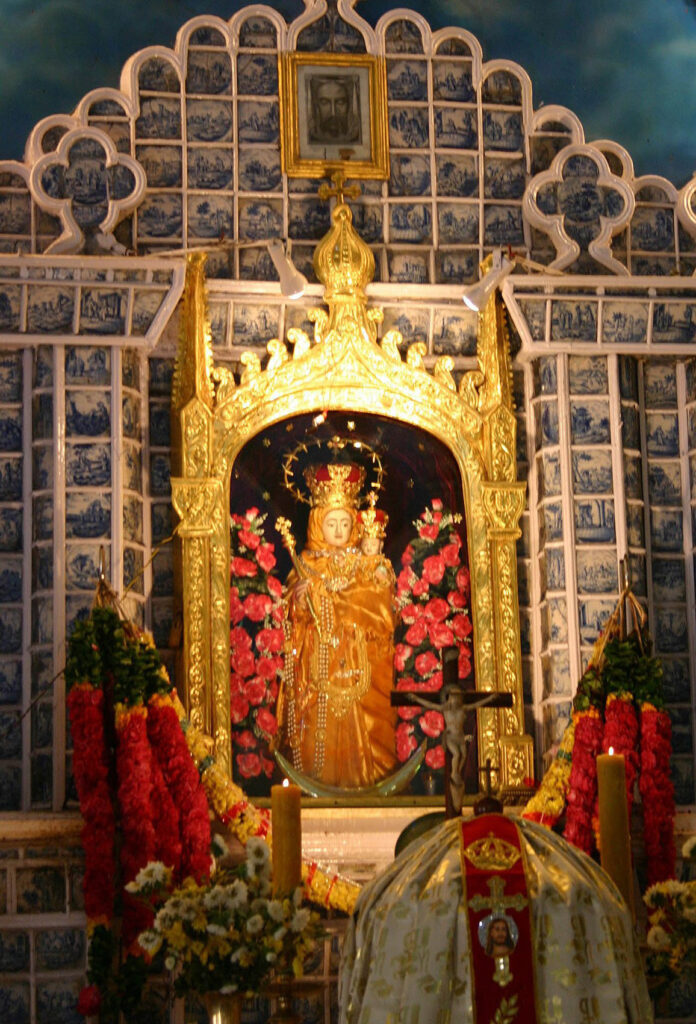
Pope John XXIII once referred to Our Lady of Vailankanni, in India, as “the Lourdes of the East.” There, the locals attest to Mary’s commitment to the infirmed, recognizing the “Good Health,” that she in fact bestows on those most in need of her intervention, and that the sickest in the community are those with the most direct access to her.
As we pray for our loved ones and ourselves in this special time of year, let us recognize that the more we accompany and stand in solidarity with the weakest and neediest among us, and the greater we grow in our childlike devotion to the God who loves us more than any flawed human parent ever could, the more we improve our chances of being heard and answered by the Queen of May.
An alumnus of Camden Catholic High School, Cherry Hill, Michael M. Canaris, Ph.D., teaches at Loyola University, Chicago.




 at the bottom and then tap “Add to Home Screen”
