





Pope Francis recently completed the longest and most grueling trip of his papacy to Southeast Asia and Oceania. After nearly two weeks abroad in Indonesia, Papua New Guinea, East Timor, and Singapore, the nearly 88-year-old pontiff has safely returned to Rome (at least for a few days before he leaves for Belgium and Luxembourg on Sept. 26). Reflecting on his demanding missionary travels on the in-flight press conference traveling home, he mused “I fell in love with East Timor.”
The statement led me to ponder why the most Catholic country in the world outside of Vatican City, with 98% of the population identifying as members of the Church, had an astonishing half of the national population of the country’s 1.2 million people attend his Papal Mass in the capital city of Dili.
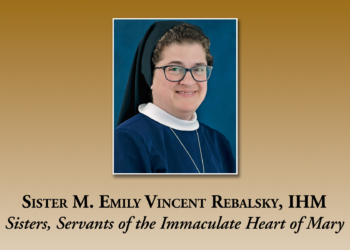
Seeking to learn more, I reached out to Sister Julia Shideler, a Maryknoll Sister of Saint Dominic, who is now completing a graduate degree in Chicago after serving as a missionary to the island that is divided between East Timor and Indonesia, off the northern coast of Australia. Our conversation below has been edited for length and clarity.
Question: How did you first come to minister in East Timor?
Answer: The testimony of a sister who lived through the Referendum of 1999 and civil unrest inspired me to request East Timor as my first mission. The people’s journey of suffering and determination through centuries of colonialism and occupation drew my compassion and respect. I felt called to learn from and to support the people’s aspirations as a new country with a youthful majority. I was attracted to the sheer needs of the nation to develop its educational, health, and economic sectors, along with its basic infrastructure. I felt drawn to accompany the youth. My superiors discerned that I would be a good match for the local community, church and needs of the people. I arrived in January of 2008, at 29 years old, with an academic background in Romance languages and philosophy.
Q: What struck you most about the people there?
A: Initially, I was struck by the people’s joyful countenance, ready smile, and lack of bitterness toward the Indonesians and Portuguese for their regimes. One of the first words I learned were “terus” and “susar,” which mean “suffering” and “hardship.” I was struck how people could describe their suffering, past and present, while smiling and shrugging their shoulders, concluding their stories with attitudes of acceptance, resilience, and a desire to move forward. From children to the elderly, their ability to patiently accept things as they are, was very inspiring. They seemed to transform vulnerability and relative powerlessness into a will to move forward and not be defeated. I heard this from women who’d been raped and seen their sons and spouses murdered, from children who lamented not being sent to school, suffering from illness and poverty, and from youth who had no jobs or means of pursuing further studies. I was amazed, inspired, humbled, and challenged. Part of me wanted to help them uncover their repressed anger and despair, which seemed to vibrate under the surface. I also wanted to encourage their initiatives to forge a better future.
I was also struck how few people could read and write, and how well people listened and retained what they’d heard.
Q: How important was inter-religious and inter-generational dialogue in your service and relationships there?
A: I had a few Protestant students in my classes, but living in a remote area, there were no Muslims or Buddhists around (as in the capital city). Most of the non-Christians I encountered were traditional animists, who kept alive the faith and customs of the Mambai tribe. The Mambai cosmology and way of life was very strong in our district and had a deeper hold on the Catholic people’s beliefs than our church doctrine. In every village where I celebrated the Liturgy of the Word, I saw the sacred houses of each clan. Elders and shamans, who were bearers of their tradition, exercised their role as arbiters of justice and mediators between the people, the spirit-world, and the clan’s ancestors. To be a shaman, one couldn’t receive baptism, so I encountered shamans and their family members in my visits to villages that engaged me in dialogue. As I listened, often accompanied by silent youth, I learned from the older generation who had never been to school. I knew that my students were being exposed to very different concepts, norms, and explanations for things, and this gap was very wide.
Mostly, I learned about the Mambai faith tradition through Catholics who tried to strike the right balance in embracing both. … I had to learn about the cultural faith of the people in order to understand their complex family relationships, their sense of cause and effect, explanations for events, and viable solutions to social and personal problems.
Q: What was most striking about your time there compared to the West?
A: The most striking experiences were related to the differences in culture and development of society. In 2008, for instance, there were few cell towers. Most people didn’t have land lines or cell phones, and the only internet available was a few “internet cafes” in the capital that catered to expats. I was amazed by the extremely high value placed on interpersonal encounters, talking face-to-face, being hospitable and receiving other’s hospitality, and waiting for people to show up before starting any event. … The honor and shame of people took on new levels of importance, and I became conscious of the social need to preserve the dignity of every person I met or talked about, which was done in unique ways in East Timor. I had to learn a whole new way of communicating to be honest without offending people.
I had also never lived in an agricultural society with real villages nearby that ran without electricity, plumbing, and sewage systems. I learned how people literally lived off the land and built homes, fed their families, and build common spaces only with products of the land.
Q: What do you think is the potential impact of this papal visit?
A: The value of listening, and the role of hearing as a way of learning. Because Pope Francis went there, received their hospitality, listened to them, and enjoyed their animations, they will listen to him in return. His spoken words will resound deeply, like a father’s parting words to his children, or a grandmother’s encouraging words. They will listen because they’ve been visited, seen, heard, esteemed as a people, and deeply affirmed. … These gestures are most powerful in East Timor. …
The average Timorese person will say readily, “Ami ki’ik, ki’ak, no terus-nain,” meaning “we are a small, poor, and suffering people.” And yet, they feel precious in the eyes of God and believe that Christ loves them, redeems them, and will raise them to eternal life. This is why Pope Francis’ words were brilliantly spoken: “You are at the periphery of the world, but at the center of the Gospel.” This resonates deeply with their dual belief in being among the poorest of the poor and yet precious in the sight of Jesus. Pope Francis’ embodied presence, having traveled from the richest and most prestigious continent to be with them, proves what they believe. That truth will energize them for decades.
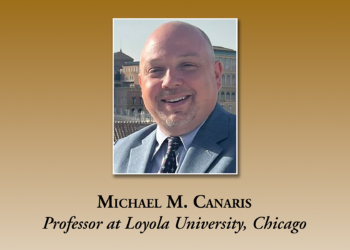
An alumnus of Camden Catholic High School, Cherry Hill, Michael M. Canaris, Ph.D., teaches at Loyola University, Chicago.



 at the bottom and then tap “Add to Home Screen”
