









As we cross the halfway point in our Lenten journey, the Church calls us to ponder Jesus’ parable typically referred to as the Prodigal Son in the liturgical readings for the Fourth Sunday of Lent.
While a stunning work of ancient writing – one that inspired nearly all of Fyodor Dostoevsky’s literature after he encountered the parable in the apocalyptic prison camps of Siberia – Christians all too frequently have a tendency to sanitize the unsettling message of the passage.
First and most importantly, the New Testament authors didn’t name the piece with a particular subtitle as we often use today, instructing us to focus on the repentance of the young man as the central point of Jesus’ story. Scripture scholars reiterate that the parable is really less about the younger son, and more about an intentional metaphorical focus on the father, who Jesus uses as an image of God: “merciful and gracious, slow to anger, and plenteous in mercy,” as the King James Version of Psalm 103 puts it.
The father, as theologian Ed Hahnenberg has expressed, is really the prodigal one here: “wastefully extravagant” in his forgiveness. Scripture makes clear that when the father first sees his son on the horizon – “a long way off” – he rushes out to embrace the one who has been gone and adrift, even before there has been any verbal confession or admission of wrongdoing. The father here is then perhaps the quintessential embodiment of Pope Francis’ Church “en salida,” which I often translate as “outward-rushing.”
Read carefully the text after the returning son’s practiced pleading for reconciliation: “‘Father I have sinned against heaven and against you. I no longer deserve to be called your son.’ BUT, his father ordered his servants … ‘let us celebrate with a feast.’” (Lk 15:21-22) That “but” – rather than a “because of this” – captures the essence of the teaching. The son isn’t welcomed back because he’s come to his senses and apologized; rather, he was accepted all along despite it.
Second, if we were to rank the attention given to each protagonist, at least according to most homilies, the younger son gets the lion’s share. There is relatively little attention given to the elder child, who is in many ways much more wayward and lost than his sibling. It is he who reflects so much of the human condition, not necessarily consumed by guilt but rather reveling in bitter and resentful anger for those less perfect than they imagine themselves to be.
So many of us use the “othering” language of this character almost daily. Think of his phrasing: “this son of yours,” implying distance and difference instead of the realization of brotherhood and sisterhood that connects people. The parable makes clear precisely what sends the senior child into fits: the joyous celebration, music and dancing recognizing his brother’s homecoming. His seething self-righteousness is an attitude Jesus constantly condemns, not only in the Pharisees but also in other parables: “Are you jealous because I am generous?” says the landowner hiring laborers throughout the day when he pays the latecomers more than they’ve “earned.”
I have found myself time and again in the all-too-human response of the elder brother and pondered what might have happened to him after this exchange with his father. Was he ever reconciled with his brother? What was that conversation like? Did he enter the fiesta or storm off the property? Did he ever get his goat to celebrate with his own friends, apart from the rest of the extended family? Did he plot vengeance and legal challenges? Did he stew in his wounded pride to his own physical and emotional demise? If he ultimately refused permanently to enter the elation and embraces, who was really punished? Certainly not the authentically happy revelers.
The Christian tradition, especially in Lent, teaches us a multiplicity of realities that point toward the One Truth, as does this parable. “For I know my transgressions, and my sin is always before me,” the psalmist says. We are correct to recognize that we are all in need of conversion, and ought not be overconfident that we are on the “right” side of God’s judgment. And yet, the Church implores us also to follow Jesus’ counsel closely in these weeks: “Go and learn what this means: ‘I desire mercy and not sacrifice.’” (Mt 9:13)
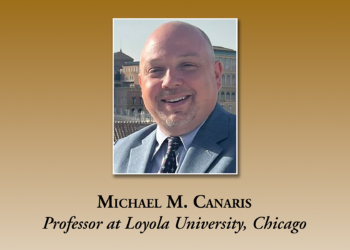
An alumnus of Camden Catholic High School, Cherry Hill, Michael M. Canaris, Ph.D., teaches at Loyola University, Chicago.





 at the bottom and then tap “Add to Home Screen”
