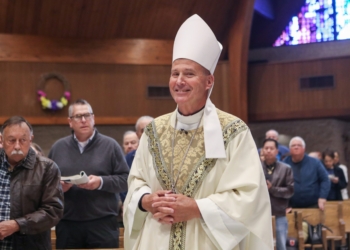




Hopefully, astute Mass attendees will have noticed that this year, the Solemnity of Saints Peter and Paul took precedence over the Thirteenth Sunday of Ordinary Time on June 29, hence the red vestments. Such patronal celebrations rarely supersede the normal Sunday rhythm, outside of Marian feasts and some other exceptions. Obviously then, this focus on two of the primary figures in the early Church is a storied, venerable and influential one.
Peter and Paul were historically widely viewed as the “new” twins of Rome, re-founding the city like the ancient Romulus and Remus, but now instead “baptizing” the Caput Mundi, or “head of the world” that is the eternal city. Their paired images are everywhere in the city – burly Peter with the keys to heaven, and balding Paul with the sword of his decapitation. Their executions under Nero are the primary reason the capital city has greater significance for Christians than other dominant empires of the past (e.g. Babylonian, Phoenician, Indian, Egyptian, etc. – many of whom also included nascent followers of Jesus).
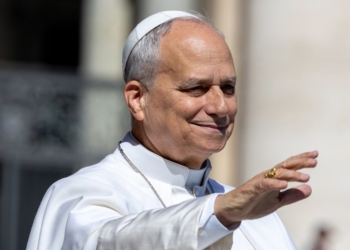
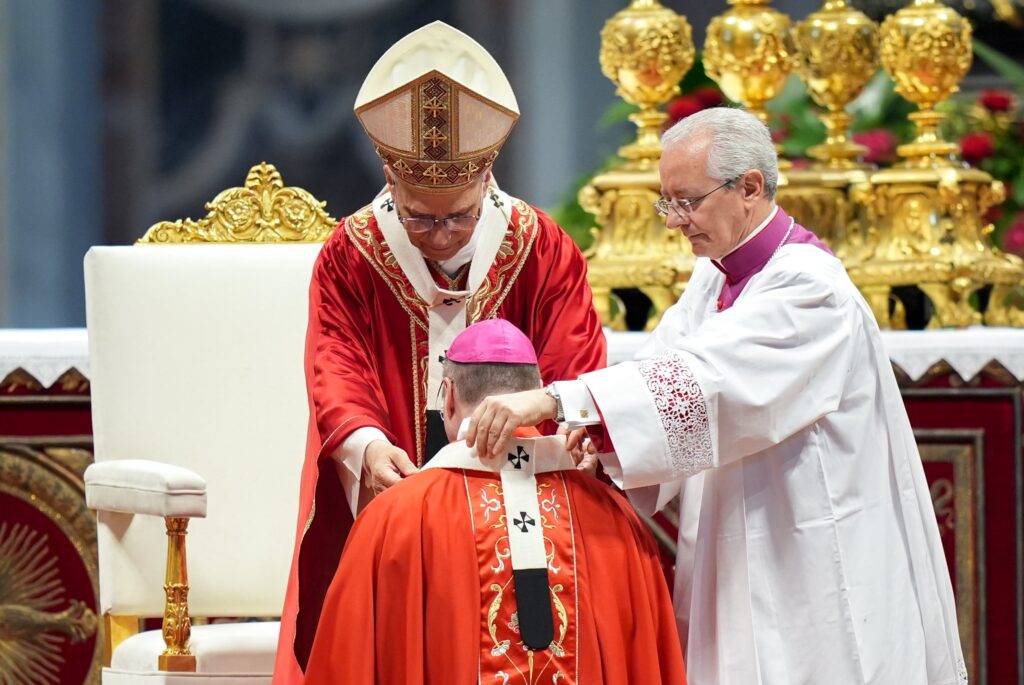
This year, Pope Leo XIV marked their feast by re-introducing an earlier (but not ancient!) practice associated with the day. He chose to bestow the pallium on newly named archbishops and metropolitans in the Basilica of Saint Peter at a celebratory shared liturgy. This Y-shaped woolen vestment brings to mind the Good Shepherd carrying the lost lamb home on his shoulders. The sheep providing the material for the pallia are consecrated at the Basilica of Saint Agnes Outside the Walls, and then the wool is eventually spun into the vestments by nuns at Saint Cecilia in Trastevere.
For centuries, this particular piece of ecclesiastical attire was a “contact relic” for the man receiving it, as it was traditionally placed on the tomb of Saint Peter before bestowal. But it wasn’t until the papacy of Pope John Paul II that it was given to the recipients during a Mass in Rome. While Pope Leo has shown clear signs of continuity with his predecessor, especially on Francis’ hallmark priority of synodality, he is undoubtedly his own man. In this vein, he has chosen to take up the post-conciliar practice of Pope John Paul II and Pope Benedict, where Pope Francis had insisted on the older practice that it be bestowed on those eligible to receive it in their home diocese, a somewhat intriguing nod to the dynamic quality of tradition.
In his homily June 29, Pope Leo was quick to point out such diversity in communion. Lest we think that all Christians agreed on all core matters (including, for instance, something as central as whether we should all become Jews first), he alludes to the early “council of Jerusalem” where the two disagreed vehemently, and the first pope stood corrected.
“Dear friends,” Pope Leo preached, “the history of Peter and Paul shows us that the communion to which the Lord calls us is a unison of voices and personalities that does not eliminate anyone’s freedom. Our patron saints followed different paths, had different ideas and, at times, argued with one another with evangelical frankness. Yet this did not prevent them from living the concordia apostolorum, that is, a living communion in the Spirit, a fruitful harmony in diversity. As Saint Augustine remarks, ‘The feast of the two apostles is celebrated on one day. They, too, were one. For although they were martyred on different days, they were one.’”
Pope Leo went on to apply this to our own day, one replete with bitter rivalries and toxic tribalism: “Let us make an effort, then, to turn our differences into a workshop of unity and communion, of fraternity and reconciliation, so that everyone in the Church, each with his or her personal history, may learn to walk side by side.”
He recognizes this will not always be an easy task, saying, “In our life as disciples, we can always risk falling into a rut, a routine, a tendency to follow the same old pastoral plans without experiencing interior renewal and a willingness to respond to new challenges. The two apostles, however, can inspire us by the example of their openness to change, to new events, encounters and concrete situations in the life of their communities, and by their readiness to consider new approaches to evangelization in response to the problems and difficulties raised by our brothers and sisters in the faith. … If we want to keep our identity as Christians from being reduced to a relic of the past, as Pope Francis often reminded us, it is important to move beyond a tired and stagnant faith.”
We see in this one Mass and thoughtful reflection the heart of creative fidelity to the Gospel; a commitment to the past and an intrepid novelty; a connection with saints (whether canonized or not), and a willingness to break with what has been to apply the vitality of the faith to the perceived needs of the current moment.
An alumnus of Camden Catholic High School, Cherry Hill, Michael M. Canaris, Ph.D., teaches at Loyola University, Chicago.




 at the bottom and then tap “Add to Home Screen”
