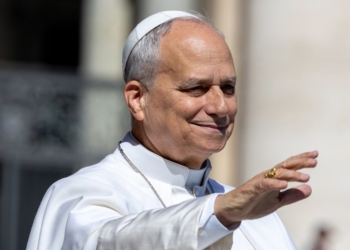
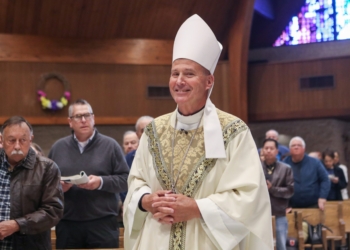





The last four popes have made the care of creation an important aspect of their focus. They have increasingly prioritized the environment, from Pope John Paul II declaring Saint Francis of Assisi the patron saint of ecologists to Pope Benedict XVI being known as the “green pope.” Pope Francis made environment care a central theme of his papacy, publishing the landmark encyclical “Laudato Si.” This encyclical linked social justice with environmental protection and called for an integral ecological conversion to address climate change, pollution and loss of biodiversity. Pope Leo XIV continues this holy work, calling for immediate change and an “ecological education” to combat environmental challenges.
His All-Holiness Bartholomew, the ecumenical patriarch of Constantinople and leader of the Orthodox Church, has been widely acknowledged as an early and influential proponent of environmental stewardship. During the 1990s, he became known as the “Green Patriarch.” He is known for his pioneering work in promoting environmentalism and ecotheology within and beyond the Orthodox Church. He has framed environmental care as a spiritual responsibility, emphasizing its connection to social justice and human rights. He has participated in international conferences as a speaker, directed practical environmental projects such as beach clean-ups, and promoted the adoption of new values alongside enhanced ecological consciousness. He believes environmental problems such as climate change and deforestation can be called “ecological sin,” resulting from greed and a sense of human dominance over nature.
Pope Leo has wholeheartedly joined the chorus of religious leaders speaking out on environmental issues. He has made the protection of the environment a central issue, calling for urgent climate action and a deeper relationship with creation. He emphasizes interior conversion and action – implementing a new liturgy for Mass that highlights humanity’s responsibility as stewards of the Earth – and supports technological solutions for environmental issues. He expressed his firm support for the observance of the World Day of Prayer for Creation on Sept. 1, which begins a monthlong time of dedicated prayer and action to safeguarding the earth. This Season of Creation ends Oct. 4, the feast of Saint Francis of Assisi.
In his Sunday Angelus on Sept. 1, Pope Leo said the day of prayer “is more important and urgent than ever” and that the theme of “Seeds of Peace and Hope” will be contemplated throughout this year’s Season of Creation.
In addition, he explained to those gathered that Pope Francis established the day of prayer for Catholics at the invitation of Patriarch Bartholomew; the Orthodox Church began the observance for ecological awareness in 1989.
Pope Leo said, “In the spirit of the ‘Canticle of Brother Sun,’ composed by Saint Francis 800 years ago, we praise God and renew our commitment not to ruin His gift but to take care of our common home.”
In his World Day of Prayer for Creation 2025 message, Pope Leo emphasized “that the destruction of nature does not affect everyone in the same way. When justice and peace are trampled underfoot, those who are most hurt are the poor, the marginalized and the excluded.”
He also expressed concern regarding the treatment of nature as a mere commodity or bargaining tool for economic or political purposes. Pope Leo lamented, “God’s creation turns into a battleground for the control of vital resources. We see this in agricultural areas and forests peppered with landmines, scorched earth policies, conflicts over water sources, and the unequal distribution of raw materials.”
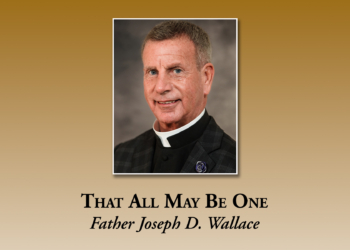
Father Joseph D. Wallace is diocesan director of Ecumenical and Inter-religious Affairs and pastor of Christ the Redeemer Parish, Atco.



 at the bottom and then tap “Add to Home Screen”
