




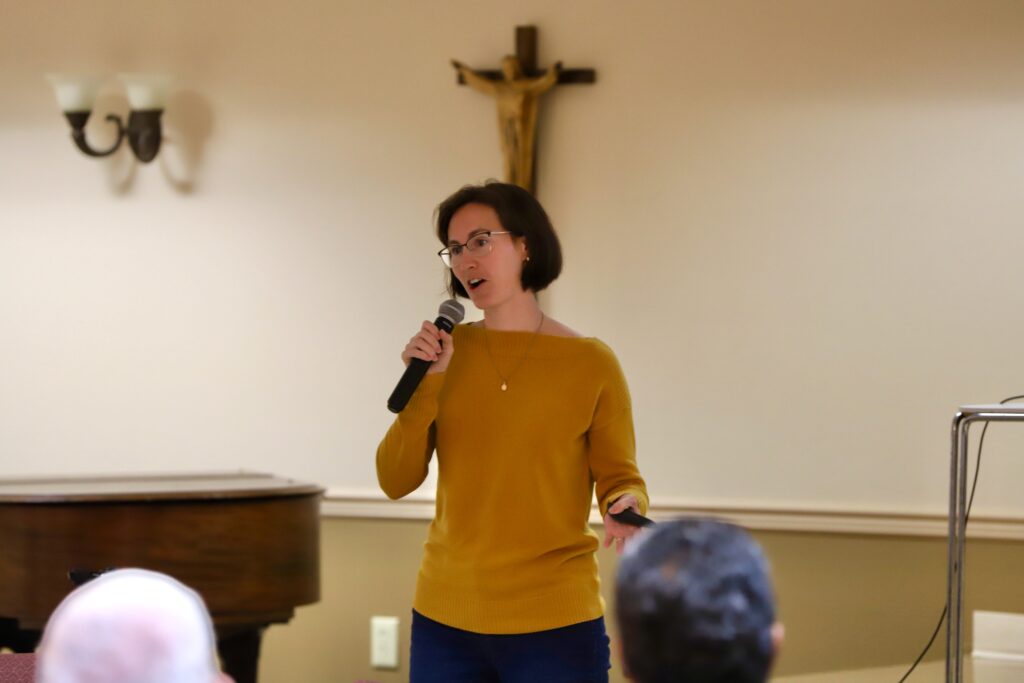
What if our Catholic faith could influence how we talk about immigration?
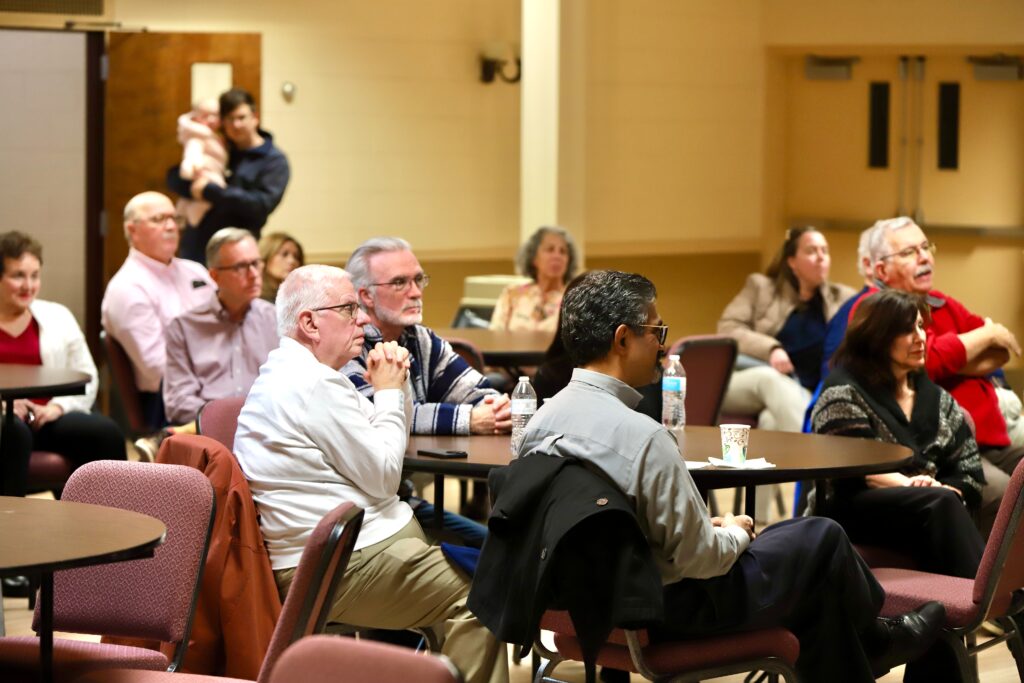
This question was part of a presentation held earlier this month titled, “Beyond Immigration Misinformation,” by Joanna McGill-Gardner, Esq., an immigration lawyer and descendant of Italian immigrants. She shared her family’s story to show how today’s laws have changed for those seeking opportunity compared to those of our Catholic ancestors.
Calling Joanna’s presentation a “talk” would be unfair, as the term doesn’t fully capture the depth of her stories and insights. It was more like a witness. As someone who works with immigrants who have faced violence and are often pushed into uncertainty and suspicion, Joanna expressed her pain not only as an attorney but also as a Catholic whose moral compass aligns with Christ’s compassion for the poor and vulnerable.
Two questions anchored the evening: Why should Catholics care about immigration? Why don’t immigrants come to the United States legally?
Joanna stated that, for Catholics, the obligation to care for migrants and refugees is not just a political stance, but a core belief of faith that is deeply rooted in Scripture and consistently affirmed by the Church’s Magisterium. This commitment comes from the fundamental belief in the dignity of every human being, created in God’s image. The Church’s teaching on migration is based on a biblical framework that recognizes the human right to migrate, balanced by the state’s right to regulate its borders for the common good.
The Bible repeatedly calls for welcoming and just treatment of the “sojourner,” “stranger” or “alien.” Joanna pointed out that the use of the legal term “alien” is the same as what is used in Hebrew, citing the Book of Leviticus 19:33-34: “When an alien resides with you in your land, do not mistreat such a one. You shall treat the alien who resides with you no differently than the natives born among you; you shall love the alien as yourself, for you, too, were once aliens in the land of Egypt. I, the Lord, am your God.”
Could one ever imagine the Holy Family as “aliens”? In the New Testament, Jesus personally identifies with the alien or migrant. He was Himself a refugee in his infancy, fleeing with Mary and Joseph to Egypt. (Matthew 2:13) Most powerfully, Christ makes the welcome of the stranger a criterion for final judgment: “For I was hungry and you gave me food, I was thirsty and you gave me drink, a stranger and you welcomed me.” (Matthew 25:35)
After sharing more Scripture references, Joanna turned to the tradition of the Catholic Church, noting that the Church has a consistent social teaching on migration and views the Holy Family’s flight as the archetype or model for every migrant family. Referencing Pope Pius XII’s “Exsul Familia Nazarethana,” or “The Emigrant Holy Family of Nazareth” (1952), Joanna stated that Pope Pius XII made no distinction between the “economic migrant” and the person fleeing persecution, emphasizing the natural right of people to migrate when forced by want or oppression to seek a life worthy of human dignity.
The second half of the evening focused on a crucial question: Why don’t immigrants come to the United States legally? Joanna carefully pointed out that the answer to this question is complicated, often shaped by misunderstandings of the realities and difficulties of the legal immigration process.
The Scriptural theme of flight from danger, together with Pius XII’s recognition of the moral limits of bureaucratic structures, shows that human necessity often outpaces legal possibility. Many migrants face situations – violence, famine, political instability or crushing poverty – that demand immediate relocation. Yet U.S. immigration law provides only limited and often inaccessible pathways: wait times extending a decade or more, few options for low-skilled workers, prohibitive financial requirements, and asylum systems unable to absorb contemporary global displacement. As “Exsul Familia” implies, when laws fail to protect the vulnerable, it is not the vulnerable who are at fault.
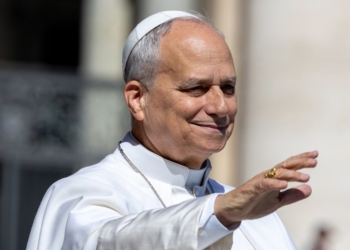
Turning to Pope Leo XIV’s first apostolic exhortation, “Dilexi te” (“I Have Loved You”), written this year, Joanna stated that, continuing Pope Francis’ concern, Pope Leo explicitly states that “welcoming migrants is therefore a crucial part of the Church’s mission.” He reminds us that the Church “knows that in every rejected migrant, it is Christ Himself who knocks at the door of the community” (#75), urging the Church to build bridges where the world builds walls.
Catholics, therefore, should care about immigration because the stranger is Christ, because human beings have God-given rights that come before political systems, and because the Gospel calls for solidarity with those whose suffering forces them to migrate.
We should also recognize why many do not come legally: not because they ignore the law, but because their circumstances make legal entry impossible. In such cases, the Christian response is guided not by fear or apathy, but by the justice, mercy, and hospitality that Scripture commands and the Church faithfully promotes.
Dr. Michael Sims, Th.D., is director of the Office of Life & Justice Ministries for the Diocese of Camden.




 at the bottom and then tap “Add to Home Screen”
