



Pope Leo released an apostolic letter on the Friday before the Super Bowl, which this year also marked the opening of the Winter Olympics in Milan and Cortina d’Ampezzo. (The letter was unlikely to have been coordinated to celebrate the anniversary of the date formerly known as Wing Bowl, however.)
Titled “Life in Abundance,” the letter expresses the enduring value and contemporary challenges facing the world of “sport” – as much of the English-speaking world calls it.
The section headings of the brief but insightful text provide a window into the pope’s hopes for publishing it: Sport and the Building of Peace; The Formative Value of Sport; Sport: A School of Life and Contemporary Forum; Sport and Personal Development; Risks That Threaten Sporting Values; Competition and the Culture of Encounter; Sport, Relationships, and Discernment; and A Pastoral Approach to Sport For Life in Abundance.
Both the spiritual and social dimensions to the physical and cultural benefits of sport are explored, along with the realities in our day that tend to distort these positive aspects.
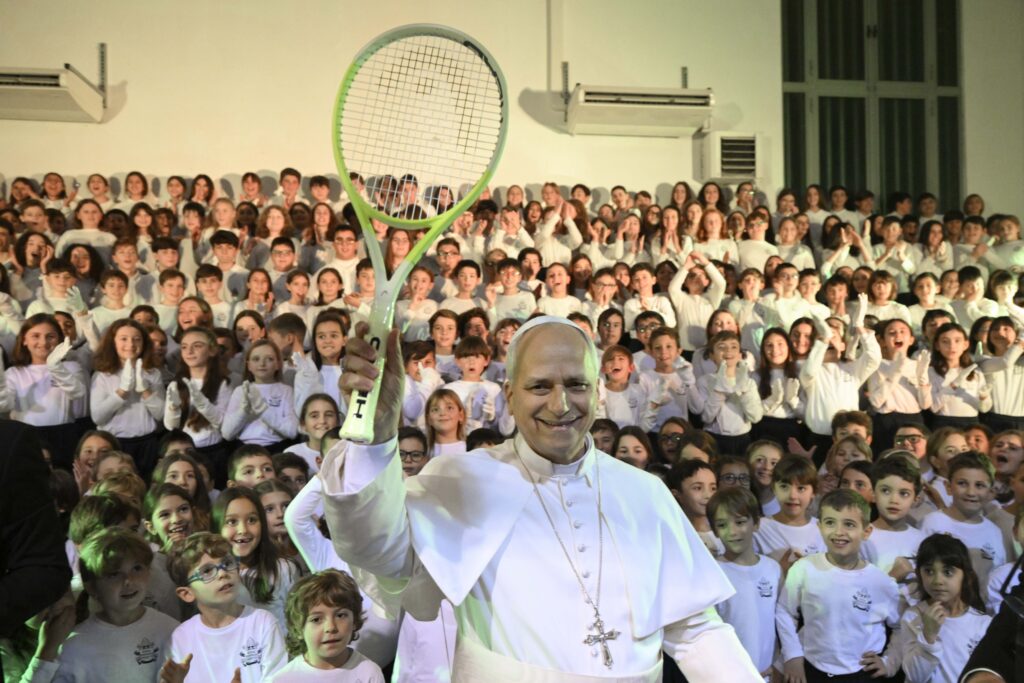
Reports that Pope Leo is an avid tennis player circulated almost immediately after the conclave. Though Paul VI, Pius XII and John Paul II were all younger than Robert Prevost when elected – Pope Leo was 69 – the pontiff seems an especially spry figure. As such, his thoughts on physical fitness likely have more resonance than would those of an octogenarian pontiff.
In its scriptural roots, connection to Catholic social teaching’s insistence on the full dignity of the embodied person, and unitive capabilities to draw together parishes, universities, neighborhoods or even entire countries, human beings undoubtedly share in “the efforts, expectations, disappointments, and hopes of those who play daily on the field, in the gym or on the street.” In terms of this unique bonding, I couldn’t help thinking of the multiple times I’ve been walking in crowded downtown Chicago wearing an Eagles hat, and a stranger in similar gear spontaneously high-fives me before wordlessly passing on in the other direction. Even hundreds of miles away from our roots, the silent connection endures.
In his letter, the pope unsurprisingly mentions one of the first saints he canonized, Pier Giorgio Frassati, an early 20th century Italian layman who combined faith, social commitment and a passion for outdoor sports (such as hiking and mountain climbing). He also references Athletica Vaticana, an initiative of the Dicastery for Culture and Education that emphasizes how sports can be an expression of ecclesial service – lifting up, accompanying, and teaching lessons to the world’s poorest and most vulnerable.
We know that unbridled competition that sees others merely as opponents to be destroyed is antithetical to the Christian message, whether in the realm of physical feats, business or geopolitics. The sacrality of the human person can never be sacrificed on the altar of contests or aggression in any walk of life. But healthy, fair and restricted struggles that focus on the journey more than the victory can ease polarization instead of worsening it.
“Accepting the limits of one’s body, the limits of time and fatigue, and respecting the established rules means recognizing that success comes from discipline, perseverance and loyalty,” as the pope sensibly puts it.
In our day, athletic performances are socio-cultural forces responsible for tens of thousands of jobs and billions of dollars, along with their obvious physical, educational, and relaxative advantages. Pope Leo XIV then makes his own the rhetorical question asked by his predecessor Pius XII in 1945 to a group of Italian athletes about the global significance of sport: “How could the Church not be interested?”
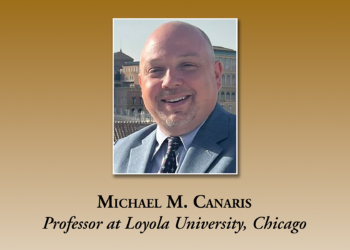
An alumnus of Camden Catholic High School, Cherry Hill, Michael M. Canaris, Ph.D., teaches at Loyola University, Chicago.



 at the bottom and then tap “Add to Home Screen”
