



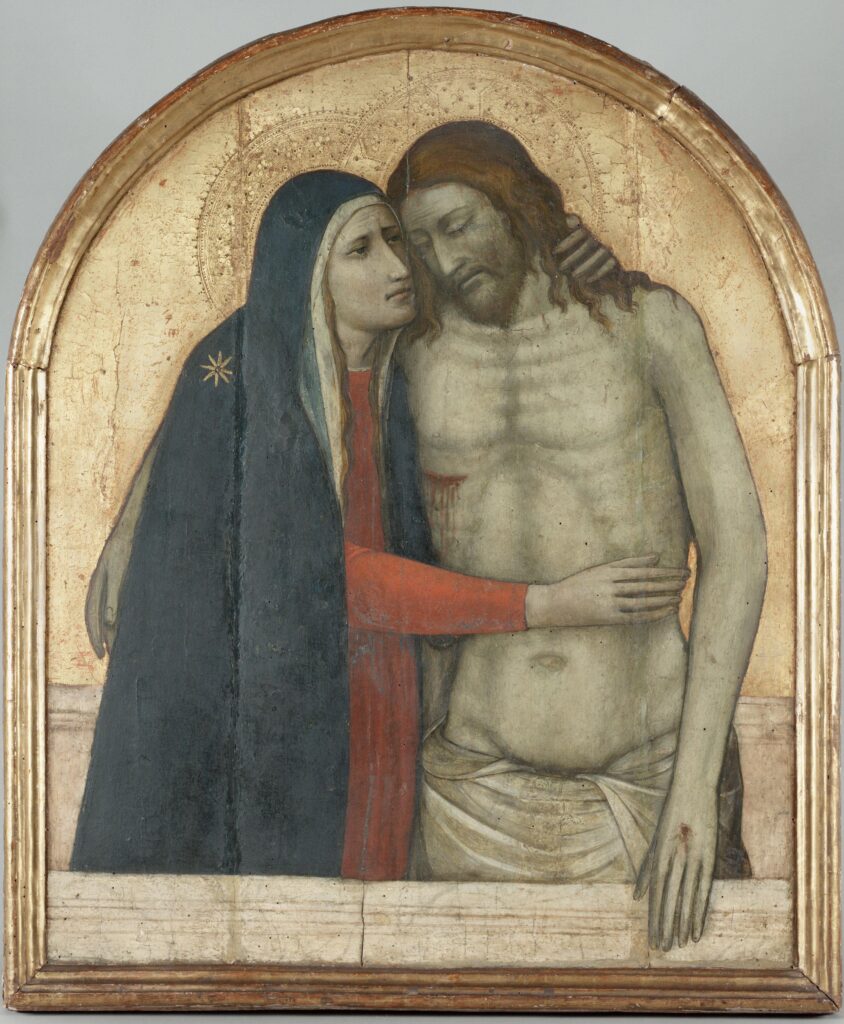
Sometime after his older brother died of cancer, author Patrick Bringley and his mother visited the Philadelphia Museum of Art. They separated in the galleries for a time, and when Bringley next saw his mother, she was weeping so hard that her were shoulders shaking. She was standing before a painting depicting Mary holding her dead son.

In his memoir, “All the Beauty in the World,” Bringley states that his mother had lost her faith long ago, implying her tears reflected not belief, but the power of art.
But the scene also illustrates the enduring and universal (catholic) relevance of the Gospels’ stories and images.
The Gospel story of the senseless death of children and anguish of their mothers – the Massacre of the Infants – echoes today in the suffering of countless children the world over who are victims of war, poverty, inadequate medical care and lack of humanitarian aid.
At the Crucifixion, another mother weeps at the savage treatment of her child. Although not a Christian, Bringley envisioned Jesus’ Death when describing his brother’s last days in a hospital. He writes, “even a story as exalted as the Passion now felt near and unmysterious, being plainly an attempt to express the very plain thing that was happening in that room.”
The painting that so moved Bringley’s mother is a 14th century work by Niccolò di Pietro Gerini, “Christ in the Tomb and the Virgin.” The painting “inspired love in her, bringing both solace and pain,” the author writes. One of Jesus’ arms and nail-pierced hands hang limply. His other arm is draped over his mother’s shoulder and rests against her back. It almost – almost – looks like a soft embrace, so soft as to be virtually imperceptible but vaguely suggestive of Jesus’ words, “Blessed are they who mourn, for they will be comforted.” (Mt 5:4)
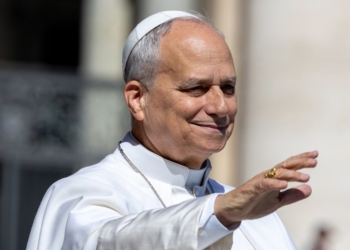
In a letter to a young boy, Pope Francis turned to art to deal with what he could not explain.
When William, a 7-year-old, asked in a letter, “If you could do one miracle what would it be?” the pope answered that he would heal children. “I’ve never been able to understand why children suffer. It’s a mystery to me. I don’t have an explanation,” Pope Francis said.
The child’s question and the papal response are collected in the book, “Dear Pope Francis: The Pope Answers Letters from Children Around the World.” Each child’s letter consists of a question and a picture they drew. In answering William, the pope suggested the child’s picture conveyed more meaning than any words he could write.
“Your drawing makes me think: there is a big, dark cross, and a rainbow and the sunshine behind it. I like that,” the pope wrote. “My answer to the pain of children is silence, or perhaps a word that rises from my tears. I am not afraid to cry. You shouldn’t be either.”
After his brother’s death, Patrick Bringley immersed himself in art by working as a security guard at New York’s Metropolitan Museum of Art. After spending a decade in the galleries, he decided that his favorite painting is one that makes him think of his brother: a crucifixion by the 15th century Italian friar Fra Angelico. The painting, Bringley writes, “reminds us again of the obvious: that we’re mortal, that we suffer, that bravery in suffering in beautiful, that loss inspires love and lamentation.”
Saint Matthew’s Gospel begins and ends – before the Massacre of the Innocents and after the Crucifixion – with the promise of God’s presence. In writing about Mary’s pregnancy, the evangelist repeats the words of Isaiah, “Behold, the virgin shall be with child and bear a son, and they shall name him Emmanuel, which means ‘God is with us.’” (Mt 1:23) The last words of the Gospel are spoken by the Risen Christ: “And behold, I am with you always, until the end of the age.” (Mt 28:20)
Sometimes, that divine embrace, that yearned-for spiritual inspiration or consolation, can seem non-existent. Even a saint like Mother Teresa could experience the feeling of being separated from God. But the Gospels always remind Christians, and even some non-Christians, of our shared humanity and teach us how to live.
Fra Angelico’s crucifixion can be seen as an artistic reflection of Pope Francis’ silence and tears. As Bringley notes, the artist includes many onlookers at Christ’s Crucifixion: Some are solemn, some curious, and others simply look bored or preoccupied.
But the scene also includes compassionate individuals. They’re doing what they can to comfort a grieving mother.
Carl Peters is former managing editor of the Catholic Star Herald.




 at the bottom and then tap “Add to Home Screen”
