




Watching the coverage of Pope Leo XIV’s apostolic visit to Algeria, I was genuinely stirred by how moved and joyful he was to visit Annaba, the home of his spiritual father, Saint Augustine.
Known in Roman times as Hippo Regius, the northeastern coastal city was the site of Saint Augustine’s ministry and leadership for more than 30 years before his death in 430 AD. Pope Leo toured the archeological ruins, listened intently to his local hosts, and helped plant and water a memorial tree in the gardens. It was clear how much he appreciated and loved being at this particular sacred ground.
Before the spread of Islam in the seventh century, North Africa was home to many vibrant Christian communities, some of which played outsized roles in the intellectual development of the faith. These are places and names you have undoubtedly heard: Hippo, Carthage, Alexandria, Cyrene, Athanasius, Cyril, Cyprian, Clement, Anthony, Catherine, Monica, Perpetua, Felicity. Three early popes were African, as was Saint Mark the Evangelist. Along with Turkey and Syria, these non-European shores of the Mediterranean formed the early faith in ways that still mark our tradition today.
Pope Leo’s community of mendicant religious priests and brothers, the Order of Saint Augustine, was founded in 1244, when groups of hermits who were striving to live the much-earlier fifth century Rule of Saint Augustine came together. Pope Leo is the first of their member to be elected pope, and given the order’s worldwide reach, some claim he is the first missionary to hold the office, after being a bishop in a peripheral diocese in Peru. Today, there are about 3,000 Augustinian friars around the planet, led by a new Prior General, Father Joseph Farrell, OSA, who was born in Philadelphia. Locally, they are known for running Villanova University and Saint Augustine Preparatory School in Richland.
It is also important to note that Pope Leo, who has been immersed in the spiritual and scholarly writings of Saint Augustine for decades as a former prior general himself, is well-aware that it was the namesake of his order who first developed the just war tradition in the Catholic Church, at the very place where he physically stood this week.
In the Christian West, by which we largely mean contemporary Roman Catholics and Protestants, perhaps no single figure more influenced our understanding of the faith than Saint Augustine. At least, this was the case made by Pope Benedict, who wrote his doctoral dissertation on the Church father’s ideas about “the people and house of God” in Saint Augustine’s writings. He is widely recognized as the founder of what came to be called Christian philosophy, connecting the scriptural writings with a largely Neo-Platonic understanding of reality, which marked Christian history until the re-emergence of Aristotle in the writings of Saint Thomas Aquinas 800 years later. But even when citing many new sources, Aquinas, too, leans heavily on Saint Augustine in his own system of thought, which importantly, was championed and mandated in Catholic seminaries by the last pope to use the current name, Leo XIII. Thus, Saint Augustine touches nearly every element of contemporary Catholic life: sacraments, ethics, ecclesiology, soteriology, human morality, priestly formation, biblical interpretation and more.
In my current graduate class, in which I have students from all over the world, I pair students up to give “disputatio” presentations on doctrinal realities: think Marcion and Tertullian (another North African) debating whether or not the God of the Old Testament is to be rejected along with interpretive elements of how we eventually understand Christ through the Hebrew Scriptures like the Psalms and the Suffering Servant motifs in Isaiah. Saint Augustine is so important, and his controversies so complex, that I need to assign three different students to play his role: debating Mani, Donatus, and Pelagius separately. All of these discussions continue to have lasting effects on Christian life today.
Pope Leo’s visit this month was not only to the relatively small minority of Christians in modern-day Algeria. It was to the very roots of my faith and yours.
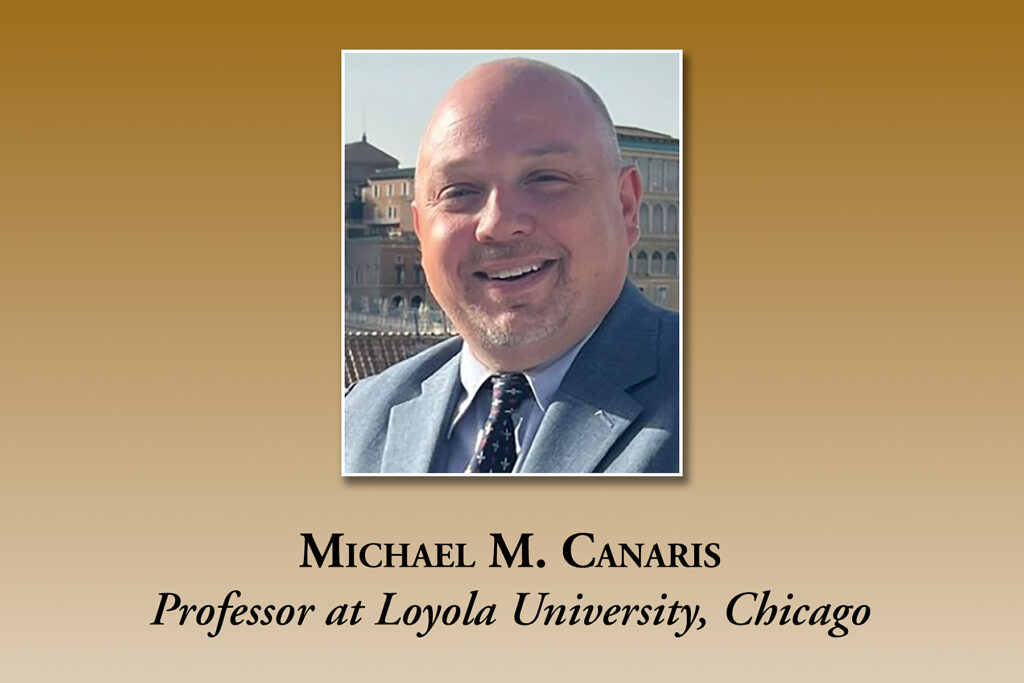
An alumnus of Camden Catholic High School, Cherry Hill, Michael M. Canaris, Ph.D., teaches at Loyola University, Chicago.



 at the bottom and then tap “Add to Home Screen”
