




During Pope Leo XIV’s busy apostolic journey to Algeria, Cameroon, Angola and Equatorial Guinea last month in Africa, he took time to visit the Great Mosque of Algiers on his first day of the trip.
As the first pope to ever visit Algeria, he visited the Great Mosque with a message of interreligious peace and harmony. This gesture was warmly received by the Muslim-majority nation of some 48 million people, the largest in Africa. This was Pope Leo’s second visit to a mosque as pope, as he visited the Blue Mosque in Istanbul last year.
The Great Mosque of Algiers (Djamaa el Djazaïr) is Africa’s largest mosque and the third-largest in the world. It also features the world’s tallest minaret, from which the Muslim call to prayer is sounded. The minaret has 37 floors and an observation deck overlooking the Mediterranean.
Completed in 2019 and opened in 2020, the mosque features an interior space capable of accommodating 37,000 individuals, with overall capacity for 120,000 worshippers in both indoor and outdoor areas. The site includes a Quranic school, a library that can hold 1 million books, a museum of Islamic art, and a research center on Algerian history. The mosque was designed by German architects; it blends modern technology with traditional Algerian geometric styles, featuring 618 white columns and a large dome.
Upon his arrival in Algeria, Pope Leo delivered opening remarks at the Martyrs’ Monument, emphasizing that peace is a “moral calling” that demands not only the absence of conflict, but a foundation built on justice. He expressed appreciation for Algeria’s “solidarity and respect” in a country where 99% of the population is Muslim, highlighting that Christians and Muslims are united as brothers and sisters under a common “Father in heaven.”
“God desires peace for every nation: a peace that is not merely an absence of conflict, but one that is an expression of justice and dignity,” he added. “This peace, which allows us to face the future with a reconciled spirit, is possible only through forgiveness.”
Pope Leo said that “the true struggle for liberation will be definitively won only when peace in our hearts has finally been achieved. I know how difficult it is to forgive. But, as conflicts continue to multiply throughout the world, we cannot add resentment upon resentment, generation after generation. The future belongs to men and women of peace. In the end, justice will always triumph over injustice, just as violence, despite all appearances, will never have the last word.”
He concluded, “We must educate people in critical thinking and freedom, in listening and dialogue, and in the trust that leads us to recognize in those who are different fellow travelers and not the threats!”
While some critics pushed back on the pope referring to Islam as a “religion of peace,” he responded by reminding us all that “by respecting the dignity of everyone and allowing yourselves to be moved by the pain of others – instead of multiplying misunderstandings and conflicts – you can surely become protagonists of a new chapter in history. Today, this is more urgent than ever in the face of continuous violations of international law and neocolonial tendencies.”
Pope Leo’s visit to the mosque follows the lead of his three most recent predecessors – Popes John Paul II, Benedict XVI and Francis – who also included mosque visits during their travels abroad. Speaking about his visit to Djamaa el Djazaïr, Pope Leo said, “I think the visit to the mosque was significant and showed that although we have different beliefs, we have different ways of worshipping, we have different ways of living, we can still live together in peace.”
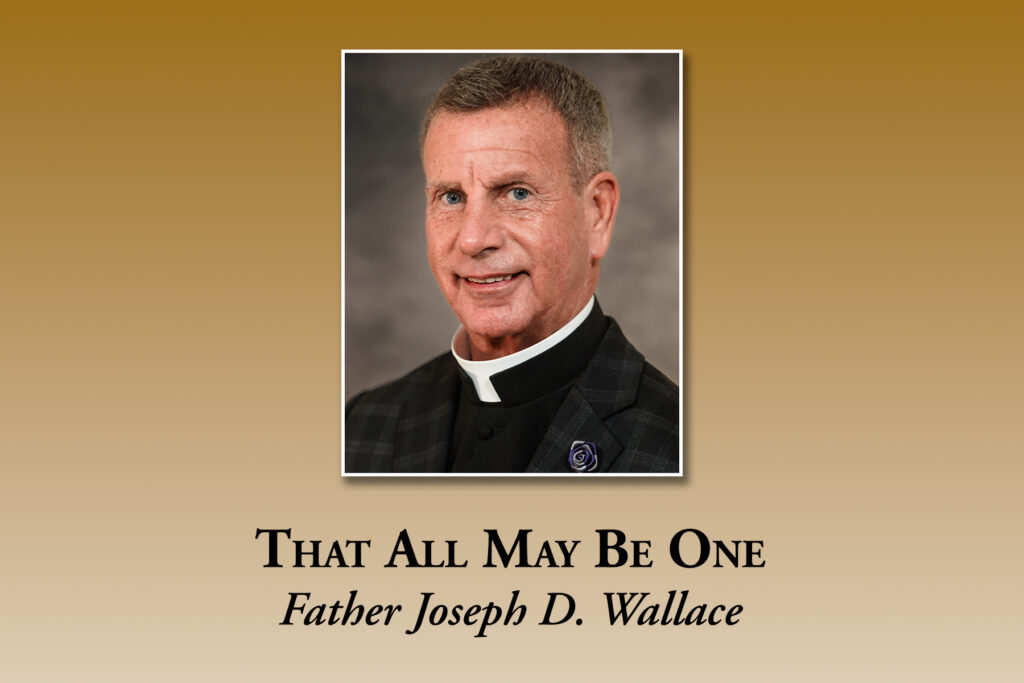
Father Joseph D. Wallace is diocesan director of Ecumenical and Inter-religious Affairs and pastor of Christ the Redeemer Parish, Atco.



 at the bottom and then tap “Add to Home Screen”
