





Ash Wednesday is not a holy day of obligation. In fact, it is a minor day on the Church calendar. It is major, however, in the minds of the faithful. Only Christmas and Easter are more popular, and perhaps Palm Sunday.
Why such popularity? What is the appeal? There seems to be two strong, positive currents that underlie the liturgy of the day. Both are very attractive to the human psyche.
First is the element of change. Just as surely as night turns into day and winter into spring, we believe we have it in our power, by the grace of God, to change our lives for the better. In the Gospel for the day, Jesus tells us how to do that through the discipline of the three-fold program of prayer, fasting and almsgiving. We can grow in holiness if want to; and remember, the root meaning of holiness is wholeness.
Second is the element of hope. Relying on God’s infinite mercy and promises, we trust that we will obtain the help of God’s grace, pardon for our sins, and life everlasting through the merits of our Lord and Redeemer, Jesus Christ.
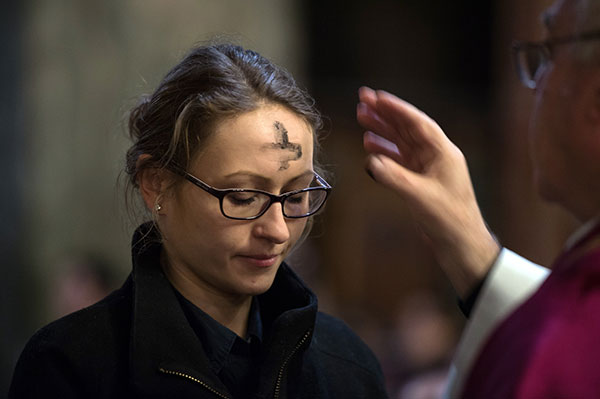
With ashes placed on our forehead, we acknowledge that, in the most elemental form, we are merely dust. At the same time, we marvel at what God has created out of such meager material. “I praise you, Lord, for I am fearfully and wonderfully made,” the psalmist exclaims. (Ps 139:14)
Moreover, we sense, deep within our being, that we are destined to live forever. The Pastoral Constitution of the Church in the Modern World (Gaudium et Spes), promulgated by the Second Vatican Council, makes this perfectly clear. The document states: “When faced with death, a deep instinct leads people rightly to shrink from and reject the utter ruin and total loss of their personality. Because they bear within themselves the seed of eternity, which cannot be reduced to mere matter, they rebel against death.” (GS 18)
In 1982, when he was vice president, George Bush was the official U.S. representative at the funeral of hardline Soviet dictator Leonid Brezhnev. He reported that he was profoundly moved by the silent protest of Brezhnev’s widow. Just as soldiers were about to close the casket, she reached down and traced the sign of the cross large over his body. There in the citadel of secular, atheistic power, the widow of the powerful ruler boldly stated that he and the government he headed were wrong about God. She hoped in eternal life, which was won by Jesus’ Death on the Cross, and trusted that the same Savior might still have mercy on her husband.
“Hope and Change.” Barack Obama ran for the presidency on that promise, but only Jesus can really deliver.
May this Lent be the best one of our lives.
Father Edward Kolla is a retired priest of the Diocese.




 at the bottom and then tap “Add to Home Screen”
