




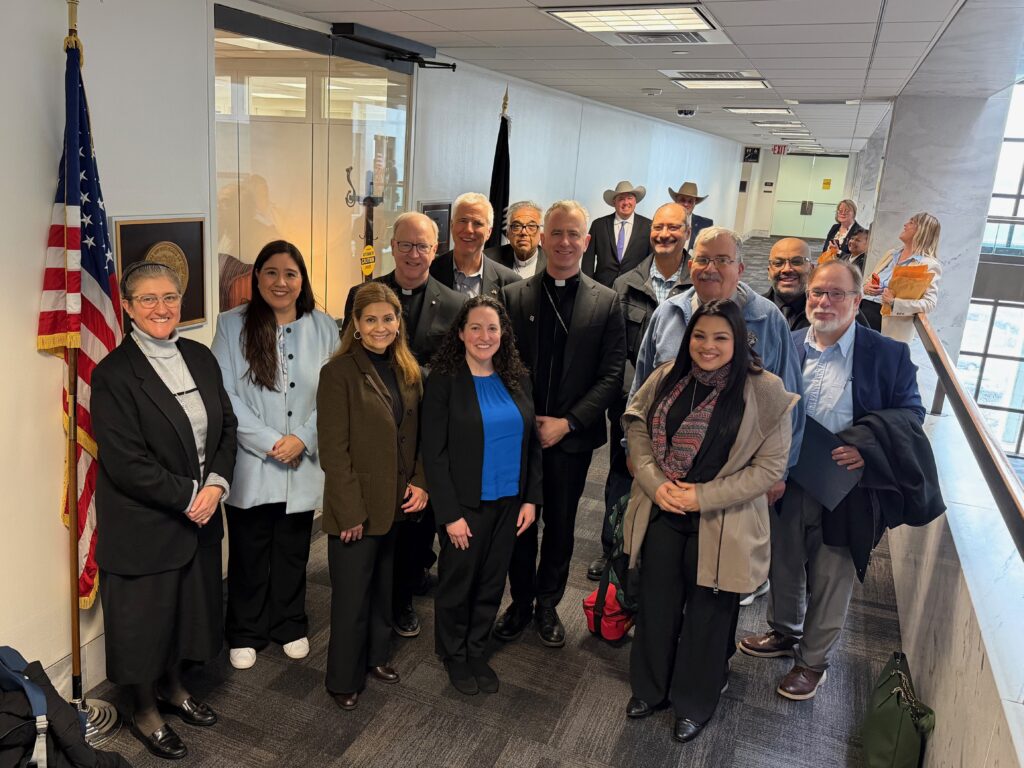
Editor’s Note: These interviews took place between and after the closed-door meetings with New Jersey’s federal lawmakers.
WASHINGTON – Delegates from the Diocese of Camden and the Archdiocese of Philadelphia traveled to the nation’s capital March 5 to advocate for legislation that promotes human dignity and the protection of religious workers.
“The Gospel transcends party politics,” Bishop Joseph Williams said as he walked the halls of Capitol Hill with 15 of the Diocese’s pilgrims. “That’s why our team is meeting with legislators on both sides of the aisle.”
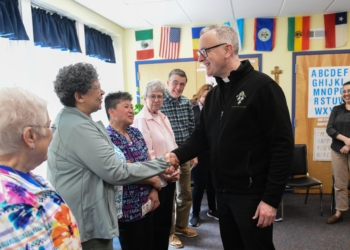
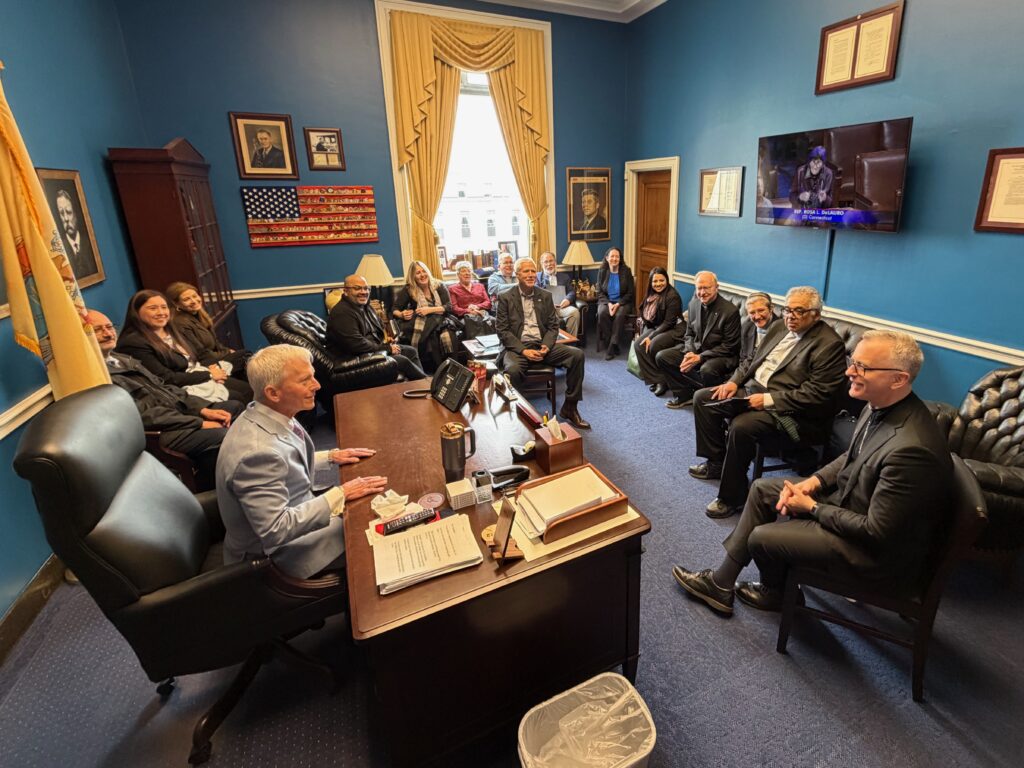
Bringing their experiences as priests, deacons, religious and lay leaders, the delegation met with U.S. Rep. Donald W. Norcross, (D-1st), U.S. Rep. Jefferson Van Drew (R-2nd), and a congressional staffer for U.S. Sen. Andy Kim.
All of the pilgrims brought with them first-hand experiences of working with and walking alongside of immigrants in their communities. They detailed honest stories of friendship and faith, service to the Church, persecution, loss and fear.
In turn, the lawmakers and their staffers not only listened respectfully to these stories of encounter and took notes, but offered their own – some relating sincere, first-hand accounts of immigrants’ dedication to their family and job, which benefits the community and economy. Other recounts, which were frank and forthright, told of violence at the hands of convicted criminals.
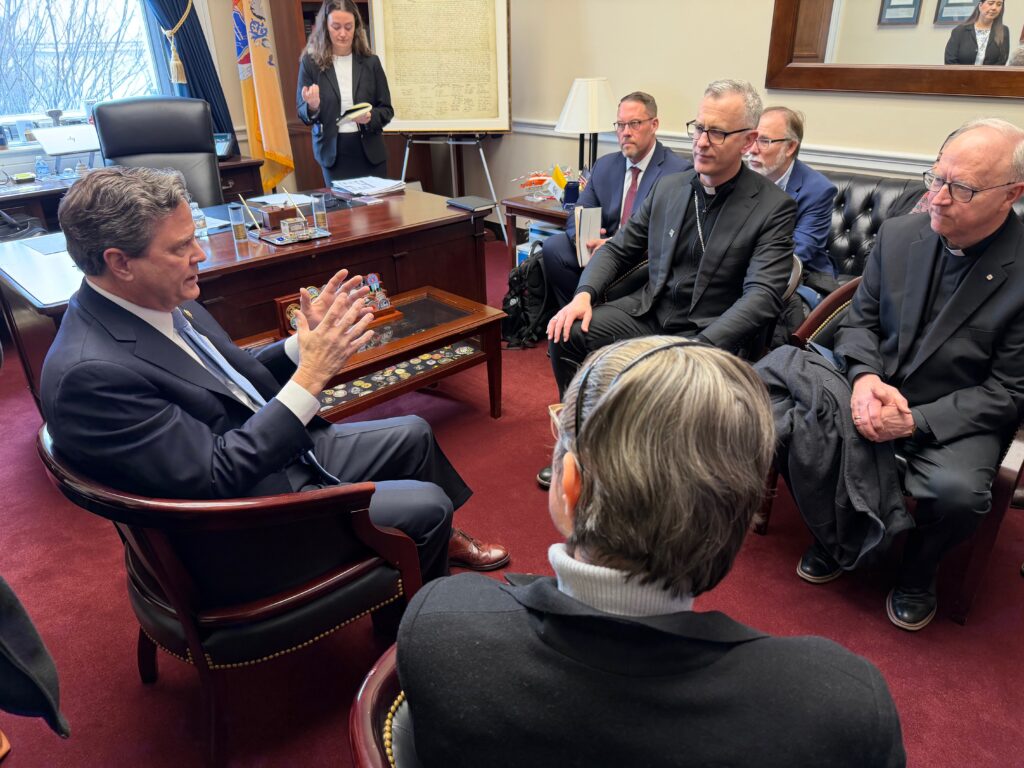
Much discussion among all parties revolved around border security. There was agreement that neither open borders nor persecution were solutions, but rather a middle ground where security and human dignity could meet.
“We are not advising for criminals [to come to the United States],” said Sister Maria de Jesus Herrera, MDPVM, Superior, and coordinator of religious education at Holy Cross Parish in Bridgeton.
A quarter of Bridgeton’s population is foreign-born, and continues to rise.
“They don’t have a voice,” Sister Maria said of the men, women and children she serves. To meet with lawmakers on Capitol Hill, she said, gives her the opportunity to “share who these families are, to say that they exist, they have dignity, they are human beings.”
Among the pilgrims’ top priorities was to ask Congress to pursue immigration reform that ensures law enforcement efforts are targeted and humane, gives long-time residents an earned pathway to citizenship, addresses the root causes of forced migration, and considers family unity as a cornerstone to the U.S. system. They also asked that when it comes to immigration enforcement, steps be taken to ensure respect for sensitive locations, especially houses of worship as well as allow pastoral services for all detainees.
“The Catholic Church has always taught that faithful citizenship is not a privilege, but a duty we have as Christians – and then to bring our faith and hope and love into the public sphere as much as possible in a non-partisan way. Because these Gospel values can be salt and light to everybody in society. That’s the hope, and that’s why we’re here,” the Bishop said.
Other legislation important to the delegation were: the Religious Workforce Protection Act, which would offer limited flexibilities to religious workers who are legally in the country and waiting to receive their green card; the DREAM Act, which would recognize Dreamers as contributing members of society and provide them with a pathway to citizenship; and the Frederick Douglass Trafficking Victims Prevention and Protection Reauthorization Act, which combats human trafficking.
Laity in the Diocese’s delegation included parish and diocesan staff and volunteers, lawyers, staff of Catholic Charities of South Jersey and the executive director of the New Jersey Catholic Conference, the public policy arm of New Jersey’s Catholic bishops – all of whom encounter women, men, children and families of the immigrant community.
“Everyone here works within their communities and can share stories that touch the heart,” Bishop Williams said. “Pope Francis was exactly right: Encounter changes the tone of the conversation, but it also brings us closer to the other – to see them as human, as people who are worthy of God’s love and our respect.
“This is why the Church plays such an important role – because we have Democrats and Republicans who are all Catholic Christians, but we all come to the same Eucharist table,” he continued. “I think if the Church is as polarized as our country, as our politics, we are going to lose our prophetic voice. But if the Church, through the culture of encounter, can bring us closer to one another even though we’re different, then we have a real role to play in the peacemaking of our present time.”
Among those peacemakers is Deacon Omar Aguilar, Our Lady of Guadalupe Parish Shrine, Lindenwold, who shared his experiences with New Jersey’s federal lawmakers during the visit.
Deacon Aguilar is an immigrant from El Salvador who came to the United States as a teenager. Now a retired lawyer who worked in the Public Defender’s Office in Atlantic and Cape May counties, he said, “I think the immigrant experience is not just one shade; there are a lot of aspects to it that are being lost in reporting from the press.”
He continued, “We tend to focus on undocumented individuals. But often, those individuals are part of families with people who have a legal status in this country, either citizens or permanent residents. And they have children who have been born in this country.
“Yes, it’s good to have control over the borders. But it seems like the mood of the country has turned so much against immigrants that there needs to be a reset.”
As an example, he shared that he knows youth altar servers in the Diocese whose fathers have been detained or deported. “This brokenness of families is worrisome to me. Broken families affect the community. Those children are traumatized.
“When I came to this country, my experience as an immigrant was completely different from what these children have to go through today,” he said. “These children aren’t even immigrants. They are children of immigrants. To have their father and mother pulled away from the family so unexpectedly without recourse is something that is going to stay with these young people for the rest of their lives.”
Marianela Nuñez, director of enrollment and outreach for South Jersey Catholic Schools, agrees. She has been working with some of the Diocese of Camden’s Catholic schools to ensure the mental, spiritual and physical well-being of children of immigrants.
“The reality is, people are afraid. Our principals are worried for families. Children are worried about their parents,” she said. “Children are having adult conversations about their parents maybe not being home when they get out of school.”
Reflecting on why a child’s parents would decide to enter illegally into the United States, she paused before sharing, “I would think it’s because they were struggling and thought they could have better opportunities by coming to the United States.
“Of course, I think we should have laws and protect our borders,” she continued. “At the same time, the process to come to the United States can be so difficult that they have no hope. When you have no hope, and you’re in danger and don’t see a future, you will risk your life to go other ways, and that’s what happened – at no fault of the children.”
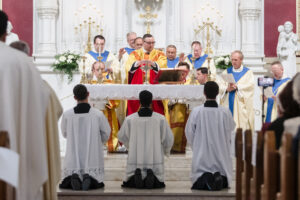
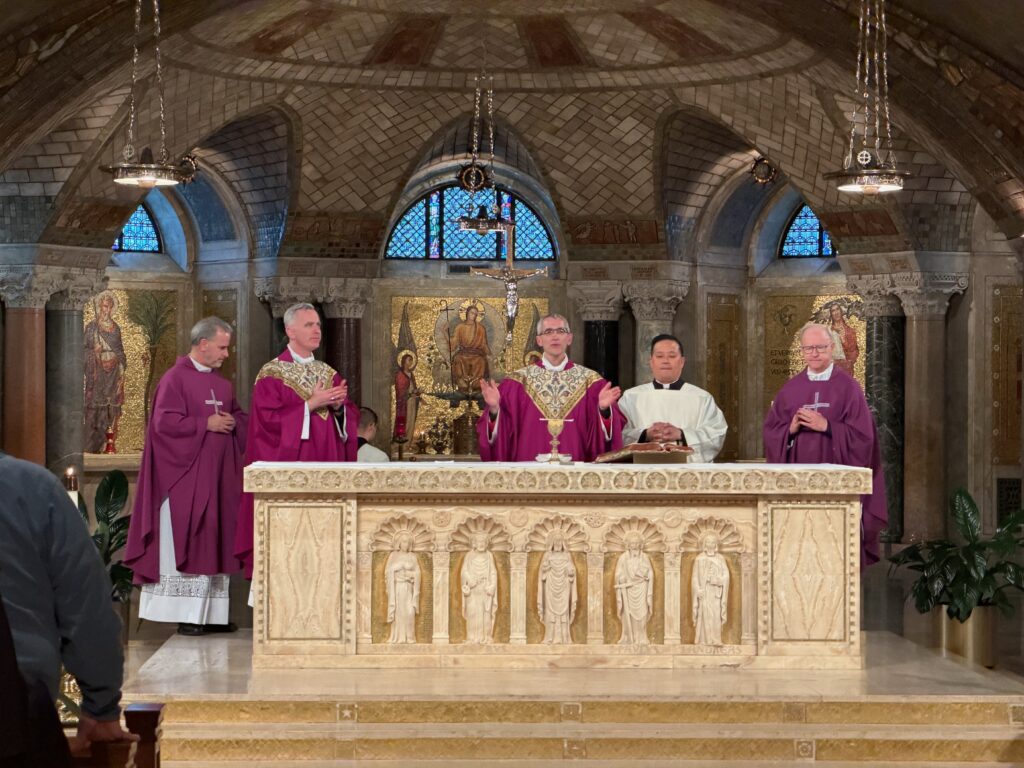
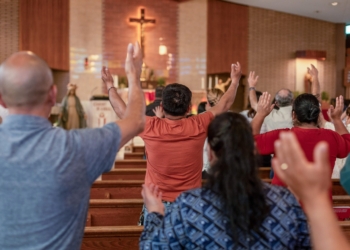
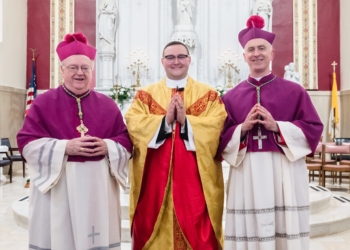
While the New Jersey pilgrims met with their federal lawmakers, the Archdiocese of Philadelphia delegates met with their Pennsylvania representatives on Capitol Hill. They came back together later in the day, meeting at the Basilica of the National Shrine of the Immaculate Conception in Washington, D.C. Philadelphia Auxiliary Bishop Christopher R. Cooke celebrated Mass, with Bishop Williams concelebrating.



 at the bottom and then tap “Add to Home Screen”
