





“Most people, even if they have been practicing their faith their whole life, have never had the opportunity to sit down and have the parts of the Mass explained to them,” says Vicar General and Moderator of the Curia Father Robert Hughes. “It’s not always something we do in our catechetical programs. We all need refreshers about what the Mass is and why we do what we do.”
In South Jersey, those refreshers will begin the weekend of Oct. 1, as pastors have been asked to insert a two-page document – printed in English, Spanish and Vietnamese, the predominant languages spoken in the Camden Diocese – into their bulletins or distribute it at Masses. Each of the six weekly documents explain a different part of the Mass, detailing the particulars of how the faithful witnesses, prays and believes what occurs at Mass each week.
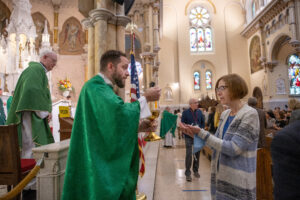
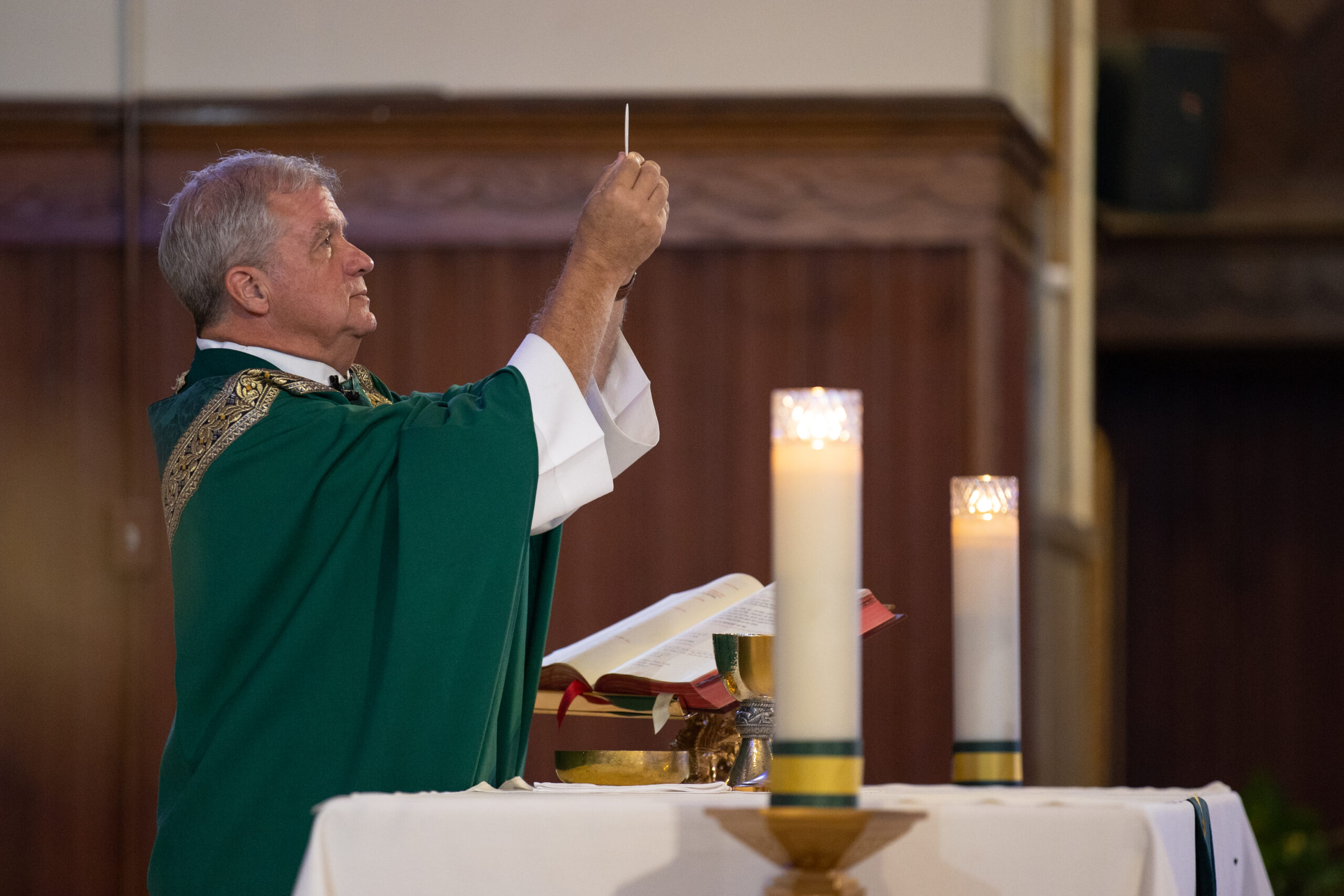
Beginning the weekend of Oct. 8, priests are urged to pause during each Mass for just five minutes to highlight that week’s lesson on that element of the liturgy.
The six “Understanding the Mass” documents discuss the Mass in chronological order – the Introductory Rites, the Liturgy of the Word, the Preparation of the Altar, the Preface and Eucharistic Prayer, the Rite of Communion and the Dismissal Rites – with clear, faith-filled text and pictures intended for all Catholics. The “Understanding the Mass” initiative is slated for the entire month of October and most of November, ending the weekend of the Solemnity of Christ, King of the Universe.
“Understanding the Mass” is designed to benefit Catholics at every place in their spiritual journey, whether they were born into the faith or newcomers, young or old, active or fallen away from the Church, Father Hughes said, explaining the Diocese of Camden’s intention for introducing the series of instructional missives.
“It will remind people of the importance – and the beauty – of the Holy Mass in their lives,” agreed Father Mark Matthias, administrator in Saint Joseph the Worker Parish, Haddon Township. “When we hear the Word of God and consume his Body, Blood, soul and divinity at Mass, we are feeding our soul. If we do not take care of our soul … it will become spiritually malnourished.”
Faith-filled conversations
“Most practicing Catholics only attend Sunday Mass,” observed Father Jon Thomas, pastor of Christ the King Parish, Haddonfield. “They don’t return during the week for prayer meetings, Bible studies and other events. Sunday Mass needs to be impactful – and that, first of all, means it needs to be understood. … Sometimes, it will be an ‘aha’ moment like, ‘So that’s why we do that!’ and they’ll be more attentive at that point in the Mass.”
Rather than a series of one-sided tutorials, Father Matthias envisions the bulletin inserts as a springboard to further conversation. He explained, “The overall goal for this initiative is to educate the faithful … with the reasons why we come, so that they can encourage others to do so.”
Father Joseph Pham, pastor of Infant Jesus Parish, Woodbury, agreed. “Some people go to Mass and just watch it like a show or concert with music. This will help them get more out of it … explain things on their level and become more interactive.”
Added Father Hughes, “We can’t cover everything in five minutes. We can encourage our parishioners to ask questions at weekday Masses or at senior groups. Just like we do Bible study, there’s nothing wrong with [using the documents to] do small group liturgy study.”
All ages, all stages
Father Stephen Robbins, part-time parochial vicar in the Cathedral of the Immaculate Conception, Camden, and part-time at Camden Catholic High School as Catholic Identity Director, believes the initiative holds value for the youth he encounters in his ministry.
“Just like Saint Augustine referred to the Lord as ‘beauty, ever ancient, ever new,’ our people, regardless of where they are in their faith journeys, can always learn more and receive more fruits from the Holy Eucharist,” Father Robbins observed. “It might help some of the false conceptions that many young people have about the Mass, and hopefully inspire them to want to return to the fold.”
Youth and mature adults understand their faith in different ways, maintains Father Pham. He believes the bulletin inserts will bridge that gap and promote a deeper understanding of what they see.
“Some people worship every week only because it is their obligation. This can bring the Scriptures into their lives,” he continued. “The Mass is not out of date; it is still happening. They can wonder how to take the Scriptures into 2022.”
Father Hughes viewed the relationship between faith-filled grandparents, experienced in sharing the faith, and their possibly underinformed grandchildren as one where a skilled tradesman might tutor an inexperienced newcomer.
“Like anything else, if you want to be a plumber, you apprentice with a plumber,” he said. “We invite our families to apprentice, practice the faith with those who believe. Little by little, it gets absorbed.”
Jennifer Mauro, managing editor, contributed to this report.
Reflecting On The Mass
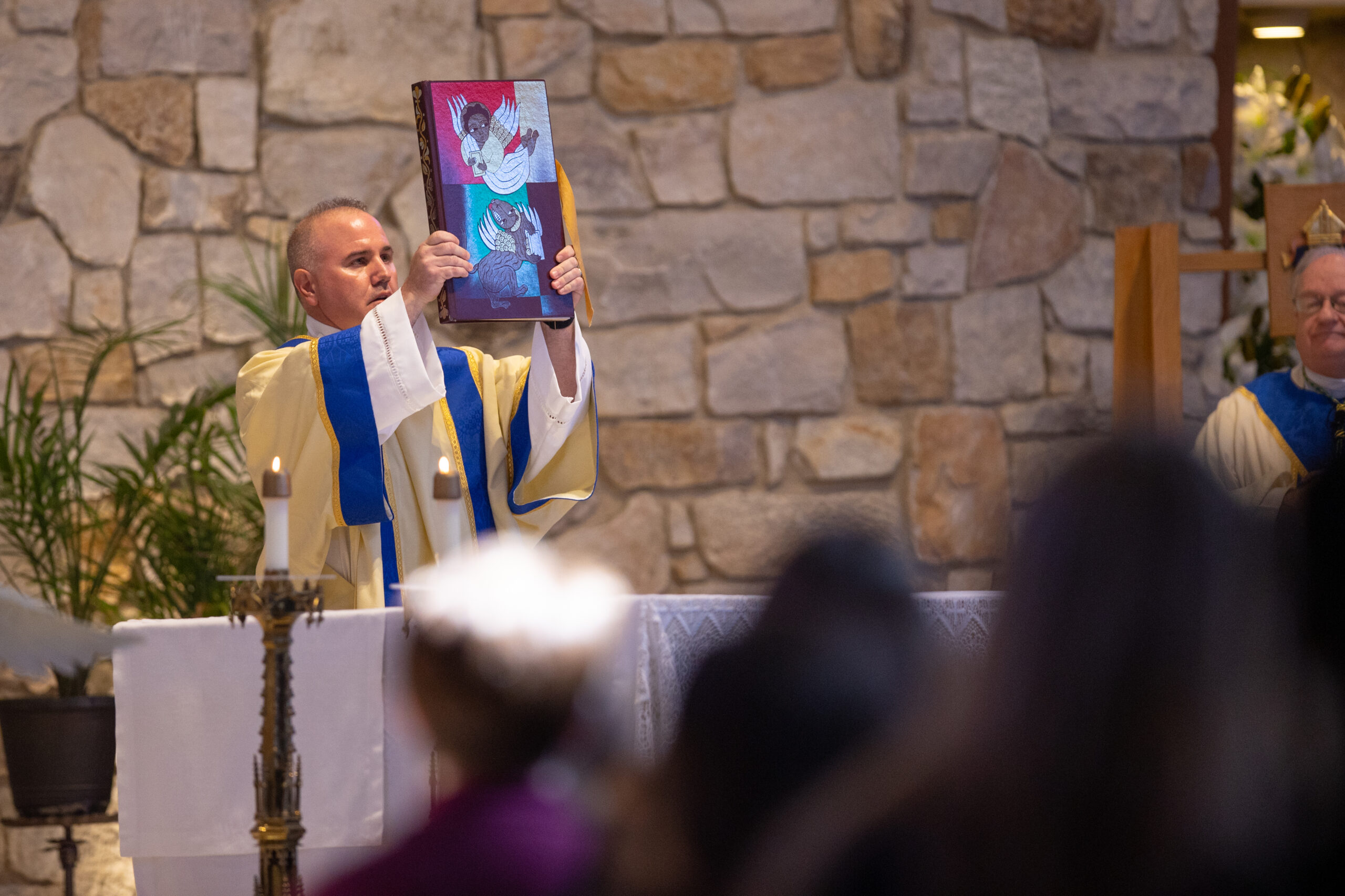
The “Understanding the Mass” series consists of six documents:
Part 1: The Introductory Rites
During this stage, the document reminds us that Mass begins when you are sent from Mass the previous Sunday, as everything you do during the week is preparation for the coming Sunday; and then it explains the prayers and actions, such as genuflection, procession, participation in the opening song, the act of penance, Gloria and opening prayer or collect.
Part 2: The Liturgy of the Word
Explains the Ministry of Lector; the First and Second Scriptural readings, the Responsorial Psalm, the proclamation of the Gospel, the homily, the Profession of Faith and the Prayers of the Faithful.
Part 3: Preparation of the Altar
Details the proper setting of the altar table with specific vessels and clothes, their names and places on the table, the collection and presentation of the gifts, prayers over the gifts and the Washing of Hands.
Part 4: The Preface and Eucharistic Prayer
Discusses the singing/speaking of the Preface, the Sanctus, the Epiclesis, the Memorial Acclamation, the Great Doxology and the Amen.
Part 5: The Rite of Communion
Explains the Our Father, Rite of Peace, Fraction, Agnus Dei, Communion Procession and Song, and how to properly receive the Eucharist and Precious Blood.
Part 6: The Dismissal Rites
Details the Prayer after Communion, the Concluding Rites, the Final Blessing, the Dismissal and the Concluding Procession, as well as the importance of sacred music, liturgical colors and incense.




 at the bottom and then tap “Add to Home Screen”
