






In the 62 years since the convening of the Second Vatican Council, we have witnessed the emerging role of women. In this brief period of time in the long scope of history, women have gained greater equality in society, workplace and the Church. However, there is still much work to be done.
Since 1869 – with the advent of the suffrage movement – women in the United States have sought to have equal access to education and employment, equality within marriage, and a married woman’s right to her own property and wages, custody over her children and control over her own body. Many of the Christian denominations, including our own Catholic Church, initially opposed the suffrage movement. The influence of patriarchy often colored how women were viewed and treated.
The first followers of Jesus spoke of a new sense of equality – rooted in the Holy Spirit – given to all men and women from every land and people. This nascent teaching of Jesus and his followers on the radical equality ultimately prevailed against the forces of patriarchy and second-class citizenship imposed on women and other perceived inferior groups. As such, women have made much progress in their quest for equality and full status in both society and the Church in modern times.
Women have advanced in leadership roles and greater participation in most aspects of the Jewish, Christian, Muslim, Buddhist and Hindu faiths in most of the Western world as well. For example, Roman Catholics, since the Second Vatican Council, have witnessed greater participation by women in most aspects of Church leadership not requiring ordination. Popes’ and bishops’ conferences have issued various statements, documents and pastoral teachings aimed at developing greater roles of equality for women in the Church.
This process of seeking greater equality for women in the Catholic Church has been one of the goals of Pope Francis’ papacy. He has often spoken of and written about the need to raise up women in the Church and for greater equality in decision-making and leadership positions. To this end, Pope Francis recently met with his Council of Cardinals – sometimes called the C9 or his papal “kitchen cabinet” – to discuss women’s roles in the Church. He invited some women theologians to give their input on the subject, including Salesian Sister Linda Pocher, a professor of Christology and Mariology at Rome’s Pontifical Faculty of Educational Sciences “Auxilium,” and Giuliva Di Berardino, a consecrated virgin and professor of spirituality from the Diocese of Verona, Italy.
Pope Francis also invited Bishop Jo Bailey Wells, deputy secretary general of the Anglican Communion who served as the chaplain to the Archbishop of Canterbury. She has served her Church as theologian, biblical scholar and priest/bishop.
Pope Francis, at a November meeting of the International Theological Commission, said the Church is in the process of “demasculinizing the Church.” In a December interview, Sister Linda said that the emerging role of women in the post-Vatican II Church is complex.
“Women are not a ‘social class’ nor a ‘political group,’ and not all think in the same way or have the same experience or the same desires,” she said, noting that while women have always been the Church’s greatest supporters, “in almost all contexts, more or less aggressive forms of machismo or clericalism continue to be found.”
One of the constant themes of synod deliberations around the world is the role of women in the Church. Many participants called for the ordination of women to the diaconate, which prompted a call for more theological discussion to continue and the results be shared at the next session of the Synod on Synodality this October. The C9, at their Feb. 5-7 meeting, concluded that there was a “need to listen, also and above all in the individual Christian communities, to the feminine aspect of the Church so that the processes of reflection and decision-making can enjoy the irreplaceable contribution of women.”
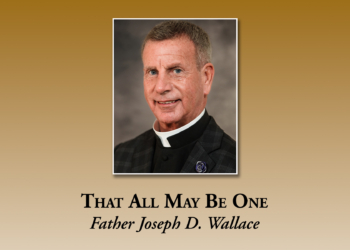
Father Joseph D. Wallace is diocesan director of Ecumenical and Inter-religious Affairs and pastor of Christ the Redeemer Parish, Atco.




 at the bottom and then tap “Add to Home Screen”
