








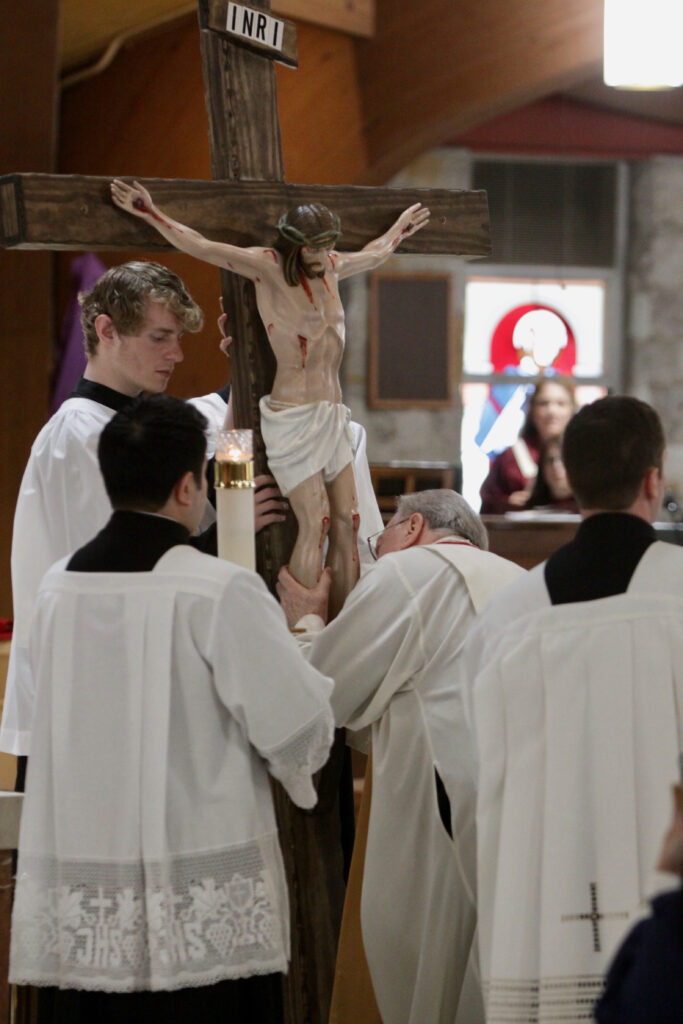
“Hope is, for me, anticipated joy, as anxiety is anticipated terror.”
Of all the theological maxims that might guide our Lenten observances as we approach the drama of Holy Week, perhaps none is more appropriate and profound than this statement by Protestant theologian Jürgen Moltmann.
We are, in essence, a people of hope, and that means living our entire lives informed by a counter-cultural posture to the dominant media-industrial complex’s “anger-tainment” profit model, which keeps us anxious and anticipating terror around every corner. This is not meant to diminish the “public” nature of our creedal assertions, or to advocate for believers to bury their heads in the sands of disinterest and naiveté. But if we are to take the Gospel seriously, then faith leads us to a firm trust in the “assurance of things hoped for, the evidence of things not seen.” (Heb. 11:1) This anticipated hope is most powerfully re-presented each year in our remembrances of the Passion, Death and Resurrection of Jesus – for at the core of our theological and liturgical lives are Easter exultations of shock, astonishment and deep gladness.
Moltmann’s theology, rooted in his experiences as a prisoner of war during World War II, presents a sort of triptych with the ministry, Passion and Resurrection of Jesus Christ understood through the lens of an overarching pathos of God, the emotional and dynamic investment of the Creator in creation. His most widely read book, “The Crucified God,” highlights this nature where God “suffers with” (cum-passio) humanity. This is a long way from the Greek metaphysics that would posit an impassible God, one who is beyond suffering as a sort of neo-Platonic ideal who can neither change nor be changed. If Jesus is the same yesterday, today and forever (Heb. 13:8), and the God of our ancestors has been our dwelling place throughout all generations, from everlasting to everlasting (Psalm 90), the constancy described here is precisely manifested in God’s unwavering investment in the human condition – the pathos, never the aloof apathy, of the Lord.
When six priests who were advocating for the rights of the poor were killed along with their housekeeper and her daughter by death squads in El Salvador on Nov. 16, 1989, the blood from their head wounds soaked through the pages of a copy of Moltmann’s “The Crucified God,” which had fallen off a shelf as the bodies were dragged through the house. When told about it, the author never again thought about his work in the same way.
Today, that book can be seen in a little museum attached to the Universidad Centroamericana (UCA) in San Salvador, an ongoing testament to the crucified peoples of the world who continue to suffer under the boot of oppression and violence, along with “the two-thirds of humanity who live in physical, cultural and moral misery,” as some 40 Latin American bishops put it in the 1965 “Pact of the Catacombs.”
In the coming days, we will mark once more the brutal execution of the Just One, the savior of the world who died not to appease an angry and sadistic father, but because of our sinful race’s hatred of peace and forgiveness. Divorced from the empty tomb and the mysterious transformation from partisan grief and fear to apostolic courage and proclamation, this would be simply one more tragic tale of darkness extinguishing light, of vainglory running roughshod over humility, and of supremacy triumphing over vulnerability.
But the anticipated hope of Sunday morning joy tells us that the pain of the Good Friday evening Sabbath and the bewilderment of Holy Saturday afternoon are prologue, not climax. “Surrexit Christus spes mea, praecedet suos in Galilaeam,” as the 11th century hymn “Victimae Paschali Laudes” asserts: “Christ my hope is arisen, and goes before his own into Galilee.” And this is truly a reason to exult with joy.
Originally from Collingswood, Michael M. Canaris, Ph.D., teaches at Loyola University, Chicago.






 at the bottom and then tap “Add to Home Screen”
