




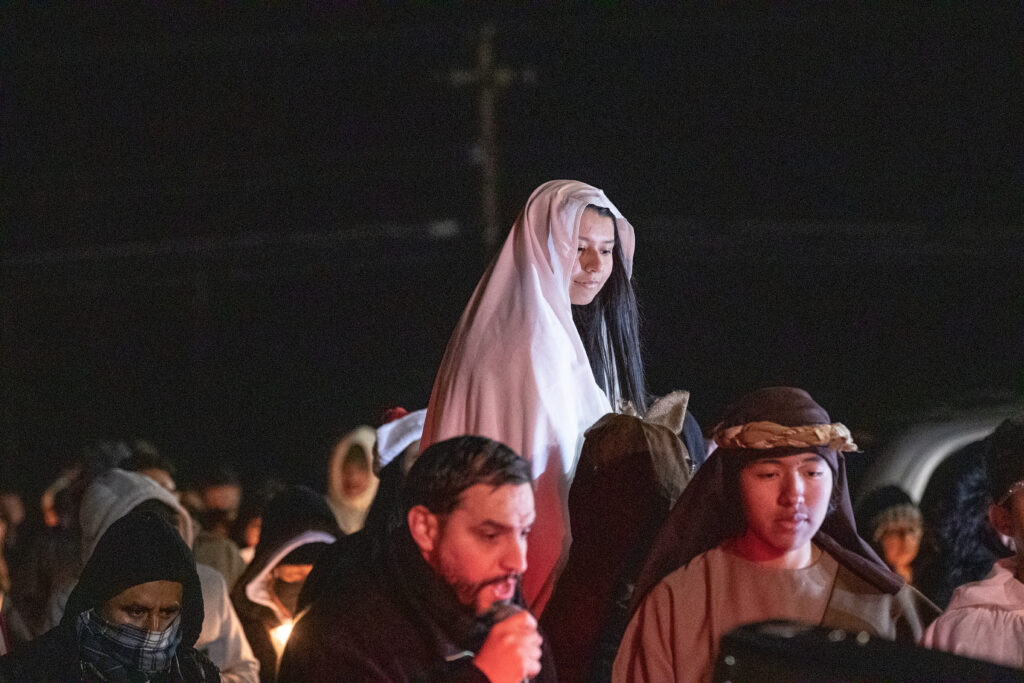
HAMMONTON – Shivering on a cold December night, the Virgin Mary holds her swollen belly and looks up into the blanket of stars above.
“In the name of heaven, I ask you for lodging, because my beloved wife cannot walk,” her husband, Joseph, pleads with an innkeeper nearby.
“Keep going. I can’t open. … Go away now; do not make me so angry that I have to have you punished,” the proprietor responds, closing the door on the Holy Family.
Such was the story told the evening of Dec. 18 during the Diocesan Posada at Saint Anthony of Padua Church, Saint Mary of Mount Carmel Parish. The Posada commemorates Mary and Joseph’s journey from Nazareth to Bethlehem and their search for lodging ahead of the Birth of Jesus. Rooted in the Mexican culture, the Posada is celebrated for nine evenings before Christmas.
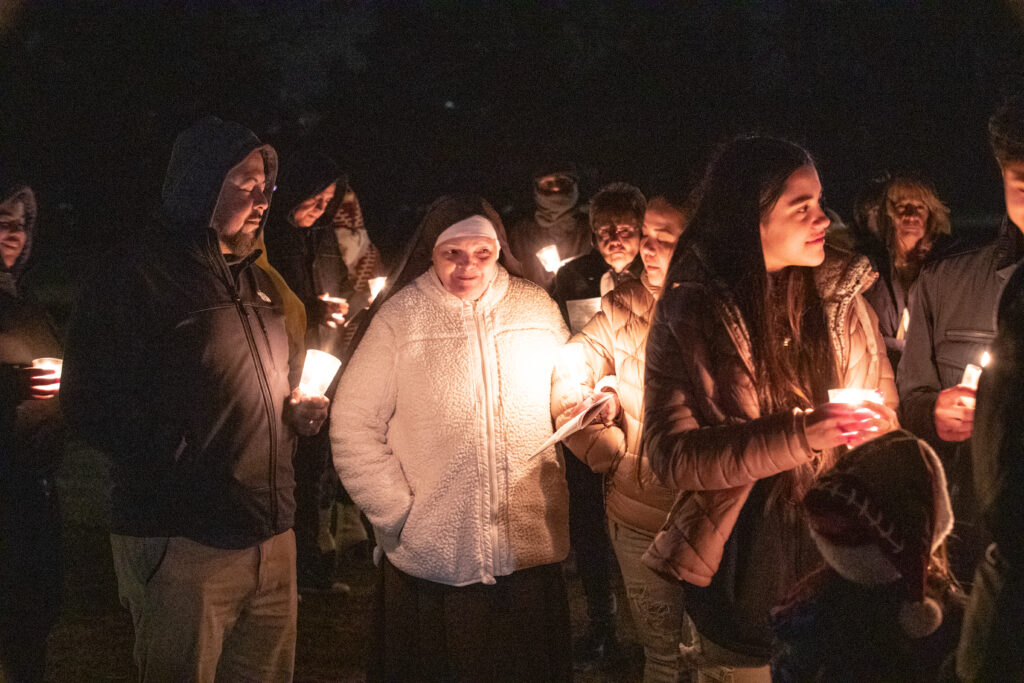
Singing and reciting the Rosary, faithful from the Spanish- and English-speaking communities processed reverently around the church property about an hour after sunset, following behind parishioners dressed as Joseph and the Blessed Mother as they searched for respite. At each stop, the crowd – which was bundled up in hats and coats – read from a printed program, echoing Joseph’s pleas in both Spanish and English. The Virgin Mary sat perched upon a wooden horse, a soft white light illuminating her midsection under her white robe.
“The Posada evokes a beautiful story – one that’s important to re-enact because it gives you a real-life perspective of what happened,” said parishioner Mariana Reyes, 16, who portrayed the Blessed Mother. “Being outside in the cold right now, you can only imagine what they went through.”
Fellow parishioner Thomas Gutierrez, 15, agreed. “Their journey wasn’t a small trip like we are doing tonight. They were traveling miles and miles from another town.”
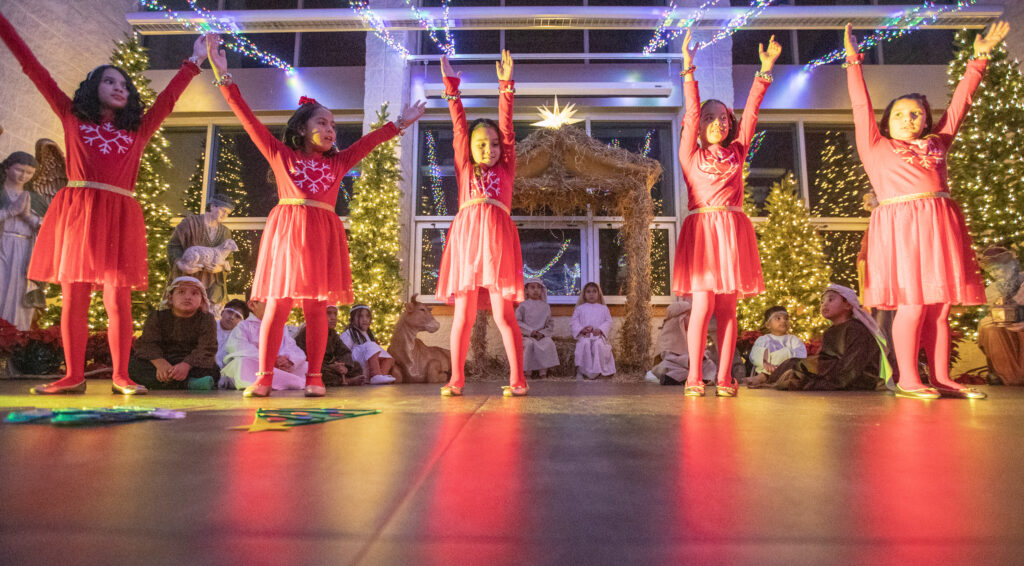
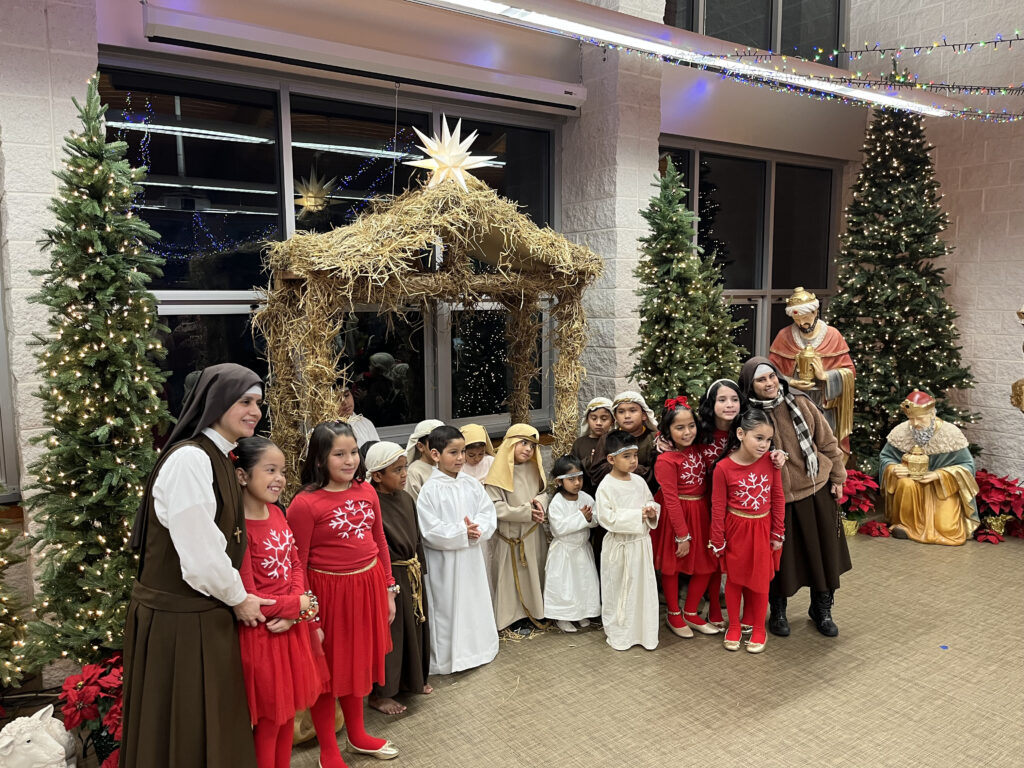
After being greeted at the last stop with open arms, Mary, Joseph and the faithful were ushered into the parish hall and greeted with Mexican food, piñatas and festivities, including a Nativity play with the youngest members of the parish community and dances by some of the older children.
“The Posada is a great opportunity for people of all ages to prepare for Christmas,” said Sister Ester Luz del Alba, who with her fellow Misioneras de Maria Formadora sisters, helped organize the children’s performances. “Many families take the programs home and do the Posada there with their families, especially the Rosary, for the full nine days.”
Father David Rivera, parish pastor, explained how every part of the Posada relates to the Nativity story. The breaking of piñatas, for example, represents destroying the seven deadly sins (often the piñatas are shaped like seven-pointed stars), and the bounty that falls out represents grace.
With the Posada being a longtime tradition in the Hammonton parish, Father Rivera started the evening earlier by welcoming the Diocese’s faithful in the church. Behind him, a blue cloth laid atop the tabernacle.
“Today, the tabernacle has a veil placed upon it to remind us that in a sense every tabernacle is like the womb of Mary, holding Jesus, making Jesus present to us,” he said. “Tonight, the Virgin Mary’s womb is illuminated with the light of Christ. A light that will come into the darkness of our world on Christmas.”
Tying the Posada into the National Eucharistic Revival and its theme, “My flesh for the life of the world,” Father Rivera reflected on the Old Testament, Moses, and how manna in the desert fed the Israelites both physically and spiritually in Exodus. During this time, a temporary place of worship would be erected – the tabernacle – and within, the Ark of the Covenant containing the manna, Aaron’s staff and the Ten Commandments.
“In New Testament times, our God prepared a new tabernacle, a new Ark of the Covenant, not for manna that would be found in the desert but for the bread that would come from heaven – Jesus,” he said.



 at the bottom and then tap “Add to Home Screen”
