






This month, with the approval of Pope Leo XIV, the Dicastery for the Doctrine of the Faith issued a new document concerning the role of Mary in the mystery of redemption. While clearly stating the love and respect that Catholics have for Mary, the mother of Jesus, and reaffirming her motherly assistance to believers, they also rejected any attempts to proclaim Mary as “co-redemptrix” or “co-mediatrix.”
The Dicastery’s document, titled “Mater Populi Fidelis” (“Mother of the Faithful People of God”), states that the title co-redemptrix or co-redeemer “carries the risk of eclipsing the exclusive role of Jesus Christ” in the mystery of redemption. And as regards the titles of co-mediatrix or co-mediator, it explains that Mary, “the first redeemed, could not have been the mediatrix of the grace that she herself received.”
Cardinal Victor Manuel Fernandez, prefect of the doctrinal dicastery, said this new teaching becomes part of the Church’s “ordinary magisterium” and must be considered the official teaching of the Church. He explained that this clarification should remove any doubt that the consistent teaching of the Church is that Jesus Christ is the sole redeemer of the world and the only bestower of grace.
He said, “Any gaze directed at her that distracts us from Christ or that places her on the same level as the Son of God would fall outside the dynamic proper to an authentically Marian faith.”
Because Mary always points to her son.
This clarification is built upon the consistent teachings of the last two popes. Pope Benedict XVI explained that “the precise meaning of these titles is not clear and the doctrine contained in them is not mature.” He added that “everything comes from Him, Christ, as the Letter to the Ephesians and the Letter to the Colossians, in particular, tell us; Mary, too, is everything that she is through Him. The word ‘co-redemptrix’ would obscure this origin.”
Pope Francis taught that Jesus entrusted Mary to humanity as a mother, “not as a goddess, not as co-redemptrix.”
Many Protestants traditions have historically disagreed with the titles of “co-redemptrix” or “co-mediatrix of grace” on theological grounds, viewing it as a theological overreach that elevates Mary to a status parallel to Christ’s status in the mystery of salvation. The response from many of these traditions to the dicastery’s new teaching is to view this doctrinal clarification as a positive development that fosters a more Christ-centered understanding of Mary’s role and could lead to a deeper ecumenical dialogue. The document states that this clarification on the role of Mary requires a “profound fidelity to Catholic identity while also requiring a particular ecumenical effort.”
Response from the Orthodox Churches has also been positive. Orthodox theologian Father John Whiteford explained that Christ is the sole mediator of the New Covenant. He said that “in the Orthodox view, Christ redeems fully and finally; Mary petitions graciously, guiding us to His mercy. Who, then, atones for humanity – the God-Man Himself, or His faithful handmaid?”
Another Orthodox theologian added, “We venerate Mary as Theotokos, as a unique participant in Christ’s sufferings, but Christ alone saves.”
For Orthodox believers, the prefix “co-” carries inherent dangers, evoking notions of an equality that threatens the integrity of Christ’s unique person and work. For the Orthodox, the teaching of Mary as “co-” flirts perilously close to Nestorianism – the fifth-century heresy that divided Christ into two separate entities, divine and human – rather than upholding the hypostatic union affirmed at the Council of Chalcedon. For the Orthodox, Mary’s mediation can only be understood as “subordinate” to Christ.
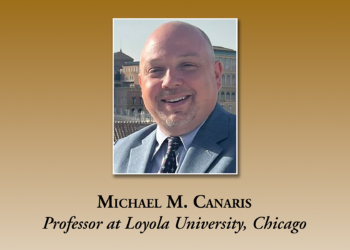
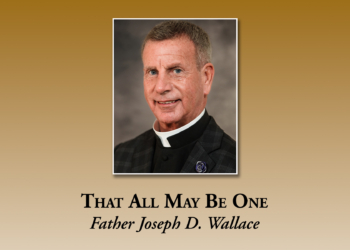
Father Joseph D. Wallace is diocesan director of Ecumenical and Inter-religious Affairs and pastor of Christ the Redeemer Parish, Atco.





 at the bottom and then tap “Add to Home Screen”
