




One beautiful spring day, while struggling with financial worries and ill health, John Donne wrote to a friend, “The pleasantness of the season displeases me. Everything refreshes, and I wither, and I grow older and not better.”
Throughout his life, the English writer suffered from digestive problems, recurring fever, sore throat and, like most people in Renaissance England, toothaches. But he and his friend corresponded regularly, and that friendship might have helped sustain Donne during a particularly dark time when he contemplated suicide.
Years later, in reflecting on an illness that brought him close to death, he made an observation that many individuals today understand too well: “The greatest misery of sickness is solitude.”
Pope Francis begins his message for World Day of the Sick this year with a similar sentiment. “If illness is experienced in isolation and abandonment, unaccompanied by care and compassion, it can become inhumane.”
The pope also comments on the fear of becoming a burden – another emotion the poet understood. “I am afraid that Death will play with me so long, as he will forget to kill me,” Donne wrote, “and suffer me to live in a languishing and useless age.”
But Donne also saw spiritual opportunity in physical vulnerability. In his poem “Hymn to God, My God, in My Sickness,” he builds on the conception of Christ – who ushered in the new creation by forgiving sin – as the “new Adam”:
As the first Adam’s sweat surrounds my face,
May the last Adam’s blood my soul embrace.
Donne was distantly related to Saint Thomas More, but he converted to Anglicanism as a young man. A complex individual, he might have been motivated by sincere belief, a desire to advance professionally, or a combination of both. Another factor might have been simple fear during an era of brutal religious persecution. When Donne was 21, his younger brother, Henry, was accused of harboring a Jesuit. Under torture, Henry betrayed the priest, who was hanged, drawn and quartered. Henry was imprisoned, where he died of plague.
Also unclear is why Donne eventually entered the ministry. He was 43 when he was ordained an Anglican cleric. Some self-interest may have been involved, states Katherine Rundell in her 2022 book “Super-Infinite: The Transformations of John Donne.” But she maintains that the death of two of his children, ages 3 and 7, was a significant motivation. (In all, Donne lost six children. His wife died less than a week after delivering their last, stillborn, child.)
As a young man, the subject of Donne’s poetry was often romantic love, but he later turned to religious themes. One of his Holy Sonnets calls to mind Saint Paul’s writing on the resurrection of the dead (“Where, O death, is your victory”) in the first letter to the Corinthians (15:51-55). Personifying the image of Death, the sonnet begins “Death be not proud,” and claims that Death will be overcome:
One short sleep past, we wake eternally,
And death shall be no more: Death thou shalt die.
Today, Donne is considered one of the finest poets in the English language, yet his verse is far less well-known than five simple words of prose he wrote: “No man is an island.” The phrase comes from his series of reflections on mortality titled “Devotions Upon Emergent Occasions.” Meditation 17 complements Pope Francis’ plea for solidarity with the suffering, as well as his observation that individuals are rarely prepared for their own illness.
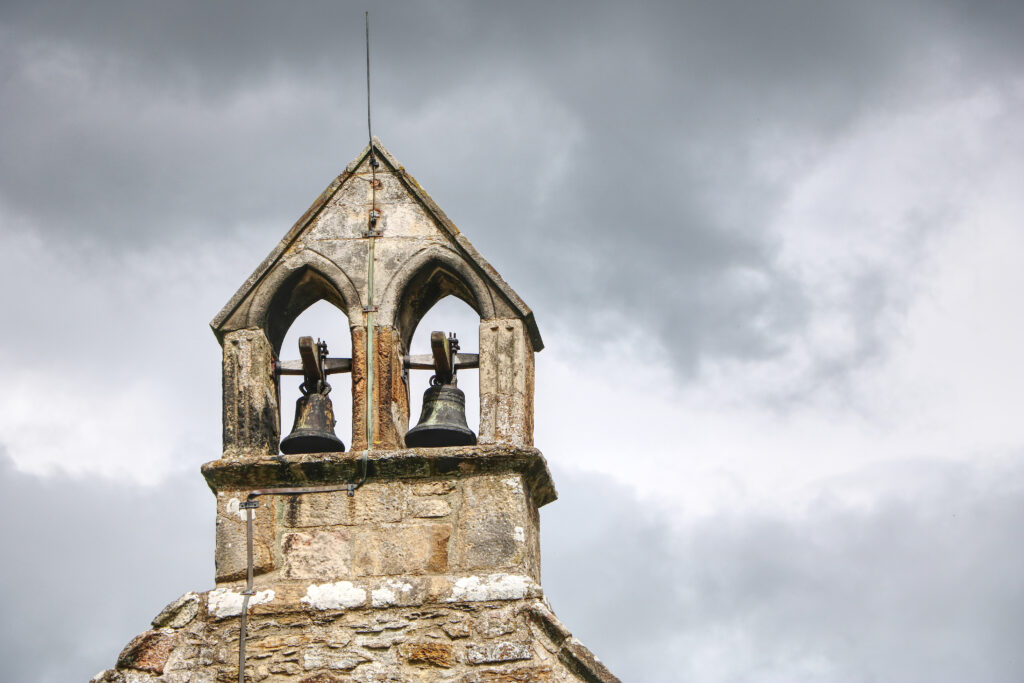
The meditation was inspired by Donne’s experience of being ill, languishing in bed, and hearing church bells toll for the dying. The most familiar part of the reflection is, “No man is an island, entire of itself; every man is a piece of the continent, a part of the main. … any man’s death diminishes me, because I am involved in mankind, and therefore never send to know for whom the bell tolls; it tolls for thee.”
Four centuries later, at his funeral in Vatican City, a bell tolled for Pope Emeritus Benedict, who had cited his own deteriorating health as the reason for his retirement in 2013.
In his book “Jesus of Nazareth,” Pope Benedict XVI uses the parable of the good Samaritan to comment on the Christian response to someone who is physically suffering and abandoned. “I have to become like someone in love, someone whose heart is open to being shaken up by another’s need,” Benedict wrote. “Then I find my neighbor, or – better – then I am found by him.”
Carl Peters is former managing editor of the Catholic Star Herald.



 at the bottom and then tap “Add to Home Screen”
