

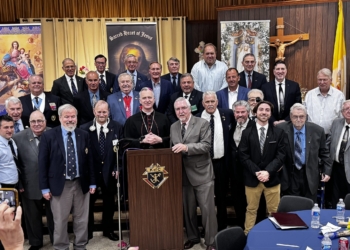





When I attended the National Workshop on Christian Unity in May, one of the hot topics of discussion was the division in the United Methodist Church – experienced by most mainline Protestant churches – over same-sex unions and the ordination of LGBTQ+ clergy.
Methodist church law forbids the marriage or ordination of “self-avowed, practicing homosexuals,” though many churches are ignoring these rules.
This ongoing debate has led to more than 6,000 congregations, a fifth of the United Methodist congregations in the United States, having received permission to leave the denomination. It all began with a trickle of congregations in 2019, when it was decided that Methodists would have a four-year window of permission for congregations to depart the denomination. That trickle turned into a flood, as this year alone, more than 4,000 congregations have left.
Most of the congregations leaving are joining what has come to be known as the Global Methodist Church. This is a quasi-new denomination created in the last few years for conservative congregations. Other dissatisfied Methodists have also gone independent or have joined other Christian denominations. While the number staying in the United Methodist Church is higher than those disaffiliated, some of the departing congregations are rather large, and denominational leaders are now bracing for significant budget cuts in 2024.
The Rev. Jay Therrell, president of the Wesleyan Covenant Association, a conservative caucus that has advocated disaffiliation with the United Methodist Church, said the number of those leaving is much larger than anyone expected. After much legal wrangling, the United Methodist Church has been able to resolve how much compensation the departing congregations must pay for their property and other financial obligations.
“For the most part, bishops and other annual conference leaders have been very gracious, and I deeply appreciate that,” the Rev. Therrell said. He added, “There have been some small exceptions to that, and those are unfortunate, but we’re grateful that cooler and calmer heads have prevailed.”
Bishop Thomas Bickerton, president of the United Methodist Church’s Council of Bishops, said the split in the Church is disappointing. “I don’t think any of us want to see any of our churches leave. We’re called to be the Body of Christ; we’re called to be unified. There’s never been a time when the church has not been without conflict, but there’s been a way we’ve worked through that.”
He said, however, that those who want to depart should “go and live out their Christian faith in a new expression, with God’s blessings on them.”
The United Methodist Church has approximately some 6.5 million members in the United States and at least that many abroad. While U.S. membership has been steadily declining, most overseas membership has grown exponentially, particularly in Africa. The Rev. Therrell said there will be efforts at its General Conference in 2024 to provide overseas churches a legal way to disaffiliate. The Global Methodist Church says more than 3,000 churches so far have affiliated with the new denomination, and they anticipate more following in the years ahead.
More than likely, the more progressive United Methodist Church members will propose changing church law at the 2024 General Conference to allow for same-sex marriage and the ordination of LGBTQ+ ministers. Bishop Bickerton said he thinks it is time for those who remain in the UMC to refocus their work.
“Quite often, when you’re pressed, you begin to exhibit creativity,” he said. “We’re pivoting away from what we were into what our next expression is going to be.”
Noting the decline in budget, he said, “This is our opportunity to refashion the church for relevance in the 21st century and really focus on evangelism.”
Methodists are not the only Protestant denomination struggling with modernity. The leaders of the Southern Baptist Convention, the largest Protestant denomination in the United States, recently ousted five large churches, including the well-known Saddleback Church, because they allow women to be ordained as ministers.
Such issues concerning inclusion or exclusion in the name of Christ are causing great consternation in numerous Christian denominations, including our own. But it seems the Holy Spirit is moving the faithful toward settling these issues. Dialogue and discernment, such as the Synod on Synodality in our own denomination, will lead us to greater unity and love.
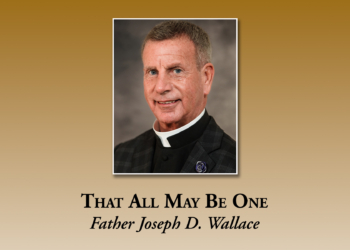
Father Joseph D. Wallace is diocesan director of Ecumenical and Inter-religious Affairs and pastor of Christ the Redeemer Parish, Atco.




 at the bottom and then tap “Add to Home Screen”
