







Much of the country recently experienced what many hope will be the last cold snap of the season, akin to what some in the United Kingdom call “blackthorn winter” – as it chills the landscape when flowering berries called blackthorn sloes are already budding. Notwithstanding contemporary changes to climate, where we can likely expect one of the hottest years on record once again, these early spring frigidities are not something new.
In fact, in certain parts of Europe, the week between May 11 and May 15 marks the celebration of the “Ice Saints.” Since this week traditionally represented the beginning of the real thaw in the mountainous regions of Germany, Poland, Slovakia, Sweden and the Czech Republic, the saints whose feast days fell on that week garnered the collective moniker.
The Ice Saints are usually listed as Saint Mamertus of Vienne, France (May 11), Saint Pancrazio of Rome (May 12), Saint Servais of Belgium (May 13) and Saint Boniface of Tarsus, Türkiye (May 14). The closing day of this strange little set of feasts is usually associated with Saint Sophia of Rome (May 15), who in German and Polish is known locally as “Cold Sophia” for this reason.
All of these saints were invoked during this last frost of the season for healthy crops in the coming spring. The closest analogy we have in the English-speaking world is probably Groundhog Day, which can be traced to Candlemas lore, or Saint Swithun’s Day on June 15 in England, which is still marked with their rhyming proverb:
“St Swithun’s day if thou dost rain
For forty days it will remain
St Swithun’s day if thou be fair
For forty days ‘twill rain nae mare.”
This year, the Ice Saints’ Days overlapped with the minor Rogation Days, which fall immediately before the Ascension. These days of prayer and fasting historically helped Christians prepare for the extinguishing of the paschal candle, when the community prayed for God’s mercy on all of creation in what is seen as a recognition of Christ’s Real Absence in the world in addition to His enduring and everlasting Real Presence. In more consciously agricultural times, these days, too, were chances to bless the fields and pray for abundant returns.
Tornadoes, hurricanes, wildfires, avalanches. These types of cataclysmic events struck grave concern into the hearts of earlier believers, as they do for many today. Often such weather occurrences had not only individual or familial consequences, but societal ones with famines or pestilence trailing in their wake. It was only natural for Christians to transfer some of the pagan inclinations to beg for the nature gods’ appeasement in the face of forces totally out of their control over to the communion of saints, invoking the cloud of witnesses’ protection and the divine “shelter from the stormy blast,” as the hymn puts it.
The Ice Saints are often referred to as “stern lords” (in German “Gestrenge Herren”) since the frost associated with them could ruin a full year of work even before the arrival of spring. Of course, the teaching was to pay attention to the gravity of one’s surroundings and carefully attune oneself to the “signs of the times” in response, so as to increase the potential harvest.
In this period of many transitions, both seasonal and otherwise, we ought to be on guard for opportunities to do the same. It’s only in doing so that we will have the spiritual resolve and resilience to reap an abundant yield.
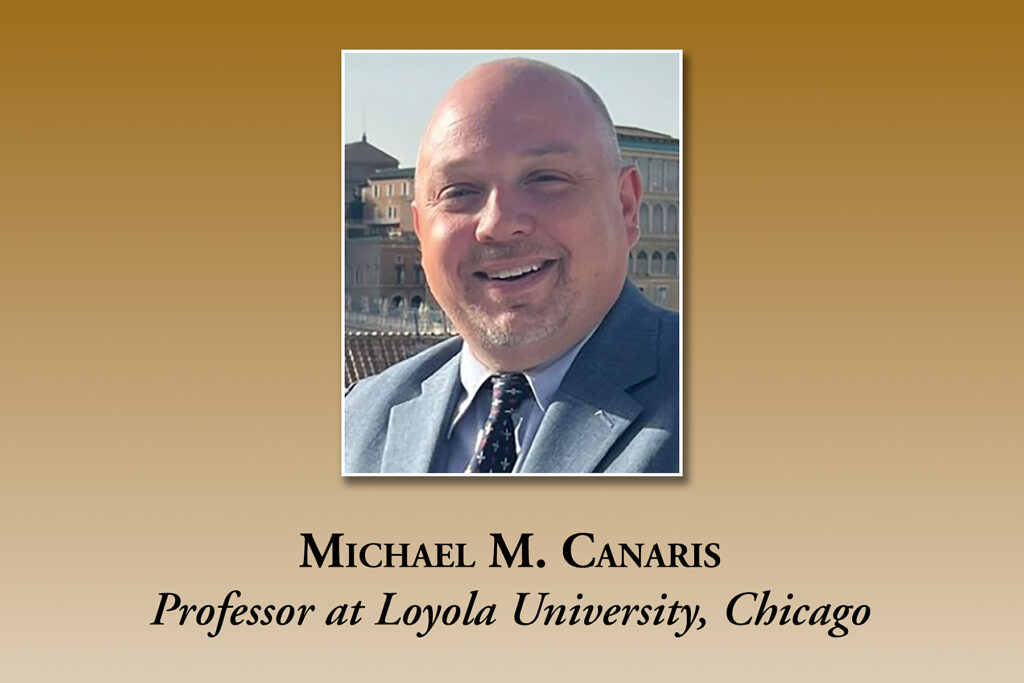
An alumnus of Camden Catholic High School, Cherry Hill, Michael M. Canaris, Ph.D., teaches at Loyola University, Chicago.





 at the bottom and then tap “Add to Home Screen”
