




We Christians have a long history of responding to epidemics. This is not the first time that the world has had to deal with a pandemic that has no known vaccine or cure. Some of the Christian response to such plagues of the past that suddenly arose, like COVID-19, comes to us from the Sacred Scripture that we share, such as: “Do unto others as you would have them do unto you”; “Love your neighbor as yourself”; “Greater love has no man than this, that he should lay down his life for his friends.” In essence the Christian view is that during a pandemic plague, the life of our neighbor and their well being should come before preoccupation with saving our own life.
In ancient times Christians were eventually admired in the Roman Empire for their fearless care for the sick. Some historians contend that during the horrible Antonine Plague of 165-180 AD, when soldiers brought back either smallpox or measles from the Near East which killed off a quarter of the Roman Empire, Christians were admired and many converted to Christianity because of their heroic outreach to the afflicted. Another outbreak in 250-270 AD, known as the Plague of Cyprian, originated in Ethiopia around Easter and spread to Rome, Greece and Syria. It killed more than 5,000 people per day in Rome. This plague was named for the great Saint Cyprian, bishop of Carthage, because he was a witness who recorded in great detail the spread of this pandemic influenza.
During this plague Saint Cyprian preached that Christians were not to waste their time grieving the death of the victims (who he preached were in heaven), but rather they were to redouble their efforts to care for the living afflicted. A fellow bishop of Saint Cyprian, Dionysius, wrote that Christians, “heedless of the dangers, took charge of the sick, attending to their every need.” The heroic ministry of Christians of the third century led to an explosive mass conversion to Christianity. A century after this pandemic, the pagan Emperor Julian noted that “the Galileans” cared not only for their own but even non-Christian people who were sick or in need of any kind. In fact, historians that study these episodic plagues throughout ancient times note that death rates in cities with large Christian communities had a death rate half the number of cities that did not.
Moving closer to modern times we can look at the Christian response to what is known as the American Influenza Epidemic of 1918-19, also known as the “Spanish flu.” This terrible pandemic killed over 50 million people around the world, including 675,000 in this country. I always remember quite vividly my dear grandmother, Barbara deVecchis, telling the stories of when she was a little girl in Philadelphia, witnessing a cart coming up the alley early in the morning to pick up the dead. Philadelphia had one of the highest death rates from this terrible flu. Like our own times, the Board of Health of the city of Philadelphia ordered the closing of all schools and suspended church services.
Archbishop Dennis Dougherty allowed diocesan buildings to be used as temporary hospitals, as he ordered all priests, non-cloistered nuns, and members of the Society of Saint Vincent de Paul to minister to the victims of the Spanish flu. Religious sisters of numerous orders rose en mass to serve their brothers and sisters in need in Philadelphia and the Camden area. Over 2,000 nuns, about two-thirds of all sisters in the archdiocese, ministered in many ways to the victims of the flu. These sisters bravely charged into the thick of the danger to minister the love of Jesus to the suffering, and many of them died from the flu. Medical staff at that time noted, “Without the service rendered by these good women, many additional lives would have been sacrificed.” The mayor of Philadelphia at that time said, “I have never seen a greater demonstration of real charity or self-sacrifice than has been given by the sisters in their nursing of the sick.”
Pope Francis sent a message to the priests of his diocese that is really pertinent to all Christians. He challenged them to “have the courage to go out and go to the sick … accompanying health workers and volunteers, in this work they are doing!” We Christians are challenged to bring the healing presence of Christ to the suffering as the sainted people of the past. May we have the courage to love without fear!
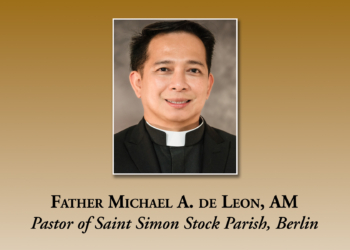
Father Joseph D. Wallace is director, Ecumenical and Inter-religious Affairs, Diocese of Camden.



 at the bottom and then tap “Add to Home Screen”
