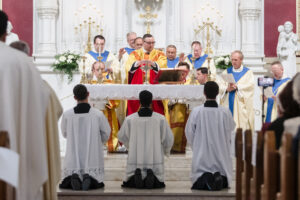
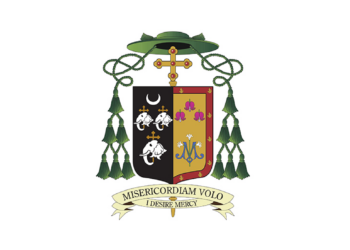
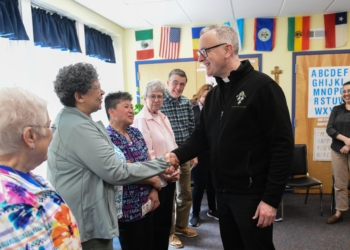





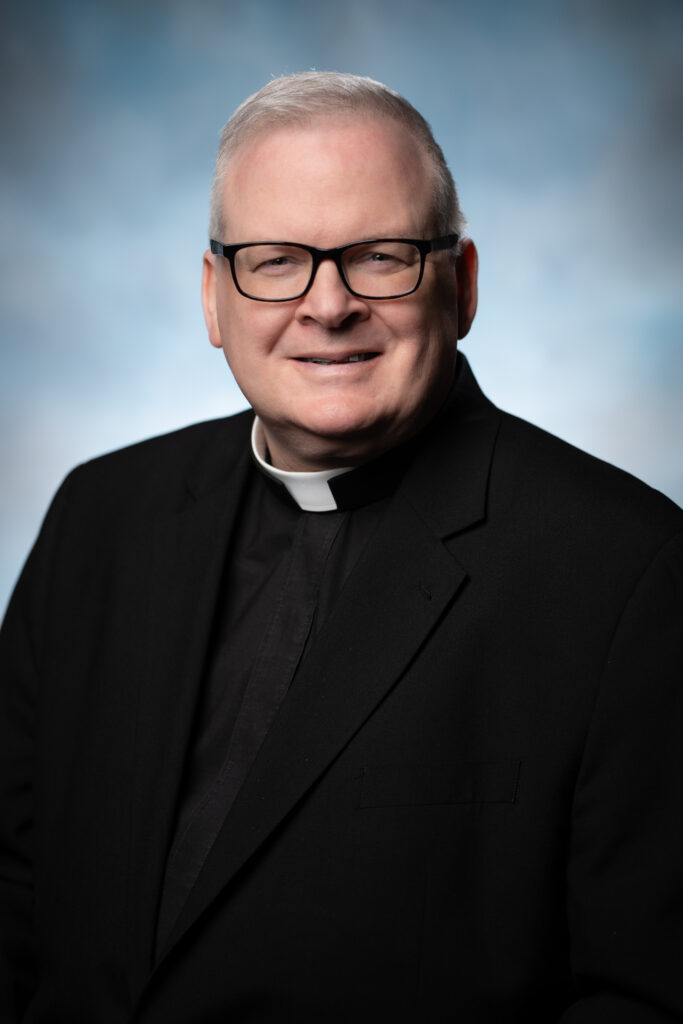
Editor’s Note: Father Jonathan S. Toborowsky is the new administrator for the Diocese of Metuchen. The diocese’s former bishop – Bishop James F. Checchio, a native of Camden who was ordained a priest for the Diocese of Camden in 1992 – officially became coadjutor archbishop for the Archdiocese of New Orleans last month. Father Toborowsky’s column on this change in leadership appears here courtesy of the Diocese of Metuchen’s Catholic newspaper, the Catholic Spirit.
I lost my job. I used to be Vicar General.
That sounds odd, and I hope it doesn’t lead you to believe that this column is going to be about getting fired or quitting. That’s certainly not the case. I was not let go from my assignment. Quite the opposite, the role of Vicar General disappeared from me (and the rest of our diocese).
All of this can be traced back to the announcement made Sept. 24, when the official announcement was made that Pope Leo XIV nominated Bishop Checchio to become the Coadjutor Archbishop of the Archdiocese of New Orleans. With that announcement also came another, less-known, appointment: Bishop Checchio went from being our “Ordinary” (what you think of when you think of the Bishop of a diocese) to the “Administrator” of our diocese, until the time of his Mass of Welcome in New Orleans.
This is nothing new. In 1997, our late Bishop Hughes became the Administrator of the diocese when his retirement was accepted and Msgr. Vincent Breen was announced to be the next bishop. More recently, in 2016 Bishop Paul Bootkoski became the Administrator of the diocese when it was announced that his retirement was accepted and then-Msgr. James Checchio was named the next Bishop of Metuchen.
This move also carries with it a “ripple effect.” Without an Ordinary, the diocesan governance (the “Curia”) changes. The appointed councils meant to give advice to the bishop of a diocese, with no bishop to advise, technically cease to exist.
Boards such as the Presbyteral Council (made up of priests) and the Diocesan Pastoral Council (made up of laity and religious) have essentially gone dormant until such time that the new bishop calls them back into being. They will be, then, his advisors and counsellors.
In addition, those priests who represented the Bishop in the liaison-role positions of Episcopal Vicars and Vicars Forane (also called “Deans”) lost their ecclesial offices and await a new bishop to reappoint them. Finally, as I wrote above, even the office of Vicar General ceased to exist as of that September appointment date.
Now, lest you fear I had been sacked, shown the door and left with nothing to do, what happened is that Bishop Checchio (now as Administrator) simply reappointed me to the same duties and responsibilities as I previously had. Interestingly, Canon Law says that some positions remain unchanged, even without an Ordinary.
This ensures certain functions deemed necessary continue to take place. The Judicial Vicar of the diocese (essentially the chief Canon Lawyer after the Bishop) continues his role, as do positions such as the Chancellor and Finance Officer (along with the Diocesan Finance Council).
With a “Vacant See,” that is, a diocese or archdiocese without an appointed bishop in charge, a key role is played by a core group who have been chosen from among the priests of the Presbyteral Council. The “College of Consultors” is a consultative body established by Canon Law to serve as advisors to the Bishop for various financial and pastoral issues.
They continue to function, serving almost as caretakers of the diocese (not unlike the role played by the Cardinals of the world after the death of a Pope). The most significant role Canon Law tasks them with is to elect a priest to serve as Administrator of our diocese, who will serve until such time that the announcement is made that The Holy Father has appointed either someone already a Bishop to lead us (who would then be “installed,” as were Bishops Hughes and Bootkoski), or a priest to become our new Bishop (who would then be ordained a Bishop and installed, as were Bishops Breen and Checchio).
When in the future that occurs, and the chosen new Bishop is ceremonially seated in the Cathedra (bishop’s chair), the role of Administrator, too, ceases to exist, and our diocese once again has a Bishop in charge.
Let’s all make a covenant to pray together to the Holy Spirit at this time. Not only for Archbishop Checchio as he assumes his new duties, but within our own diocese for the members of the College of Consultors, the Administrator they will elect, and the priest out there in the world who at the moment has no idea he will be chosen as the next Bishop of Metuchen.



 at the bottom and then tap “Add to Home Screen”
