




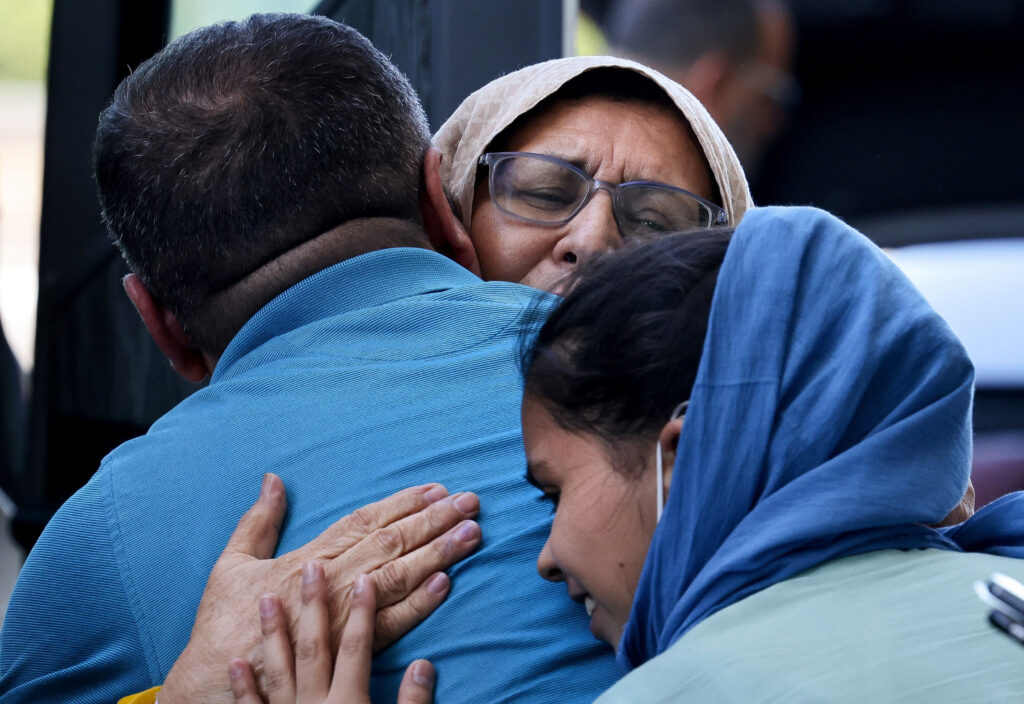
As the world reeled with heartbreak and horror over the last few weeks from the scenes in Afghanistan and the end of the United States’ longest war, the pleas for humanitarian aid came from all over the globe, including from the Vatican.
The Afghan people have suffered tremendously over the centuries, some of it due to their geographical location and varied topography, wedged as it is between larger empires that have dominated their history, economics and politics: Iran, China and the former Soviet Union. Successive waves of occupation trace back at least as far as Alexander the Great, who conquered the territory in 330 B.C.
Today, more than 99 percent of Afghans practice Islam, with roughly 90 percent identifying as Sunni Muslims and 10 percent Shiite. (The difference is traced to a debate over succession upon Muhammad’s death in 632 AD, between the followers of Abu Bakr and Ali ibn Abi Talib).
But this was not always the case. Like other areas in the region, religious pluralism once played a crucial role in the nation’s history. Islamization happened incrementally, just as Christianization of countries and continents did.
Most of us remember the destruction of the Buddhist statues in Afghanistan’s Bamiyan Valley in 2001. They had been there for 15 centuries and were a UNESCO world heritage site. Despite a marked presence in past eras, very few Buddhists remain in the country today.
Many scholars believe Zoroaster was born in Bactria, in what is modern-day Afghanistan. Some people think the Magi who came from the East were astrologers who practiced ancient Zoroastrianism in Parthia, and so could possibly have been Afghans themselves, though many traditions tie them to Persia, Phoenicia and Ethiopia, largely because of certain interpretations of Psalm 72.
After the Resurrection, when the disciples traveled from Jerusalem throughout the ancient world to spread the message of the Good News, a longstanding belief is that Thomas, called the “twin” (Didymus in Greek), overcame his initial doubts and traveled outside the Roman Empire toward the East. The Kerala region of India has long traced its spiritual heritage to him, and those who live there still refer to themselves as “St. Thomas Christians.” Some of these oral and written traditions – which are mentioned in the reflections of Ambrose, Gregory of Nazianzus, Jerome and Ephrem – attest that Thomas, along with Bartholomew, likely also made missionary excursions to Arabia, Hindu Kush, Balochistan and the Pamir Mountains, which would include large swaths of modern Afghanistan. This likely happened before Peter and Paul were martyred in Rome, and so the Church there in some ways predates the Roman one.
Millenia later, when Italy recognized Afghanistan with official diplomatic relations in 1921, it eventually negotiated to have a Catholic chapel erected in the Italian Embassy in Kabul. This is the only legal church in the country, dedicated to Our Lady of Divine Providence. It has been staffed by Barnabite priests after being erected as a mission “sui juris” by Saint John Paul II in 2002. Since conversion, proselytism and baptism of Muslims are expressly prohibited in the agreements for the mission; the church mostly served expatriate Catholics from other places, including from the military and humanitarian aid workers like Mother Teresa’s Missionaries of Charity.
Unfortunately, the mission’s leader, Father Giovanni Scalese, has had to return to Rome given the current chaos in Kabul. He has publicly lamented the inability to continue to serve the mission and to represent the Holy See in the overwhelmingly Muslim nation, and has said he would return if the conditions in the future permitted him to do so.
For many of us in the United States, Afghanistan seems at least half a world away. But as we have seen in so many areas of life, we live in a global community and are all connected in both practical and transcendental ways. Our origins and destinies are bound together as members of the human family who share this small blue oasis in what can feel at times like the uncontrollable wilderness of the cosmos. We are intimately tied to one another, and must continue to work to dismantle the “globalization of indifference” that hardens our hearts as in a modern-day Meribah, testing our resolve to overcome the ongoing severing of nations, tribes, civilizations and individuals from one another.
Originally from Collingswood, Michael M. Canaris, Ph.D., teaches at Loyola University, Chicago.




 at the bottom and then tap “Add to Home Screen”
