




By Michael J. Sims, Th.D.
I have a book on my office desk that I have read, picked apart, and read again. The book is by the Dominican friar Timothy Radcliffe, who gained worldwide attention while working with people with AIDS. The book is titled, “What is the Point of Being a Christian?”
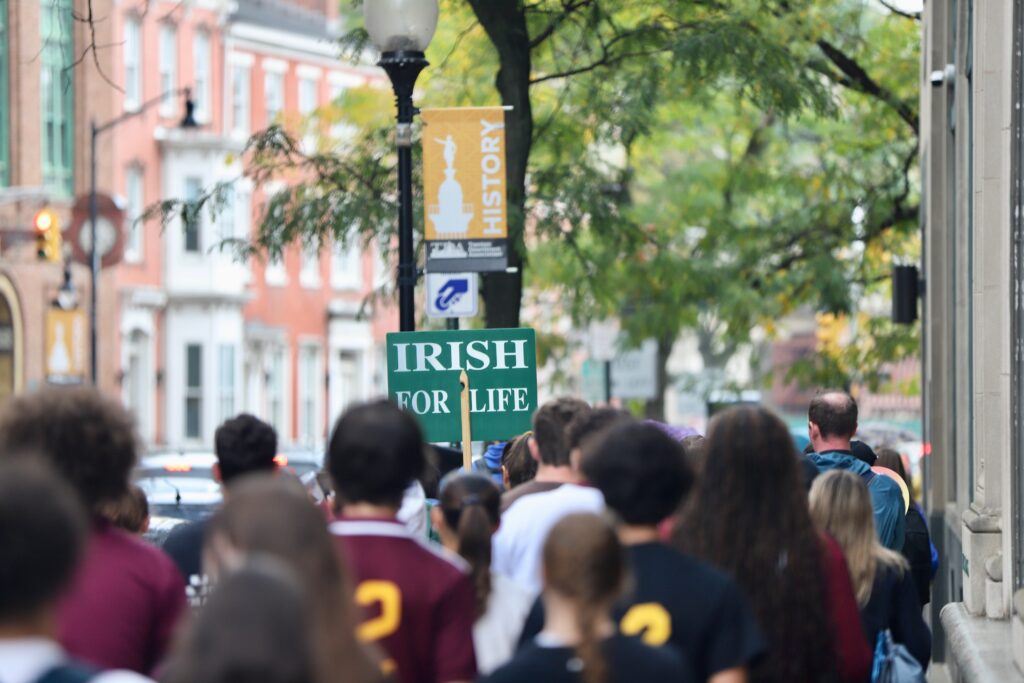
The title alone can be off-putting for some. However, reflecting on the 2025 theme for the National March for Life, “Why We March,” I could not help but draw parallels between Father Radcliffe’s work and the Jan. 24 march in Washington, D.C. For starters, both address profound questions of human dignity, purpose, and the moral foundation of society.
In his work, Father Radcliffe explores the essence of Christian life, asking why one should follow Christ and what it means to live as a Christian in a world filled with propaganda and falsehoods. His reflections center on the idea that “if God is the point of everything, then being religious, being pointed towards God as one’s ultimate goal must show itself somehow in one’s life.”
If Christianity is about heeding the call to repentance, love, communion, and offering hope to others, then, as Father Radcliffe emphasizes, being a Christian is not succumbing to fatalism or planning to live in a dystopian future, but living a life of “imagination and boldness.” He speaks to the importance of a personal relationship with Christ, the call to live out one’s faith through actions of justice, compassion, and solidarity with the marginalized.
The core message of Father Radcliffe’s work is that the Christian faith is about living with a purpose that transcends individual needs, aiming instead at the flourishing of the community and the world. For him, Christianity encourages a transformative way of seeing oneself and others through God’s love.
For 52 years, the March for Life has brought people to the nation’s capital to advocate for the protection of all life, especially those threatened by abortion. This year’s “Life: Why We March” theme directly addresses the advocates’ commitment to protecting the sanctity of life from conception to natural death.
The march is a public demonstration of the belief that every human being – regardless of age, disability, illness, or stage of development – has an inherent right to life. The theme speaks to the pro-life movement’s deep conviction that human dignity is not conditional and that society must work to protect the most vulnerable. It invites participants to reflect on why they march – to affirm human life’s value and call for a culture that cherishes and defends life.
For Father Radcliffe, being a Christian is not just about personal faith, but about making a tangible difference in the world by dying to oneself and advocating for the most vulnerable. Similarly, the March for Life is an active expression of faith, where participants demonstrate their commitment to protecting life in practical ways, call for social and legal changes that honor human dignity, and offer assistance for families and mothers in need.
Both call for a deeper reflection on how society upholds human dignity, and challenge individuals and communities to take action for justice and life.
Since the 2022 U.S. Supreme Court decision overturning the constitutional right to abortion – thus leaving the legality of abortion up to the states – the right-to-life movement has advocated for local action, such as marches, rallies, and letter-writing campaigns to state officials, in addition to the national march.
To that point, on Jan. 24, Bishop Dennis Sullivan will celebrate a Mass for the Protection of Human Life at 12:05 p.m., Cathedral of the Immaculate Conception, Camden. On Sept. 25, there will be a New Jersey Right to Life rally and march in Trenton. Mass at Trenton’s Cathedral of Saint Mary of the Assumption will precede the march.
I invite, and encourage, all to attend any local events in the Diocese of Camden and State of New Jersey. Look for even more opportunities at camdendiocese.org/ljm.
Dr. Michael J. Sims is the director of the Office of Life & Justice Ministries for the Diocese of Camden.





 at the bottom and then tap “Add to Home Screen”
