





On Sept. 19, throughout the United States, those attending Mass will view a diverse group of fellow parishioners presented to them as catechists for the coming year as part of the celebration of Catechetical Sunday.
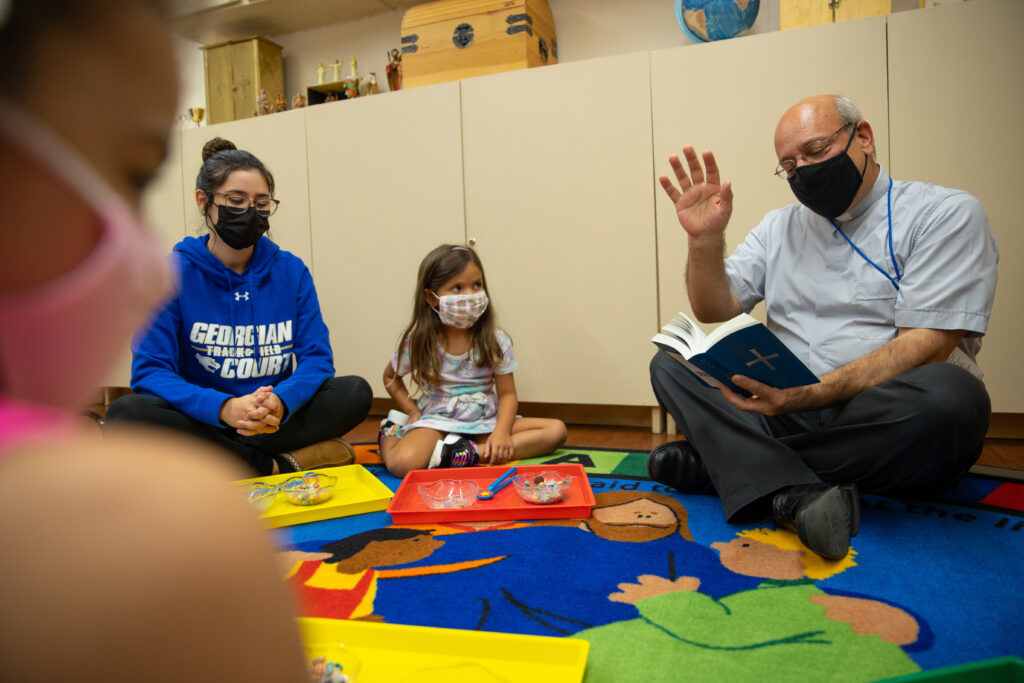
The groups will include parents and grandparents, young adults and senior citizens, high school seniors and college professors. Some will be working full-time jobs. Others will be retired and looking for a way to contribute anew. There will be cradle Catholics and those newly received into the Church. There will be seasoned veterans of catechetical classrooms and anxious first-time volunteers. They will stand before the assembly excited and hesitant, confident and fearful. But amid this diversity will lie a common experience: these men and women have all responded to a call to step out and serve. And they have answered yes.
The annual Catechetical Sunday serves a two-fold purpose, helping both the catechists and the parish community. The commissioning dignifies the catechists’ efforts, reminding everyone that the catechists are not just volunteers plugged into a classroom, they are co-operators in the great commission to pass on the faith, to “make disciples of all nations.” (Mt 28:19)
Although this connection to the Church’s evangelizing mission can sometimes seem a bit hazy to the catechists making tissue paper Advent wreaths with first-graders or rehearsing Living Stations with fifth-graders, the commissioning helps them to see that their efforts contribute to the growth of the Church. As the Second Vatican Council notes, “the role of catechists is of the highest importance.” Indeed, the ministry has such great significance in the Church that Pope Francis has given it the status of an official lay ministry and has invited bishops to examine and strengthen the “biblical, theological, pastoral and pedagogical formation” necessary for the ministry. At the parish level, directors of religious education strive to provide catechists with materials, guidance and opportunities for spiritual growth to help them grow into their ministry.
But Catechetical Sunday is not for the catechist alone. Every parishioner has a responsibility, because of his or her Baptism, to pass on a lively, relevant, life-giving faith to the next generation. Parishioners do not sit in the pews on Catechetical Sunday, breathing a sigh of relief that they are off the hook for yet another year. Rather, this celebration should remind them of their responsibility to support the efforts of the catechists and to give good example to families by renewing their commitment to the life of the parish community.
The catechetical efforts of a parish extend well beyond a specific time allotted for religion class. Catechesis, the echoing and passing on of the Word of Life we all have heard, occurs in every moment and every aspect of parish life. The reverence of a parish’s prayer and worship, the compassion of its outreach, the creativity of its presentations, the true community experienced in its gatherings, all edify and educate.
Each year, Catechetical Sunday offers a theme taken from Scripture. This year’s theme, “Say the Word and My Soul Shall Be Healed” is part of the assembly’s response to the priest’s invitation to Communion. The full response, “Lord I am not worthy that you should enter under my roof, but only say the word and my soul shall be healed,” is taken from the Scripture story about the healing of the centurion’s servant. In this story, Jesus praises the faith of the centurion, who understands the capacity of Jesus’ power to heal through his Word alone. This Scripture passage reminds catechists and parishioners of the depth and breadth of God’s power to restore and reinvigorate our lives and the essential need we all have for God’s healing. The theme should make us eager to share this Good News and foster its growth in our children, friends and families.
In the Scripture story, Jesus heals the servant from a distance, as the centurion requested. But at Mass, something different happens. Despite our protests and our expression of confidence, God enters under our roofs, leaky and patched as they are, and heals us from within. God is never remote with us. This, in essence, is the most important message for the catechists. They do not embark on the mission of catechesis as mere representatives of God’s life-giving message. They enter this ministry with God’s intimate presence to support, inspire and sustain their efforts. As these men and women stand before the assembly this weekend, let us pray that they are comforted and strengthened by the reality that God will be standing with them at every moment of their ministry as catechists.
Pat Lipperini is director of Faith Formation, Saint Teresa of Calcutta Parish, Collingswood. She holds a doctorate in religious education from Fordham University.



 at the bottom and then tap “Add to Home Screen”
