



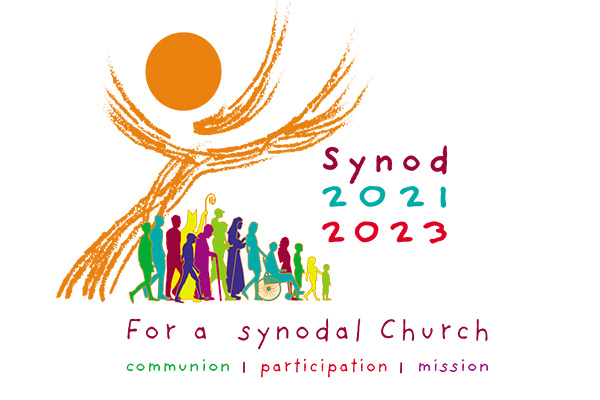
Pope Francis announced earlier this year that the Church will enter into a worldwide synodal process beginning next month. The theme of the synod is “For a synodal Church: communion, participation and mission.”
In August, Bishop Sullivan announced that on Oct. 17, the Diocese of Camden will gather for a Solemn Opening Mass that will initiate our participation in this worldwide enterprise, inviting pastors and representatives from each parish. This gathering will begin our diocesan contribution, as we discuss the synod documents and complete an online response to the official questionnaire. The various deaneries of the diocese will meet in the next year, and the information culled will then be sent to the U.S. Conference of Catholic Bishops for the next phase of the synod process.
Synodality, another word for “walking together,” is one of the centerpieces of Pope Francis’ agenda for the future of the Church. This process has been around since the beginning of the Church’s history. Pope Francis teaches that synodality implies that each member of the Church, by virtue of the grace received at Baptism, should be fully immersed in its life and mission. To bring this to fruition, all members of the Church have the right and responsibility in discerning God’s will and listening to the Holy Spirit, as we move together into the future. The goal is to discern the promptings of the Holy Spirit by involving all the baptized in fulfilling the Church’s mission of proclaiming God’s love and salvation in Jesus Christ to the whole world.
While this process is not necessarily a democratic parliamentarian exercise that ends in a vote of some kind, it is a process to glean the sensus fidelium, “sense of the faith on the part of the faithful.” In 2018, the International Theological Commission, which advises the Congregation for the Doctrine of the Faith, published a document on synodality. In it they said, “A synodal Church is a Church of participation and co-responsibility. In exercising synodality, she is called to give expression to the participation of all, according to each one’s calling, with the authority conferred by Christ on the College of Bishops headed by the pope. Participation is based on the fact that all the faithful are qualified and called to serve each other through gifts they have all received from the Holy Spirit.”
Cardinal Kurt Koch, president of the Pontifical Council for Promoting Christian Unity, recently spoke of the contribution that synodality makes to the ecumenical dialogue and outreach of the Church. In an article that he wrote in January for the Vatican newspaper, “L’Osservatore Romano,” Cardinal Koch said, “Theological and pastoral efforts to build a synodal Church have a profound effect on ecumenism, as Pope Francis emphasizes with the basic principle of ecumenical dialogue, which consists in the exchange of gifts, thanks to which we can learn from each other.”
He sees synodality as “the most important contribution” to the ecumenical ministry, saying, “the synodal tradition of Christianity includes a rich heritage that should be revitalized.” Speaking directly on the upcoming synod, he remarked, “This synod will not only be an important event in the Catholic Church, but it will contain a significant ecumenical message, since synodality is an issue that also moves ecumenism, and moves it in depth.”
In particular, Cardinal Koch addressed the important contribution that the synodal process will have with our Orthodox brothers and sisters. He noted that in an important document promulgated in 2007, the “Declaration of Ravenna,” Catholic and Orthodox theologians agreed that the Bishop of Rome was the “protos,” or “first among patriarchs,” before the Great Schism of 1054 AD. He remarked that this declaration highlighted “the fact that the two dialogue partners were able to declare together for the first time that the Church is structured synodally at all levels, and therefore also at the universal level, and that she needs a protos is an important milestone in Catholic-Orthodox dialogue.”
Synodality, and all that it implies, will be a major contribution in the ongoing dialogue with the Orthodox communion. Orthodox and Roman Catholic theologians are interested in the particular contribution that synodality is making on the ongoing ecumenical discussion on the role and meaning of “papal primacy” in a unified Church, especially as regards the Orthodox faithful. In my next column, I would like to take a closer look at the ongoing discussions among Orthodox and Roman Catholic theologians on this important topic of synodality and papal primacy.
Father Joseph D. Wallace is diocesan director of Ecumenical and Inter-religious Affairs and pastor of Christ the Redeemer Parish, Atco.


 at the bottom and then tap “Add to Home Screen”
