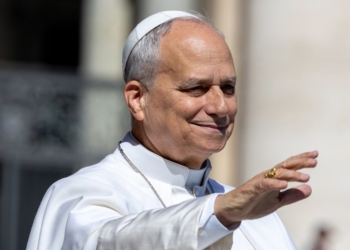




Substantial advancements in the pursuit of Christian unity occurred during Pope Leo XIV’s recent apostolic visit to Türkiye. The primary objective of his inaugural journey as pope was to commemorate the 1,700th anniversary of the First Council of Nicaea. Furthermore, he joined with the Orthodox Church to commemorate significant milestones from our collective history, acknowledging both its achievements and challenges.
Pope Leo has continued the tradition established by his predecessors in the Petrine Ministry – Pope Saint Paul VI, Pope Saint John Paul II, Pope Benedict and Pope Francis – by visiting Ecumenical Patriarchs Athenagoras, Dimitrios and Bartholomew. Each meeting, held in Constantinople (now Istanbul) – the home of the Ecumenical Patriarch who serves as the spiritual leader of Orthodoxy – featured joint declarations. These signings strengthened the dedication of both churches to greater unity and their shared pursuit of restoring ecclesial communion.
During the Holy Father’s visit, another significant anniversary was recognized. On Dec. 7, 1965, 60 years prior, Pope Paul VI and Patriarch Athenagoras signed a joint declaration expressing their mutual regret and officially removing the sentences of excommunication from both memory and the life of the Church, thereby consigning these 11th century excommunications to oblivion. The division during the 11th century stemmed primarily from what is now referred to as the Filioque clause controversy.
The Filioque clause, derived from the Latin term meaning “and the Son,” is a disputed addition to the Nicene Creed. In Pope Leo’s apostolic letter “In Unitate Fidei,” issued in November shortly before his visit to Türkiye, he cites the Nicene-Constantinopolitan Creed without including the Filioque. An accompanying footnote clarifies: “The statement ‘and proceeds from the Father and the Son [Filioque]’ does not appear in the text of Constantinople; it was incorporated into the Latin Creed by Pope Benedict VIII in 1014 and continues to be a topic of dialogue between Orthodox and Catholic traditions.”
Orthodox Christians oppose the Filioque clause because it was added to the Nicene Creed without approval from an Ecumenical Council. They believe this change disturbs the balance of the Trinity by claiming the Holy Spirit proceeds from both the Father and the Son, which, in their view, subordinates the Holy Spirit and violates the “monarchy of the Father” – the idea that the Father alone is the source or cause of both the Son (through begetting) and the Holy Spirit (through proceeding). As a result, they argue that the Filioque alters the original faith established by the early Church fathers and expressed in the Nicene-Constantinopolitan Creed.
On Nov. 28, Pope Leo and Ecumenical Patriarch Bartholomew – in the presence of the Patriarch of Alexandria – led a beautiful ecumenical prayer service celebrating the anniversary of Nicaea – on the very spot where the council took place (in modern-day Iznik). At that ceremony, official delegates of the ancient Patriarchates of Antioch and Jerusalem, and representatives of all the Oriental Orthodox Churches and the Protestant World Christian communions, recited the Nicene-Constantinopolitan Creed without the addition of the Filioque clause.
This significant move toward unity results from four decades of theological dialogue between Orthodox and Roman Catholics. It is another step toward full, visible unity among our sister churches.
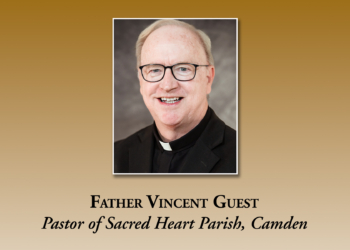
Father Joseph D. Wallace is diocesan director of Ecumenical and Inter-religious Affairs and pastor of Christ the Redeemer Parish, Atco.




 at the bottom and then tap “Add to Home Screen”
