




I was honored to be invited to an intimate lunch in recent days with Cardinal Pedro Barreto Jimeno, SJ, the Archbishop of Huancayo in Peru, along with a number of representatives from universities in South America.
After attending a United Nations conference on water access and sanitation, the cardinal was visiting a few institutions of higher education around the United States to seek collaborators and dialogue partners in his role as president of the Ecclesial Conference of the Amazon (using the acronym CEAMA for its Spanish formulation), which is a permanent canonical body established by Pope Francis in 2022.
There is an important distinction between this new “ecclesial” conference and the more familiar “episcopal” ones, such as the U.S. Conference of Catholic Bishops and the Consejo Episcopal Latinoamericano y Caribeño (CELAM). The CEAMA is unique in that it includes not only bishops in leadership roles, but also priests, women and men religious, and laity in decision-making capacities across the whole Amazon region – usually defined as including territories within the countries of Peru, Ecuador, Colombia, Brazil, Bolivia, Suriname, Guiana, French Guinana and Venezuela. For that reason, it is truly a conference seeking the contributions of the whole assembly of believers (ekklesia) and the first of its kind.
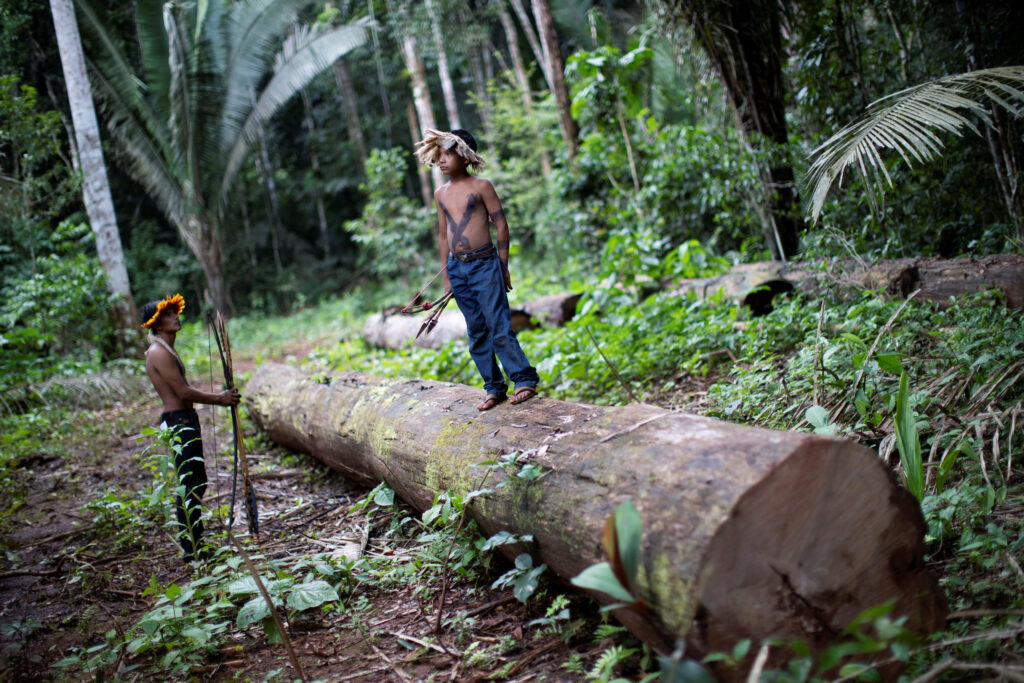
The region famously called the “lungs of the planet” holds a central role in many of the issues that define life in the 21st century, whether it be in terms of ecology, migration, economic development, intercultural exchange or creative fidelity in theological research. Of course, many of the complex issues around these themes raised in “Querida Amazonia,” Pope Francis’ post-synodal exhortation published in 2020, intersect with the global ones put forth five years earlier in “Laudato Si.’” They undoubtedly have relevance for the people of the region, whether Christian or not, but also for all of us on the spinning blue marble that we call our casa común (common home).
In Section 7 of “Querida Amazonia,” Pope Francis traces four dreams he holds for the region that impact the global community: “I dream of an Amazon region that fights for the rights of the poor, the original peoples and the least of our brothers and sisters, where their voices can be heard and their dignity advanced. I dream of an Amazon region that can preserve its distinctive cultural riches, where the beauty of our humanity shines forth in so many varied ways. I dream of an Amazon region that can jealously preserve its overwhelming natural beauty and the superabundant life teeming in its rivers and forests. I dream of Christian communities capable of generous commitment, incarnate in the Amazon region, and giving the Church new faces with Amazonian features.”
These social, cultural, ecological and ecclesial dreams present a strategy for the region “to be transformed and to be set free from the evils that beset it.” (111)
The Marian intercessory prayer that concludes the document recognizes the destruction of the area by “petty interests,” lamenting “how much pain and misery, how much neglect and abuse there is in this blessed land, overflowing with life.” Emphasizing the absolute urgency of the conversion he entreats upon all men and women of good will, Pope Francis refers to the hour at hand as both “late” and “dark.”
Demographics continue to make clear that the future of the Church will increasingly have the face of the Global South, much more than its Mediterranean or Eurocentric past. Even the posture of United States Catholicism in the coming decades will, by necessity, turn its attention less toward Rome, Dublin, Berlin and Warsaw, and more toward São Paulo, Lima, Kinshasa, Lagos, Manila and Mumbai.
This is not to say the specificity of the radical solidarity of the Incarnation within a particular place and time and people will fail to hold a perpetual place of centrality and veneration for Christians. It is simply to recognize that a post-Constantinian global Church will take seriously the experiences and dynamic agency of those in other contexts and social locations, beyond the empires of past centuries, whether ancient or recent.
CEAMA is widely being interpreted as a necessary step toward precisely such a noble aspiration, one rooted in the utter realism that the Church in our day is in fact taking on “a variety of faces that better manifest the inexhaustible riches of God’s grace.” (6)
Originally from Collingswood, Michael M. Canaris, Ph.D., teaches at Loyola University, Chicago.




 at the bottom and then tap “Add to Home Screen”
