




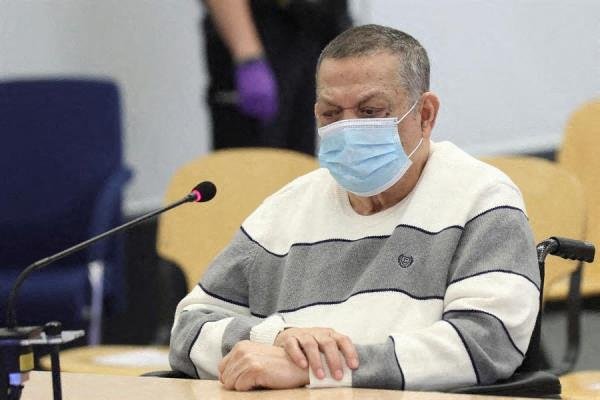
This week a court in Spain convicted a man named Inocente Orlando Montano, who had been extradited from the United States, for the murders of Father Ignacio Ellacuria, S.J., and other Jesuits murdered in El Salvador in 1989. Their housekeeper Elba Ramos, and her daughter Celina, were also killed while embracing one another, but allegedly by a different shooter in the same raid. Montano will very likely serve the rest of his life in prison for these crimes, although the verdict can be appealed.
As someone who has spent over half of my life on Jesuit campuses, I introduce these facts with an emotional connection to these events, but also with a profound awareness of the shortcomings of criminal justice systems around the world, and resisting the natural (as opposed to supernatural) temptation toward a thirst for vengeance, instead of a demand for justice. I am heartened that a longstanding wrong has apparently been righted and that the victims’ families and so many others can begin to heal.
I mention this contemporary event because of its historical and spiritual ties to one of the principal defining moments for the Salvadoran people which will occur in the coming days, on Sept. 21. In 1787, on this day, a volcanic eruption on Mount Chaparrastique threatened the nearby city of San Miguel. As in so many other Latin American locales, (e.g. Guadalupe, Aparecida, Luján, etc.), a local Marian devotion had arisen by this time among the Catholic Salvadoran population, that of Nuestra Señora Reina de la Paz — Our Lady, Queen of Peace. In the terror of the moment, they brought the image of the Virgin to the foot of the volcano, and the lava flows subsequently spared the city, while a cloudlike plume in the form of a palm frond was interpreted as a sign of maternal intervention. Though the official feast occurs on Nov. 21, when Pope Benedict XV held a coronation ceremony for the Queen of Peace in 1921, the September “Milagro de la Paz” is still widely venerated.
What does it mean to beg God, Mary, and the communion of saints for “Peace”? The word comes to us from the Latin, familiar to us in everything from the Pax Romana to the tranquil waters of the Pacific Ocean. But the Romans actually drew the concept from even older Proto-Indo-European roots, where it is hypothesized to be related to concepts having to do with cords, ropes and fastening. So when we ask for peace, it is not primarily a passive freeing “from” the turbulence of conflict, but rather a closer binding “to” our community and those with whom we share this journey of life — whether by choice, chance, necessity or providence. Of course, we all long for security for ourselves and our families, and the serenity of communion with the transcendent, which the world cannot ultimately provide. We can and should strive to escape from the agitated and noisy bazaar of our souls, “where day after day the trucks unload their crates without any plan or discrimination, to be piled helter-skelter in every available corner and cranny, until it is crammed full from top to bottom with the trite, the commonplace, the insignificant, the routine,” as Karl Rahner puts it. We all seek a reposeful place clear of that clutter, and all the more so if the packages are incendiary and explosive, violently mangled by others, by loss or by own missteps.
But to prostrate ourselves before the Reina de la Paz involves a further step. It mandates the tireless work to “fasten” ourselves to one another, to resist the fueling of flames across the ever-widening chasms of division among the human family. If we can only be called children of God by engaging in peacemaking (cf. Mt 5:9), then we best commit ourselves to the proactive labor this beatitude mandates, which is decidedly different from both conflict avoidance and scorched earth polemics.
The decision in Spain this week sought to heal wounds that have festered for decades, but it is a beginning not an end — a challenge to all of us, not a final resolution. Regardless of the brutality and terror of the events, how can we allow the Salvadoran experiences from 1787 and 1989 to guide our efforts at proactive peacemaking today? Only by rooting that work in the overflowing companionship of the longsuffering God of peace (Rom 16:20), who is always close to the brokenhearted, victimized and isolated.
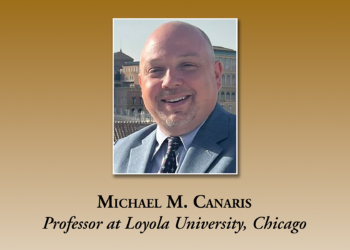
Originally from Collingswood, Michael M. Canaris, Ph.D., teaches at Loyola University, Chicago.




 at the bottom and then tap “Add to Home Screen”
