



I was on a mission trip in Colombia while the dramatic events in Minneapolis were unfolding. I felt somewhat helpless, being so far away, but I was connected to the events via my family’s text thread.
One thing shared on that thread stayed with me. It was from my mother, who wrote, “How about as a family united in faith, hope and prayer, we each choose a fasting of our choice for one week to offer to God for our brothers and sisters in Minnesota who are enduring much spiritual, emotional and physical suffering?”
I took my mother up on that offer, and I humbly invite all the faithful of South Jersey to do the same.
I cannot say everything that needs to be said about this important topic in a single column, and I know that people of goodwill – inside and outside of the Church – can disagree with details of federal immigration policy. That is why this column will be the first in a series of columns that examine this topic from different perspectives, including the perspective of our law enforcement. It is my hope that these columns will provoke a cordial and fruitful dialogue among us and, most importantly, a culture of encounter.
Indeed, I believe that the only way to understand the current unrest in Minneapolis is through a culture of encounter. As such, let me share one of my experiences from my ministry in the Archdiocese of Saint Paul and Minneapolis.
Two months ago, I received a voicemail from a young adult Catholic who I have known since she was 5. Her name is Lydia, and I met her and her parents, Mario and Rosalita, during my very first days as pastor of Saint Stephen Church in south Minneapolis in 2008. Lydia is now 23, and I assumed she was calling to share the good news that she is getting married. When I spoke with her, however, I received the shocking news that her father had been detained by federal law enforcement officers as he was going to work on a cold November morning. I was stunned and deeply disturbed.
Although Mario does not have citizenship in this country, he did have a permit to work here. He also has a squeaky-clean legal record in his 20-plus years in this country. But most importantly, Mario is a wonderful human being and faithful Catholic. I knew immediately when I met him 18 years ago that there were two things that came before everything else in his life: his faith and his family. Lydia was his only daughter when I arrived at Saint Stephen, but I had the privilege of seeing three more girls born to him and his wife during my years as pastor.
I also had the joy of seeing this family every Sunday at Mass, and they didn’t come to church simply to be served by the Church, but rather to serve others in the Church. I could call on Mario and Rosalita for anything: decorating the church, preparing food for our festivals and serving in our youth ministry. Eventually, Mario agreed to be the leader of our growing Confirmation program. He was diligent in his preparation and generous in his service, despite long hours at his job and a growing family. The young people he served, often from struggling immigrant families, found wisdom and fatherly counsel in his leadership.
Mario is also a beloved member of the broader Minneapolis community. He is an excellent chef and has worked for years in some of the finest restaurants and steak houses in Minneapolis. Consider the tens of thousands of Twin Cities citizens who have been nourished by his delicious meals over the years!
The Church also benefited from this talent. We started a pro-life outreach to immigrant families in South Minneapolis called Sagrada Familia. Each year, Sagrada Familia would host a fundraising gala. Mario accepted to cook for several of those galas. Our benefactors – hundreds of them – were amazed at his culinary creations. It was touching to seeing how his food became a cultural bridge between the Anglo and Hispanic members of our communities.
You can imagine my sadness, then, when Mario called me on Christmas Eve day from a detention center in another state. I was heartbroken to think of him separated from his beloved family and Church at Christmas and to imagine the devastation of his girls, who were worried about their dad.
My heartbreak turned to horror this past week upon seeing the images of Alex Pretti fatally shot on Nicollet Avenue in South Minneapolis. That is within Saint Stephen’s parish boundaries on a stretch of Nicollet Avenue known as “Eat Street.” In fact, when I saw those images on the news, I immediately recognized that this tragedy happened right across the street from my favorite bakery where I spent many a Saturday morning preparing for my weekend. It was surreal to see a scene like this occurring again in the beloved city of my birth, so soon – and only 19 blocks – from the George Floyd tragedy.
Let me be clear: I have a tremendous respect for law enforcement officials. In the weeks and months that followed the death of George Floyd, there were calls to defund the police. I was never part of that crowd. On the contrary, I always went out of my way to let police officers know that they were deeply appreciated. At Saint Stephen, we had a wonderful relationship with the Minneapolis Police Department. In fact, I would greet officers almost daily as they helped our parish and Saint Stephen Human Services keep the peace on Clinton Avenue as hundreds of meals were served Monday through Friday in our school basement to the poor of Whittier neighborhood. They also did a great job caring for us as we had our religious processions through south Minneapolis. I will always be grateful to them.
Again, I must say that I believe that the only way to understand the current unrest in Minneapolis is in the context of Mario’s story and stories like his. We are being told repeatedly by certain media outlets that Mario and other undocumented like him targeted by federal law enforcement are the “worst of the worst.”
That is a lie, and the people of south Minneapolis know it is a lie. As of late 2025, it has been noted in multiple news outlets that more than 70% of individuals held in Immigrations and Customs Enforcement detention do not have criminal records. Even more importantly, to the human community of south Minneapolis, Mario is a trusted neighbor, a valued coworker and a cherished member of the Catholic Church; his neighbors, coworkers and fellow parishioners protest vigorously – and we pray always peacefully – at the thought of him being torn from the fabric of their community.
Of course, some of those targeted by our federal officials are criminals and should be fully prosecuted, and even deported. Anyone who comes to this country is expected to “play by the rules” and should have profound respect for our laws – and the vast majority do.
We are being told, however, that most of the undocumented are “drug dealers, criminals and rapists.” In fact, just this week, a federal leader said that “2% of the population commits 90% of the crime,” associating these figures with undocumented immigrants. That is a lie, and it is a lie that fans the flames of hatred and racism in our neighborhoods and in our country.
The truth in Minnesota, for example, is that the total state prison population is around 8,000, and only 207 of them are non-citizens. This means that the criminal activity of non-documented persons is significantly less than that of documented citizens in the state.
This is consistent with study after study that indicate undocumented immigrants have lower rates of criminal activity and incarceration than both documented immigrants and native-born U.S citizens. In fact, research analyzing crime data over the past decades shows that as the undocumented population has increased, crime rates have often declined. This is exactly what happened in the Whittier neighborhood of Minneapolis over the past 30 years!
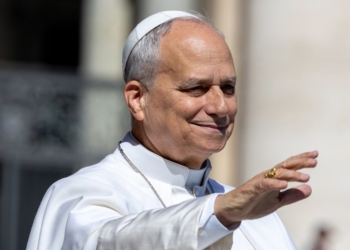
Recently, Pope Leo was asked about the situation facing migrants in the United States. He responded, “We have to look for ways of treating people humanely; treating people with the dignity that they have. If people are in the United States illegally, there are ways to treat that. There are courts. There is a system of justice. I think there are a lot of problems in the system. No one has said that the United States should have open borders. I think every country has a right to determine who and how and when people enter. But when people are living good lives – and many of them for 10, 15 and 20 years – to treat them in a way that is extremely disrespectful, to say the least, and there’s been some violence unfortunately. I think the bishops have been very clear in what they’ve said, and I would just invite all people in the United States to listen to them.”
His Holiness was referring to a statement issued by the United States Conference of Catholic Bishops at our fall General Assembly. I will conclude this column by simply echoing what our Holy Father said, and I urge you to read that statement so that there may be peace in Minneapolis – and our great country – for all.
Editor’s note: The names of the families in Minneapolis have been changed.




 at the bottom and then tap “Add to Home Screen”
