



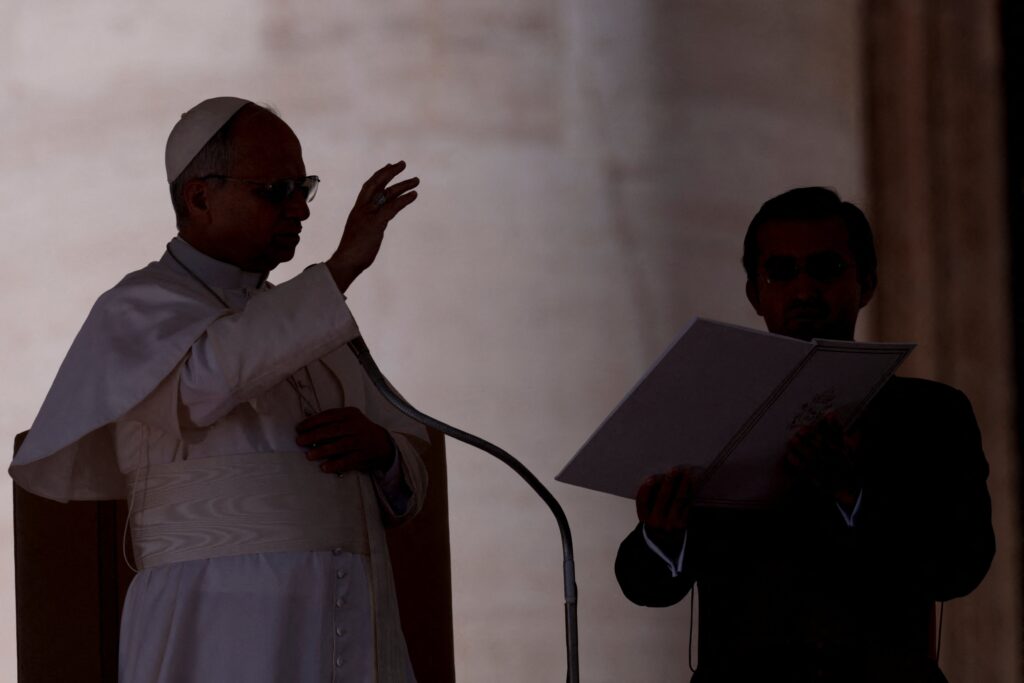
The Holy Father has recently been using his Wednesday General Audiences to offer catecheses on the documents of the Second Vatican Council. The overarching goal of Pope Leo’s conviction to revisit these texts is connected to one of the most pressing and perennial dialectics in not just our ecclesial experience, but in the human condition overall: the knotty and never-ending tension between continuity and change.
We do not step into the same living river of our experience twice. Christians recognize permanence, stability and identity in and through development, change and progress. Empires and presidencies rise and fall; able-bodied people begin on four legs, spend their mature years on two, and end on three as they lean on a cane – as the famous proverb puts it. Church eons come and go, the truth remains – and yet how we interpret or integrate or articulate that truth is a constant process of unfolding. Your love for your spouse or vocation is likely quite different than it was when you first made life choices.
As a lighthearted example, Pope Gregory XVI is reputed to have referred to railways as so disruptive to traditional life as to be literal highways to hell. Not too many of the staunchest traditionalists would today refuse modern means of travel to meet with their flocks or evangelize the world, nor should they.
We have also seen the disillusionment of calamitous utopian hallucinations that would posit that never-ending novelty is a benefit to the human race, especially if unmoored from the Transcendent. Believers are always eschatological in their orientation, peering toward the ultimate horizon that recognizes this world as transitory and provisional. But we do so by contesting that the way to act in the present and the future must be informed by the past: both by the inter-generational witnesses of the communion of saints and by the stunning revelation of the Incarnation itself.
Lent is the perfect time to meditate upon this. We have never behaved so well that we can say with any authenticity, “We don’t need a season of repentance this time around.” The Church would insist we can’t even make it a week, considering that Mass opens with the Confiteor and Kyrie Eleison. We need change – at least in our spiritual lives – constantly. If the dynamism of faith is static and stagnant and still, we have a major problem.
God wants us to “turn around,” again and again, and not just keep plowing ahead convinced we are doing everything right. That is what is meant by the literal meaning of “meta-noia.” Yet, we are also told anyone who turns his head from the plow to look back is not worthy of the Kingdom of Heaven. If Christians are practitioners of the Way, our God is apparently a God of U-turns and re-turns, of wanderings and curves, and, at times, of ambiguities and paradoxes.
God let the Israelites wander for four decades in the wilderness when the average route across the desert could be made in 20 days. That’s quite a few circles and backtracks and twists and turns. Accordingly, the GPS of our moral lives should also often say: “re-calculating.”
All this takes us back to the weekly reflections of Pope Leo. The great debates over the past 60 years have often revolved around continuity and rupture at the council. Of course, both have to exist not only in how we see Vatican II, but in how we see ourselves. The average age of the cells in our bodies is seven to 10 years (though there is a wide range of variability in this claim). Some of who you are now is not physically who you were when you started your journey. Yet, the “you” of you remains.
We ourselves, like the council, are testaments to permanence-amidst-change, or identity-in-development. That’s why it is worth revisiting these collective teachings, the radicality of the Gospel, and what we can learn about our own nature through them over and over again.
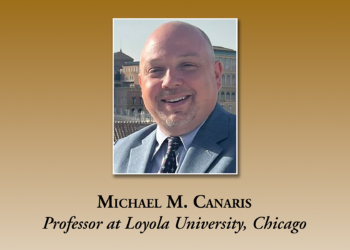
An alumnus of Camden Catholic High School, Cherry Hill, Michael M. Canaris, Ph.D., teaches at Loyola University, Chicago.



 at the bottom and then tap “Add to Home Screen”
